
























































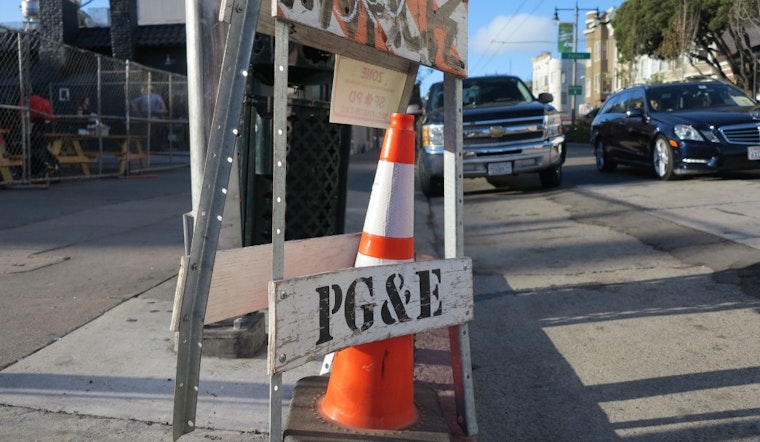
It would be difficult to ignore the massive amount of heavy machinery and construction barriers up and down Divisadero Street lately. What gives?
It’s simple. PG&E is working on the main gas pipeline beneath the road. In fact, the company is replacing the existing pipeline with a new one, from Geary Boulevard all the way down to the Castro Muni stop. Construction is supposed to be finished by the end of the year, affecting the Divisadero neighborhood as well as Duboce Triangle.
Here’s a map of where they’re replacing the pipeline.

It’s all part of PG&E's multi-year Gas Pipeline Replacement Program that will upgrade over 270 miles of pipeline in San Francisco alone. The replacements will include both the main pipeline in the street and the ancillary pipes that provide gas to homes and businesses. In accordance with California Public Utilities Commission requirements, some gas meters may need to be moved in the process.
According to PG&E, the program will improve gas service to customers by replacing older pipes with “modern new piping that is more resistant to corrosion and earth movement.” Furthermore, the company expects the project to create “a more reliable system with less maintenance and lower energy costs.” Priority is being given to older pipes, and ones with a history of leakage.
Once the main pipelines are in, PG&E workers will schedule times with homes and businesses that will need new service lines. They say they will make an effort to contact folks three to five business days in advance. An adult will need to be present to grant access to the meter and relight the pilot light.

Finally, if you were wondering why there seemed to be a particularly large presence of PG&E workers and vehicles on the corner of Hayes and Divisadero this week, the answer is once again pretty straightforward.
Crews were working to run an electric line underground from the Popeye’s corner to 607 Divisadero, where the new Mediterranean restaurant is being built out. A worker from the project told us that this was most likely being done to increase the amount of electric load being delivered.
While some street permits indicate that certain sections of the work will be finished by October, the overall gas pipeline replacement project is slated to be complete "by 2015." So, things could be pretty rough out there for weeks and months to come. But, if it means less gas leakage and improved safety along the corridor, we don't mind the disruption.





