

























































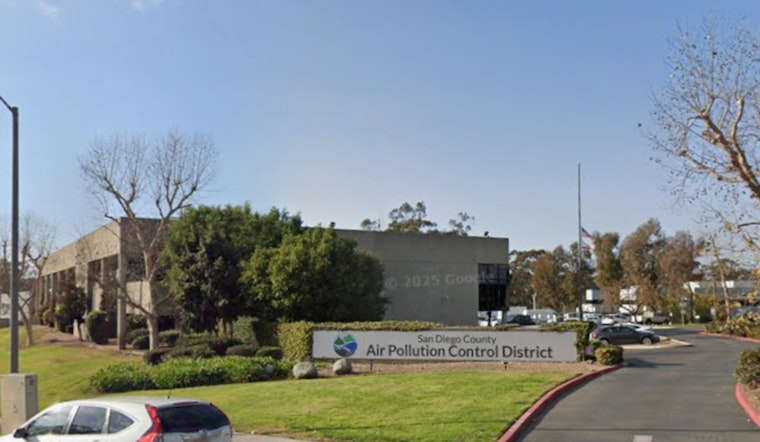
That rotten egg smell hanging over parts of South San Diego today was not a mystery plumbing problem. County officials issued an air quality advisory after monitoring stations detected elevated levels of hydrogen sulfide across South San Diego County.
The foul odor associated with hydrogen sulfide (H2S) is more than just annoying. At higher concentrations, it can trigger headaches, nausea, and respiratory irritation. Health officials warned that children, older adults, and people with breathing or heart conditions should be especially careful whenever the smell is noticeable.
The San Diego County Air Pollution Control District posted the alert on X, flagging “South San Diego County Communities” as affected and directing residents to more information and local guidance, according to the San Diego County Air Pollution Control District. The advisory pointed people to the agency’s community hydrogen sulfide guidance and an information page with tips on keeping indoor air as clean as possible during odor events.
** H₂S AIR QUALITY ADVISORY***
— San Diego County Air Pollution Control District (@sdapcd) February 5, 2026
AFFECTED AREAS: South San Diego County Communities
INCIDENT: Elevated levels of Hydrogen Sulfide (H2S)
For more information visit, https://t.co/eNUNFjO0o4
For info on the Community Hydrogen Sulfide Guidance, visit https://t.co/zH8nKG3OHZ pic.twitter.com/ZCTgipO6RB
What the readings mean
A peer‑reviewed study led by UC San Diego documented short hydrogen sulfide spikes as high as 4,500 parts per billion and one‑hour averages near 2,100 parts per billion at a hotspot in the Tijuana River Valley, linking river flows to airborne pollution, according to UC San Diego. For context, California’s one‑hour hydrogen sulfide standard is 30 parts per billion, and state public health reviews put long‑term guidance in the single‑digit parts‑per‑billion range, according to PubMed Central, underscoring how far those measured peaks shot past public health thresholds.
How to protect your home and family
County air officials advise staying indoors when the rotten egg odor is noticeable, cutting back on vigorous outdoor activity, and seeking medical care if symptoms such as headaches, nausea, or breathing problems become persistent or severe.
San Diego County also runs an Air Improvement Relief Effort, or AIRE, that offers free activated carbon air purifiers and replacement filters to eligible South Bay households, according to KPBS. Residents with questions can find eligibility details, application materials, and contact numbers on the program page maintained by the San Diego County Air Pollution Control District.
Why this keeps happening
Scientists and community groups point to a largely cross‑border problem. Polluted flows in the Tijuana River carry untreated sewage and organic waste, which release sulfide gases as bacteria break the material down. Monitoring and modeling have tied hydrogen sulfide spikes to river flow patterns and nighttime conditions that allow gases to concentrate over nearby neighborhoods, according to the National Center for Atmospheric Research.
Local officials and members of Congress have urged more funding and binational fixes to head off repeat episodes, outlining their demands in a letter from the San Diego delegation, according to Rep. Mike Levin.
Regulatory and enforcement notes
The county has already shown a willingness to use its enforcement tools. The Air Pollution Control District issued a notice of violation to the International Boundary and Water Commission in 2024 following a pump failure and hundreds of odor complaints from residents, according to inewsource.
Even with stepped‑up enforcement and air purifier programs, community advocates argue that real relief will require long‑term, binational infrastructure repairs to stop the sewage flows that generate these hazardous gases in the first place.





