

























































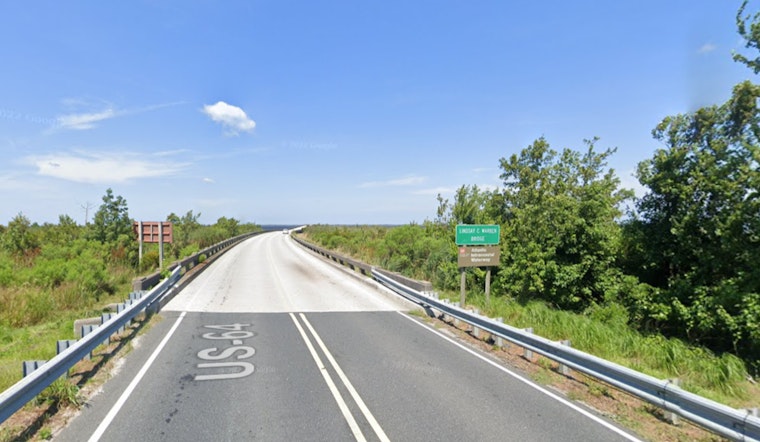
Construction of a vital piece of infrastructure began with significant momentum this week, as the first concrete pile of a massive $450 million project was driven into the Alligator River bed, setting in motion the replacement of the Lindsay C. Warren Bridge, a vital link to the Outer Banks. This marks the initiation of a project that will span several years, aiming to enhance the infrastructure and connectivity for the region's residents and visitors.
According to a press release by the North Carolina Department of Transportation, witnessed by local officials and community stakeholders, the pile is one of hundreds that will lay the foundation for a new, two-lane fixed-span bridge which will run just north of its predecessor; and though it heralds the beginning of a modern era for local transportation, it also serves as a poignant reminder of the obsolescence and vulnerability of our aging infrastructure, the swing-span drawbridge constructed back in 1960 which now succumbs to the relentless march of time and technology. The replacement is slated to welcome its first traffic flow in the fall of 2029.
The current drawbridge not only serves as the primary artery for reaching the Outer Banks from the west but also functions as an essential route for hurricane evacuation; despite being an indispensable part of the local transit network, the bridge's swing span, even with regular maintenance, is no stranger to mechanical failures that force lengthy detours, stretching close to 100 miles and disturbing the rhythm of local life and commerce.
Adding to the significance of the project, the completion of the new bridge aims to streamline river traffic with over 4,000 vessels navigate through the swing span annually the NCDOT endeavors to simplify this passage by introducing a design that accommodates the demands of both roadway and riverine navigation seamlessly into the surrounding ecosystem.





