

























































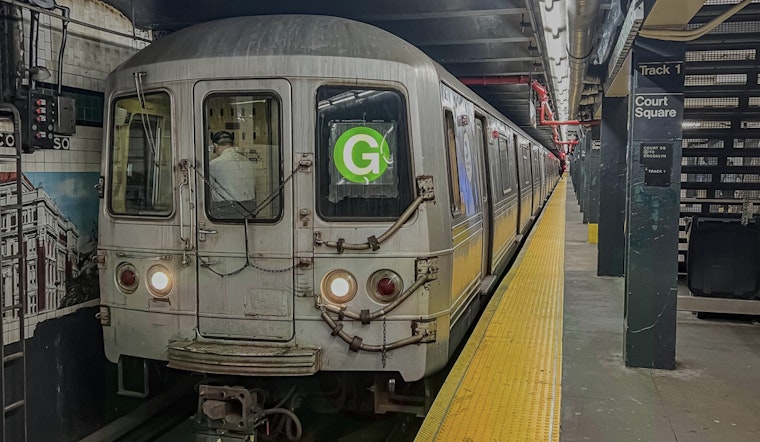
For those who depend on the G train for evening and weekend travel this summer, take note: the Metropolitan Transportation Authority (MTA) is introducing additional service interruptions to accommodate signal upgrades. From July 14 through Aug. 18, on select weeknights and weekends, the G line will be out of service between Court Square and Bedford-Nostrand Avenues. According to a press release by the MTA, quoted by Gothamist, these interruptions are due to the modernization of "The G train’s signal system dates back to the 1930s" to the more advanced Communications-based Train Control (CBTC).
The signal upgrades, while disrupting service, promise to enhance reliability for the 160,000 daily riders. Overnight closures are scheduled from 9:45 p.m. to 5 a.m. on specified dates, and weekend closures will extend from 9:45 p.m. Friday through to early Monday morning, reported AM New York. Affected riders can look forward to fare-free shuttle buses running every three to four minutes overnight, and every five to 10 minutes on weekends.
The $368 million CBTC project is not only replacing obsolete tech but is also part of broader modernization efforts that include station improvements and the debut of new open-gangway R211T trains. "During last summer’s shutdowns, the MTA deep-cleaned 10 stations and replaced tiles, lighting and columns," as had been mentioned by Gothamist, while also overseeing the introduction of cell service in tunnels north of Hoyt-Schermerhorn.
Despite the short-term inconvenience, the leap to CBTC is a crucial step in phasing out the nearly century-old signal system, a major cause of service disruptions and delays, the MTA explained. For more information on the upcoming G train service changes, the MTA directs travelers to their website, apps, or 511 hotline. This information comes in anticipation of a smoother and fully modernized journey along the distinct line by the time 2027 rolls around.



