

























































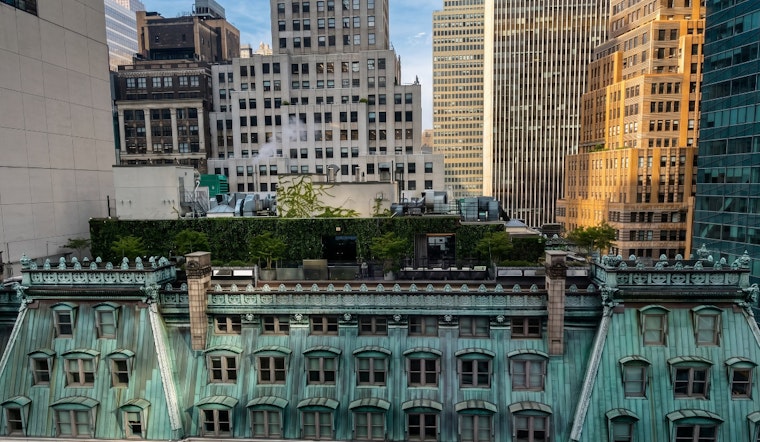
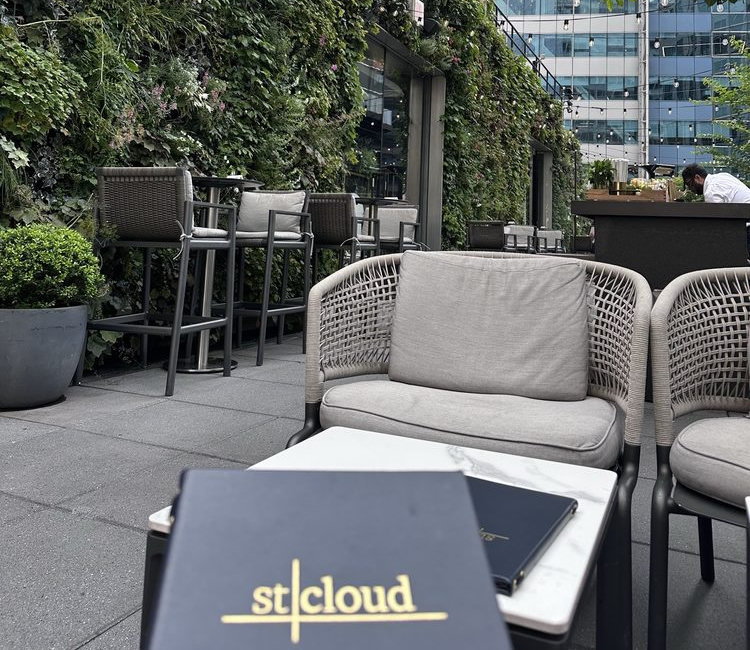
St. Cloud, the sky-high rooftop bar and lounge perched atop The Knickerbocker Hotel at the corner of 42nd Street and Broadway, was cited for seven health violations — including four critical ones — during a routine inspection on April 20, 2026 by the New York City Department of Health and Mental Hygiene. The inspection produced a score of 42 — well into C-grade territory under the city's grading system — at one of Times Square's most celebrated hotel dining properties, which carries the name and reputation of James Beard Award-winning chef Charlie Palmer.
What Inspectors Found
The April 20 inspection at 1466 Broadway cited seven violations across two tiers of severity. The four critical violations are the most consequential under the NYC grading system, as each carries a minimum of seven points toward a restaurant's score. First, inspectors cited both a cold holding temperature violation (violation code 02G) — cold TCS foods held above 41°F — and a hot holding temperature failure (02B), with hot TCS foods not maintained at or above the required 140°F. Dual temperature control failures at a single inspection are a significant red flag, as they suggest systemic breakdowns in food safety protocols rather than an isolated equipment issue.
The third critical violation, 04N, cited the presence of filth flies or food/refuse/sewage-associated flies — including house flies, blow flies, bottle flies, flesh flies, drain flies, Phorid flies, or fruit flies — in food and non-food areas of the establishment. The fourth and perhaps most notable critical citation was violation 03A, which covers food from an unapproved or unknown source, home-canned or home-prepared food, or reduced oxygen packaged (ROP) fish not frozen before processing. That last item — ROP fish not frozen prior to processing — is a specific and serious food safety requirement, as raw fish in vacuum packaging creates conditions where dangerous pathogens can proliferate without the safeguard of freezing to kill parasites.
The three non-critical violations round out the picture: 08A cited harborage conditions conducive to rodents, insects, or other pests — meaning the physical environment of the establishment had gaps, debris, or conditions that invite infestation, separate from any observed pests themselves; 10B cited anti-siphonage or backflow prevention failures, along with improper drainage or liquid waste disposal; and 10F cited non-food contact surfaces or equipment that were not kept clean, not properly sealed, or not raised or spaced to allow cleaning underneath and around units.
Under NYC's restaurant grading system, a score of 42 on an initial inspection does not result in an immediate grade being posted — the restaurant is not given an A, B, or C until a reinspection is conducted no fewer than seven days later. That reinspection score determines the grade displayed publicly. A score of 28 or more points at reinspection results in a C. St. Cloud will face that reinspection with four critical and three non-critical violations to address. If critical violations remain unresolved, the DOHMH retains the authority to close the establishment.
About St. Cloud and the Knickerbocker
St. Cloud is the rooftop venue atop The Knickerbocker Hotel, which itself is one of the most historically significant buildings in Times Square. As described by Wikipedia, the Knickerbocker was built by John Jacob Astor IV — who would later perish on the Titanic — and opened in 1906 as a Beaux-Arts landmark designed by Marvin & Davis. In its early decades it hosted Enrico Caruso, F. Scott Fitzgerald, and John D. Rockefeller, and the hotel's bar earned the nickname "the 42nd Street Country Club." Legend holds that the dry martini was invented there. The building closed during Prohibition and eventually became an office building before reopening as a luxury hotel in 2015 after a $240 million renovation, according to 6sqft.
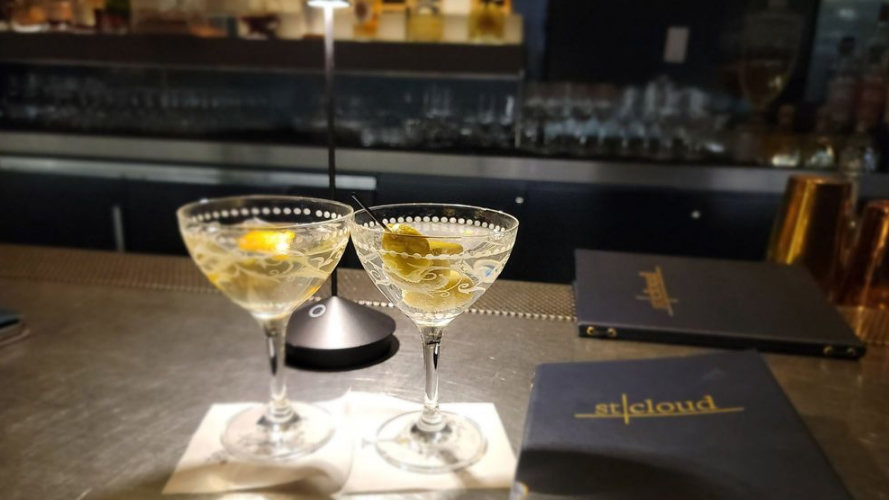
St. Cloud occupies the Knickerbocker's rooftop, offering what the property markets as "three corner Sky Pods overlooking Times Square" along with an indoor-outdoor cocktail and small plates experience. According to Charlie Palmer's website, it is named for the late-19th-century hotel that originally occupied the site. The rooftop has become one of the most prominent perches in Midtown for after-work gatherings and New Year's Eve events. Charlie Palmer's culinary operation also includes the fourth-floor Charlie Palmer Steak IV at the same property, as well as the temaki bar Akoya and the lobby café Jake's.
Charlie Palmer's Credentials
The inspection result is a notable stumble for an operation bearing one of the most decorated names in American fine dining. As documented by Wikipedia, Charlie Palmer was named Best Chef in America by the James Beard Foundation in 1997 and inducted into its "Who's Who of Food & Beverage in America" the following year. His flagship restaurant Aureole, which opened in Manhattan in 1988 and ran for 30 years as a brick-and-mortar, accumulated 13 Michelin stars and two James Beard awards during that run — making it one of the longest-sustained Michelin-recognized restaurants in New York history. Palmer has received more than 20 Michelin stars in total across his portfolio, and has been characterized as a "pioneer of progressive American cooking." He currently oversees more than 15 restaurants and three hotels through the Charlie Palmer Collective and Appellation Hotels, according to his official biography.
St. Cloud operates under a different set of expectations than a Michelin-starred fine dining room — it is a hotel rooftop bar, primarily a cocktail and small plates venue oriented around the view as much as the food. But the Knickerbocker brand is premium by any measure, and the combination of critical temperature violations, a fly presence, and an unapproved-source food citation in the same inspection will require prompt and thorough remediation before the city's reinspectors return.
What Comes Next
St. Cloud will receive an unannounced reinspection from the DOHMH no fewer than seven days after the April 20 inspection. That reinspection score will determine the letter grade the venue must post publicly. If the score drops to 13 or below, the venue earns an A. A score of 14–27 results in a B. If critical violations — particularly the food sourcing issue and temperature control failures — are not resolved, the venue risks a C grade or potential closure. Current inspection records can be viewed on the NYC Health Department restaurant lookup portal. Hoodline has reached out to the Charlie Palmer Collective and The Knickerbocker Hotel for comment and will update this story when responses are received.


