

























































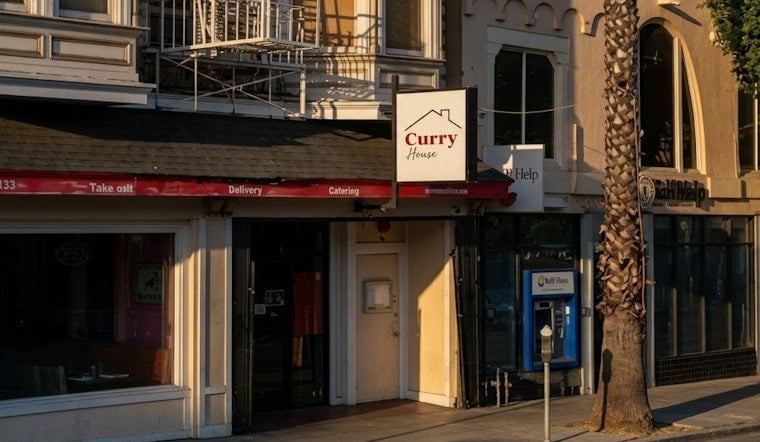
A San Francisco health inspector walked into Mission Curry House on Monday morning, opened the two ovens sitting under the cookline, and found live and dead cockroaches on the walls and surfaces inside. Ninety-five minutes later, the Nepali-Indian mainstay at 2434 Mission Street had a suspended health permit and a CLOSED placard on its door. And the ranges bolted to the top of those same ovens? They were in use at the time.
What the inspector found
The routine inspection began at 11 a.m. on July 13 and ended at 12:35 p.m., according to the report filed by Environmental Health Branch inspector Katie Dea of the San Francisco Department of Public Health. Along with the roaches in both ovens — described as greasy, dusty and used as storage — Dea documented a live cockroach in the trash room crawling into a gap in the wall above a storage shelf, which was sealed on the spot.
The pest problem wasn't the only thing that got flagged. Inspectors found a large, deep stock pot of cooked orange sauce sitting at 58°F, two deep containers of onion sauce at 48°F, and two more of tomato sauce at roughly 54°F — all in a walk-in cooler measuring under 41°F, all cooked the day before. Staff told the inspector the sauces had been in the unit since; the food was voluntarily condemned and destroyed on site, and the operator was cited under the state's rapid-cooling rules, which require potentially hazardous food to drop from 135°F to 70°F within two hours.
Rounding out the report: debris on and below the dishwasher, buildup in prep cooler gaskets, a cellphone and medication stashed on a shelf near clean plates, and a ceiling outside the kitchen's swing doors with bubbling paint and a steady stream of liquid dripping onto the floor between the wait station and the glassware storage. The operator called for repairs and for pest control during the inspection. The last professional pest service on file at the restaurant was in early June.
What it takes to reopen
Reopening isn't a matter of sweeping up. Before requesting a reinspection, the operator must hire a licensed pest control operator, treat both ovens and the trash room plus the entire premises, and email the pest report directly to the inspector — the same procedure that has governed every recent SF roach closure. The restaurant also has to follow the pest operator's re-entry instructions, sanitize all food-contact surfaces, set monitoring traps, seal remaining cracks and crevices, and stop the leak in that ceiling.
One detail worth flagging for anyone tracking the block: the report tells the operator to seal gaps noted on a Change of Ownership report issued the same day, and the permit's owner is listed as BBD LLC, with Nikesh Luitel as certified food safety manager. A closure landing on the same date as an ownership transaction is not a great opening week.
A very San Francisco pattern
Cockroach infestations have become the leading cause of health permit suspensions in the city, and the last several months have been ugly. Hoodline reported in April that roaches were found laying eggs in a dough mixer at New Delhi Restaurant, the city's oldest Indian eatery, which got worse on reinspection. Days earlier, a Chinatown institution was shuttered after an inspector counted 15 to 18 cockroaches along the kitchen ceiling conduit.
The Castro's beloved 24-hour diner Orphan Andy's got the same treatment on June 3 and reopened the next day, as Hoodline reported when the closure hit mid-sale for the retiring owners. In March alone, both Lers Ros Thai and The Willows drew roach-related closure orders and reopened within days, per WhatNow SF; Mexican spot El Tomate was closed in April for the same reason. Two more restaurants, including one on Valencia Street, went down in a single sweep in August 2025, KTVU reported.
The pattern in nearly all of them is the same: self-treatment with gel bait and store-bought spray, a gap in professional service, and an infestation that quietly establishes itself in warm, greasy equipment before an inspector opens the right door. At Mission Curry House, that door was an oven.
Legal implications
The suspension was issued under Sections 114405 and 114409 of the California Health and Safety Code and San Francisco Health Code §§ 440(j) and 440.1. Under those authorities, the facility must cease all food handling and remain closed until conditions are corrected and the permit is reinstated by an Environmental Health representative — and the closure placard can be removed only by a department inspector.
The operator has 15 calendar days to request a hearing to show why the suspension isn't warranted; failing to request one waives the right. And this is the part restaurants sometimes learn the hard way: an owner, manager or operator who keeps serving food in defiance of a closure notice can be charged with a misdemeanor carrying a fine of up to $1,000 and/or up to six months in jail per offense. The reinspection date is listed as TBD, pending a call to the inspector.
Mission Curry House has spent years as a reliable neighborhood option — momos, dosas, gluten-free naan, a 4.4-star average across hundreds of reviews on Yelp — and its odds of reopening quickly are decent, since most SF operators clear these orders in days. Whether the pest control report satisfies inspector Dea is now the only thing standing between the ovens and the dinner rush.
Hoodline SF reached out to Mission Curry House for comment. This story will be updated upon receipt of a response.



