

























































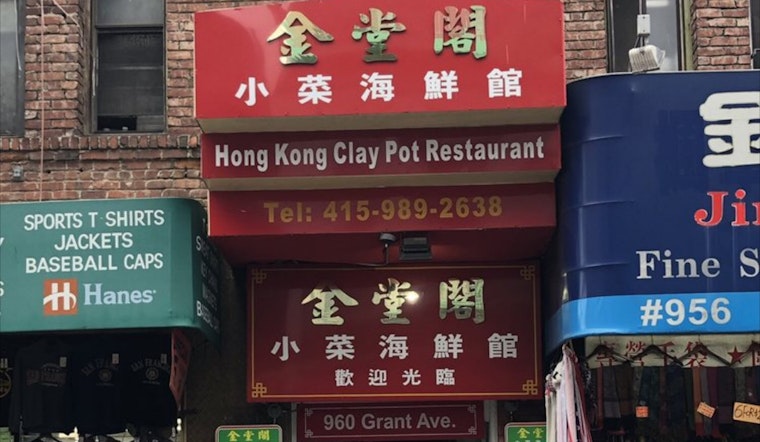
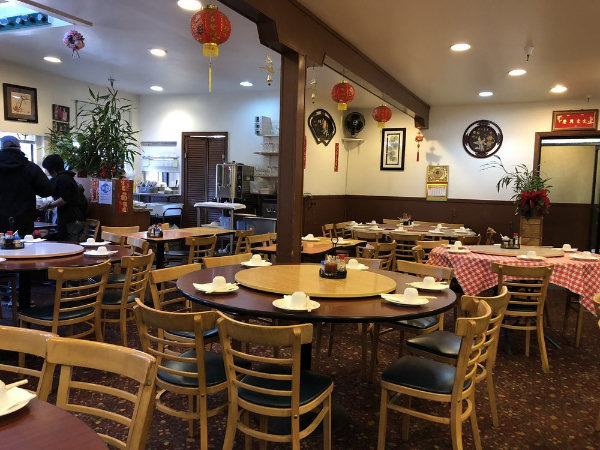
Hong Kong Clay Pot Restaurant has been a Chinatown fixture since 1998 — a second-floor walk-up on Grant Avenue that The Infatuation gave a 7.8 and described as "an oasis of well-priced, well-sized, and well-seasoned clay pot dishes," recommending you "show up with a group as big as a boy band." Regulars cite the seafood clay pot, the beef chow fun, and the spicy jellyfish with pineapple. The staff speaks Cantonese, Mandarin, and English. Family-owned, affordable, genuinely beloved. On April 7, 2026, inspector Michael Mooney from the San Francisco Department of Public Health walked in and found cockroaches along the kitchen ceiling conduit, Raid under the counter, what appeared to be rodent poison under the dish machine, and a ware washing machine that was producing no sanitizer. The permit was suspended and the closed placard went up.
What the Inspection Found
The cockroach finding is the most detailed in the report, which runs four pages. Approximately 15 to 18 cockroaches were observed along the ceiling conduit above the three-basin sink and prep tables on the Grant Avenue side of the kitchen. One dead cockroach was found on a shelf above the sink with dishes, along with a cockroach egg. Heavy evidence of cockroach droppings was documented along the conduit on the ceiling and where framing meets the wall above the sink. The inspector recommended advanced remediation methods including ULV fumigation, crack and crevice treatment with a flushing agent and vacuum, insect growth regulators, and dusting of voids — language that signals a well-established infestation rather than a recent incursion, per the SFDPH inspection database.
Then there's the self-treatment problem, which is the same pattern seen in other recent SF closures. Inspectors found cans of Raid — consumer-grade residential insect spray — stored under the counter. They also found what appeared to be a plate of crumbled rodent poison on the floor under the dish machine. Consumer pesticides cannot legally be used in food facilities; rodent poison placed directly on the floor near food equipment is a contamination hazard in its own right. The citation under violation 29 directed the operator to immediately remove both and use only licensed pest control.
Beyond the pest findings: the ware washing machine was producing no sanitizer — it can perform the wash and rinse steps, but the sanitizing step required clean dishes was not functioning. Staff would need to manually sanitize dishes in the three-basin sink until the machine is repaired. Live clams were found stored without required shellfish tags, which are necessary for tracing the source of shellstock. An employee was observed drinking from an open glass in the kitchen — an open container in a food prep area is a contamination risk. Bulk storage containers in the rear were not labeled. Latex gloves were in use in the kitchen, which the inspector flagged as an allergen hazard.
A Beloved Spot With a Compounding Situation
The Raid-and-rodent-poison combination found at Hong Kong Clay Pot is a specific indicator — the same pattern documented in other recent SFDPH closures — that the facility had already noticed the pest problem and attempted to manage it independently before inspectors arrived. As the SF Standard reported earlier this year, San Francisco's older building stock and dense commercial corridors create persistent pest pressure citywide. That context doesn't excuse the conditions found here, but it helps explain why do-it-yourself pest management is such a recurring theme: operators see the problem, reach for the hardware store solution, and the infestation continues regardless.
To reopen, Hong Kong Clay Pot must have professional pest control performed, document it, deep clean and sanitize all affected areas, get the ware washing machine serviced, and contact the district inspector. The facility's current status can be checked at the SFDPH inspection database. The restaurant can be reached at (415) 989-2638. Hoodline has reached out for comment.



