

























































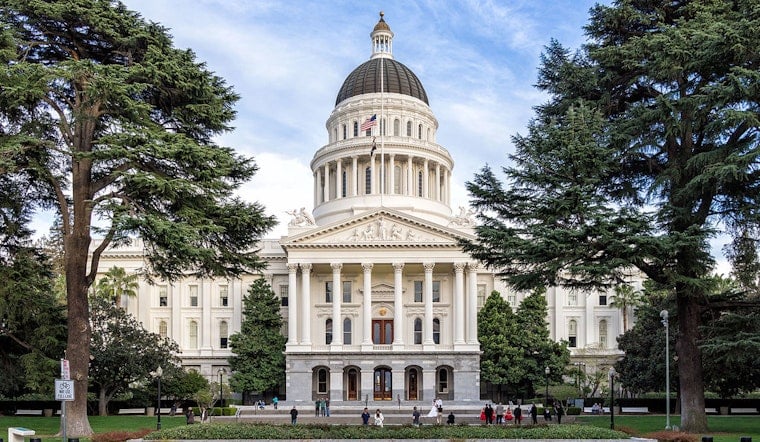
Two of the top Republicans in the California Assembly crossed the aisle last Thursday, helping Democrats move a bill that could let a string of cities and counties hike local sales taxes beyond the state's long-standing 2% cap on add-on rates. Minority Leader Heath Flora and GOP caucus chair Juan Alanis cast pivotal yes votes on SB 762, a move that stunned local Republican activists and taxpayer groups as the measure cleared the Assembly and headed back to the Senate for procedural sign-off.
The Assembly signed off on SB 762 in a 54-13 vote, just clearing the two-thirds threshold needed for tax-related measures. Flora and Alanis are both recorded in the aye column, providing the margin Democrats needed for passage. LegiScan shows the bill passing on third reading and being returned to the Senate, where members must concur in Assembly amendments before the measure can be sent to Gov. Gavin Newsom.
What SB 762 Would Do
SB 762 is essentially a menu of special permissions for specific local governments. It would allow the named jurisdictions to exceed the 2% transactions and use tax cap, but only if their voters sign off on a new local sales tax at the ballot box. The Assembly committee analysis lists the communities that would get this option, including Santa Barbara County, Palo Alto, Santa Cruz County, Hercules, and several other cities, and spells out the voter-approval and ordinance rules that apply in each case, according to the Assembly committee analysis.
The bill also carries an urgency clause, which would make it effective immediately if signed, and it is laced with expiration dates. If a jurisdiction fails to win voter approval for a tax measure by the specified deadlines, its exemption from the 2% cap would automatically disappear.
Local Impact and High-Tax Pockets
Supporters argue these tightly tailored carve-outs give cities and counties a way to plug budget holes as federal and state dollars dry up. Los Angeles County, for example, has already moved to put a half-cent sales tax hike before voters to offset cuts to Medi-Cal funding, as reported by the Los Angeles Times.
Critics counter that some communities are already flirting with sticker-shock territory on sales tax. Several California cities, including Lancaster and Palmdale, have combined state and local rates north of 11%, a level that would climb even higher if new local add-ons are approved, according to SalesTaxHandbook and other tax-rate trackers. That prospect has residents and businesses watching closely to see how local officials might use the new authority if SB 762 becomes law.
GOP Backlash at Home
Flora's role in pushing SB 762 forward is landing in the middle of an already tense relationship with some Republicans in his own backyard. The Stanislaus and San Joaquin County Republican central committees opted not to endorse him in the 2026 primary, instead backing a challenger. Local party leaders framed the snub as a response to complaints about Flora's visibility and engagement in the district, according to the Modesto Bee.
That simmering intra-party friction is now mixing with fresh anger over leadership siding with Democrats on a bill that greases the skids for higher local taxes. For grassroots conservatives who see any tax flexibility as a slippery slope, SB 762 is becoming another talking point in a broader fight over the direction of the state GOP.
Taxpayer Groups Weigh In
Fiscal watchdogs are not exactly thrilled either. They warn that one-off carve-outs for select jurisdictions create a confusing patchwork of tax rules that can frustrate businesses and voters alike. David Kline, vice president of communications for the California Taxpayers Association, told The Sacramento Bee that arguments about local affordability cut in more than one direction, and he cautioned that stacking new local levies on top of already high bills could have unintended consequences for both prices and economic activity.
If SB 762 is signed, organized opposition from taxpayer groups could become a major factor in local campaigns, shaping whether the higher-rate measures that counties and cities put on the ballot actually survive contact with voters.
What Happens Next
Because the Assembly amended SB 762, the Senate must now decide whether to concur before the bill can land on the governor's desk. The official record lays out that final path and the roll-call tally that powered the bill through the lower house.
If it is enacted, only the jurisdictions named in the measure would be allowed to ask voters for sales tax rates beyond the current 2% cap, and those permissions would vanish on the timelines spelled out in the bill if local officials never take a tax hike to the ballot, or if voters reject it. Regardless of how those local fights play out, the unexpected cross-party votes in Sacramento have already shifted the debate over who should pay for city and county services, and how far local leaders can go when they ask residents to chip in a little more at the register.





.jpg)