

























































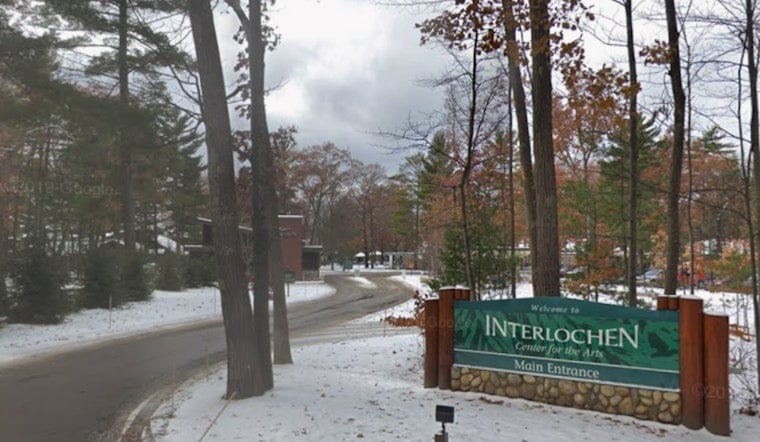
The newly released Department of Justice files on convicted sex offender Jeffrey Epstein have revealed a dark Michigan connection: a prestigious arts camp in Grand Traverse County served as the hunting ground where Epstein met his first known victim in 1994.
The victim, identified in court documents as Jane Doe, was just 13 years old when she encountered Epstein and his accomplice Ghislaine Maxwell at Interlochen Arts Camp. According to a Fox 2 Detroit report, this revelation came as part of more than 300,000 pages of previously classified documents released on December 19, 2025, following passage of the Epstein Files Transparency Act.
What makes this discovery particularly chilling is how Epstein positioned himself within the institution. Court documents show the financier wasn't just a visitor—he was a former camper himself in 1967 and later became a significant donor, contributing between $200,000 to $500,000 to construct what was originally named the "Jeffrey Epstein Scholarship Lodge" on campus, according to The Detroit News.
A Predator's Playbook
The lawsuit, filed in May 2020 and settled through the Epstein Victims' Compensation Program in January 2021, describes how Epstein and Maxwell approached the 13-year-old girl while she sat alone on a bench between classes. They presented themselves as arts patrons offering scholarships to talented young artists, as reported by WOODTV News 8. Court documents reveal Maxwell helped "supply" Epstein with young girls who were fatherless and came from struggling families—exactly the profile Jane Doe fit.
Flight logs confirm Epstein and Maxwell traveled to Traverse City on August 18, 1994, around the time they met the victim. According to letters released in the files, Interlochen even reserved the lodge specifically for Epstein during the final week of camp that year, from August 14 through August 20.
From Grooming to Abuse
What followed was a calculated grooming operation that spanned years. As reported by UpNorthLive News, Epstein contacted Jane Doe's mother after she returned to Florida, positioning himself as a mentor who helps young talent. He sent a driver to pick up both the girl and her mother, bringing them to his Palm Beach mansion.
The abuse escalated significantly over time. Court documents detail how when Jane Doe was 14, Epstein took her to Mar-a-Lago, where he introduced her to then-real estate developer Donald Trump. According to the lawsuit, Epstein elbowed Trump playfully and asked, referring to the teenage girl, "This is a good one, right?" The documents state Trump smiled and nodded in agreement, with Jane Doe later recalling she felt uncomfortable but was too young to understand why.
By the end of 1994, Epstein had begun sexually assaulting the girl. The lawsuit alleges he moved Jane Doe and her mother to New York, paid for her private school education, and subjected her to years of sexual abuse that included digital penetration, forced sexual acts, and the use of sex toys. The lawsuit describes Jane Doe as the "guinea pig" Epstein and Maxwell used to refine their criminal enterprise before expanding their network of victims.
Institutional Response and Historical Context
Interlochen Center for the Arts, located at 4000 J. Maddy Parkway in Interlochen, Michigan, has been quick to emphasize its commitment to student safety. In a statement provided to multiple news outlets, the institution noted it conducted internal reviews following Epstein's 2008 and 2019 arrests and found no record of complaints about him. All donor recognition in Epstein's name was removed from campus in 2008, and the "Epstein Lodge" was renamed "Green Lake Lodge" in July 2019.
However, the camp's history with sexual misconduct extends beyond Epstein. As reported by The Traverse Ticker in June 2025, Interlochen President Trey Devey announced that the institution's leadership had learned of sexual misconduct on campus involving former faculty members and students during the 1960s and 1970s. The school engaged a Massachusetts-based civil rights law firm to conduct an independent investigation into these historical incidents.
Grand Traverse County Prosecuting Attorney Noelle Moeggenberg told The Ticker her office would get involved if victims came forward with allegations that could be prosecuted, noting there's no statute of limitations for first-degree criminal sexual conduct in Michigan.
Political Fallout and Ongoing Releases
The December 19 document release has sparked significant political controversy. The Epstein Files Transparency Act, signed into law by President Trump on November 19, 2025, required the Department of Justice to release all unclassified records within 30 days. However, Deputy Attorney General Todd Blanche announced that "several hundred thousand" more documents would be released in coming weeks, a statement that drew immediate bipartisan criticism from the law's authors, Representatives Ro Khanna (D-Calif.) and Thomas Massie (R-Ky.).
Adding to the controversy, NBC News reported that at least 16 files, including photographs showing Trump, disappeared from the Justice Department's public webpage less than a day after being posted, with no explanation provided to the public. Deputy Attorney General Blanche later stated the removal was at the request of victim advocacy groups concerned about unredacted images of women.
Why This Matters Now
While the abuse described in these files occurred three decades ago, the revelations arrive at a critical moment for discussions about child safety at summer camps and educational institutions. The detailed documentation of how Epstein used philanthropic giving to gain access to vulnerable children offers a sobering case study in predatory behavior that institutions nationwide are working to prevent.
For Michigan families, particularly those in the Grand Traverse region where Interlochen remains a prominent institution, these files serve as a reminder that prestigious settings and wealthy donors don't automatically ensure safety. As Michigan Medicine noted in research from the University of Michigan Health C.S. Mott Children's Hospital, only half of parents feel very confident they can tell if a summer camp is safe and healthy for their child, and less than half rate general safety policies as essential to their camp decision.
The files also provide crucial context for understanding how Epstein built his criminal network—not through random chance, but through systematic targeting of vulnerable children in environments where he'd cultivated trust through financial contributions and social connections. Jane Doe's case, as described in the lawsuit, became the template for what would eventually become a nationwide sex trafficking operation.
For those seeking additional information about the released documents, the full list of files can be accessed through the Department of Justice's public release portal, though officials have warned that the details are disturbing and discretion is advised.





