

























































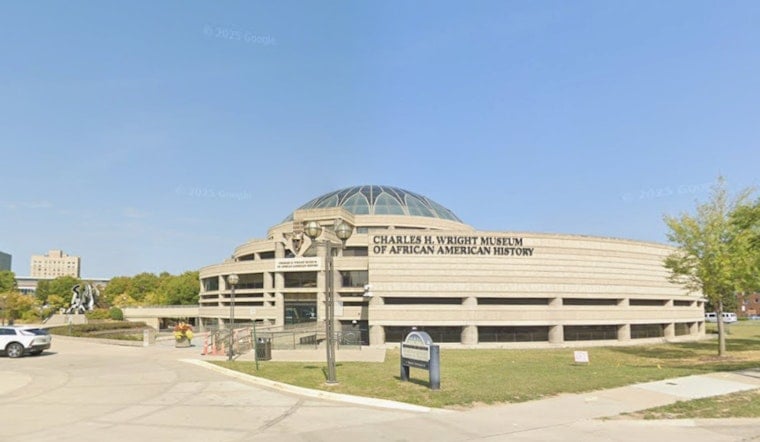
Detroit's Charles H. Wright Museum of African American History hosted the inaugural Black Bottom | Black Legacy Festival on Saturday and Sunday, drawing residents together to celebrate the city's past, present and future through storytelling panels, oral history workshops and musical performances centered on preserving local Black history.
The two-day event, organized by Black Bottom Archives, was introduced to viewers by CBS News Detroit. As reported by The Wright, the festival featured programming built around preserving local Black history and community memory.
The centerpiece of the weekend was the debut of seven new Black Detroit community archives, created by participants in the Preserving Black Legacy Fellowship, according to ClickOnDetroit. The fellowship trains an intergenerational cohort of local residents to collect and preserve neighborhood oral histories, and as part of the yearlong program, fellows build neighborhood-specific digital exhibits on Historypin using oral history interviews and historical records, per Black Bottom Archives. Each fellow focuses on a distinct Detroit neighborhood so that hyper-local stories get documented rather than folded into a single citywide narrative.
A Museum Fighting to Reopen Its Doors
One fellow, archivist Kamila Shakur, presented research on the Hush House museum in Detroit's Northwest Goldberg neighborhood, an activist-led historical home that has been closed since 2021 and is now the subject of efforts to reopen it, the station's report noted. Educator Charles Simmons grew up in the Wabash Avenue house before turning it into a community museum, according to the same account.
Black Bottom Archives itself began in 2015 as a Tumblr blog run by young Black Detroiters, later expanding into oral history projects and acquiring the interactive Black Bottom Street View exhibit in 2018, per Planet Detroit. The organization now manages digitized 1949–1950 municipal photos that let users view historic Black Bottom streets as they looked before demolition.
How Urban Renewal Erased a Neighborhood
Detroit's historic Black Bottom neighborhood was originally named by 18th-century French colonial settlers for the dark, fertile topsoil of the River Savoyard bed, not for its later African American demographic majority, according to the Detroit Historical Society. Racially restrictive housing covenants had forced Black residents to settle there, and by the 1950s, Black Bottom and adjacent Paradise Valley contained hundreds of Black-owned businesses, clubs and cultural landmarks, the historical society notes.
During the 1950s and 1960s, state and city “urban renewal” policies demolished Black Bottom and Paradise Valley to construct Lafayette Park and the I-375 freeway, destroying the commercial corridor along Hastings Street. Highway construction and urban renewal projects in that era displaced up to 100,000 Detroit residents, with Black Detroiters making up 70% to 75% of those displaced despite comprising only 16% of the city's overall population, according to Segregation by Design. Official government records from the period listed roughly 43,000 displaced residents, while independent researchers estimate the true total was significantly higher, the same source states.
The Freeway That Erased It Is Now Coming Down
The festival's timing lands alongside a major shift for the physical footprint of Black Bottom itself. In July, federal approval was granted for the Michigan Department of Transportation's $500-million-plus project to fill in the sunken I-375 freeway and replace it with a street-level boulevard, with construction slated to begin in summer 2027, according to a video shared by The Perna Team. MDOT had briefly paused the project in August 2025 over rising costs and local design objections before restructuring it into phases, the same account notes.
The planned removal of the freeway trench is expected to reclaim somewhere between 8 and 31 acres of land where Black Bottom once stood, a range that has fueled ongoing public debate over equitable development and historic reparations, per a video from New Detroit. Local activists and historians continue pushing for land use plans that honor descendants of Black Bottom residents, though how the reclaimed land will ultimately be zoned, and whether those descendants will receive tangible reparations or equity in the new development, remains unresolved. Hoodline has previously covered early utility prep work tied to the boulevard conversion, part of the broader effort to reimagine the corridor that MDOT and its partners first outlined in a conceptual plan last November.
Set against that backdrop, the archival work showcased at the Wright Museum reads as more than nostalgia. Fellows like Shakur are building a documented record of Black Bottom and neighborhoods like it just as the physical scars of the freeway that erased them begin to disappear, raising the stakes for who gets to shape what rises in their place.





