

























































Sterling Heights city leaders are exploring whether an existing freight rail corridor running through Sterling Heights and Warren could one day carry passengers again, linking Macomb County to downtown Detroit for the first time since commuter rail service in the region ended in 1983. The push comes with urgency attached: officials say sections of the line are already being dismantled, and the window to preserve the corridor may not stay open much longer.
A Freight Line With a Second Life in Mind
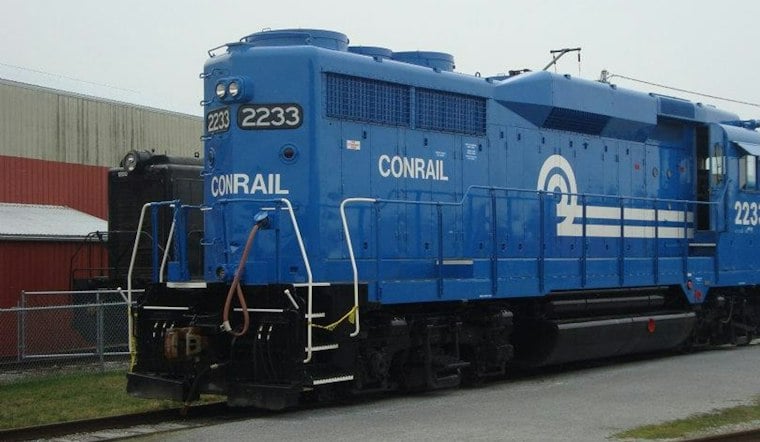
According to The Detroit News, the city of Sterling Heights is examining the potential for passenger rail service to Detroit along an existing Conrail freight corridor. City officials say the effort is focused on preserving that corridor through Sterling Heights and Warren while bringing regional partners together to secure funding for a feasibility study, the paper reports. Earlier this year, the Sterling Heights City Council directed city administration to prepare a white paper on promoting the idea, laying the groundwork for the discussions now underway.
Sterling Heights City Manager Mark Vanderpool, who joined Local 4 to discuss community reaction to the idea, has framed the moment as one of the last chances to save the freight line before more of it disappears. That concern is not hypothetical: as reported by ClickOnDetroit, Conrail has already begun removing parts of the rail north of 22 Mile Road. City officials have said they are not committing to a rail project today, even as they try to keep the remaining track intact.
Where Might the Trains Stop?
Exactly where a future line would stop remains unsettled, and reports differ on the details. The Detroit News account of the white paper presented Nov. 4 describes proposed stops at the Velocity Center on 18 Mile Road in Sterling Heights, in the General Motors Technical Center area in Warren, and in the 8 Mile Road area. MLive, however, describes potential station locations in Sterling Heights near M-59 and in Warren near the General Motors Technical Center. Neither account represents a finalized decision, and city officials have been clear that no station locations have been approved.
Per the Detroit Free Press, the idea under discussion is a future passenger rail line connecting Sterling Heights, Warren and other Macomb County communities to downtown Detroit, the airport and other rail lines. The paper notes the corridor being considered is a freight line that is currently, and primarily, tied to the auto industry — a reminder that any passenger service would have to coexist with existing industrial rail traffic rather than replace it.
What a Feasibility Study Would Actually Examine
City officials are now in discussions with Warren, Macomb County and the Regional Transit Authority of Southeast Michigan to gauge regional interest in funding a formal study, the Detroit News reports. That kind of study, per MLive, would examine passenger demand, track conditions, coordination with freight operations, station locations, safety, costs and funding options — the full menu of questions that would need answers before any train could run. MLive's report is direct about where things currently stand: no passenger rail project, station locations, funding commitments or construction schedule have been approved.
The scope of what is being discussed goes beyond a single city. ClickOnDetroit reports the proposed service could connect residents to downtown Detroit, Detroit Metro Airport and the broader passenger rail system, with the white paper suggesting trains might run roughly once per hour during the main part of the service day. City officials are also in the early stages of reaching out to regional governments, transit agencies and rail operators simply to find out who might be willing to help fund a feasibility study in the first place, the outlet notes.
A Timeline Still Taking Shape
On the question of timing, WXYZ-TV reports that the city hopes to secure funding for a formal feasibility study within the next six to 12 months — described as a goal officials are working toward rather than a locked-in deadline. Whether that funding materializes, and whether the remaining stretches of track survive long enough to matter, are open questions the city has not yet answered.
For a sense of what a fuller study can look like once it is complete, a Phase IV report from the Southeast Michigan Council of Governments on a proposed Lansing-to-Detroit commuter line offers a point of comparison from elsewhere in the state. That study, covering a 98.5-mile corridor with stops including East Lansing, Howell, Ann Arbor and Dearborn before reaching Detroit's New Center area, projected five daily round trips with travel times of about one hour and 45 minutes, ridership climbing from roughly 411,000 passengers in its first year to more than 741,000 by 2030, and a start-up year operating deficit of $6.4 million. It is a snapshot of how detailed — and how costly — a finished passenger rail plan can get, though it says nothing about what a Sterling Heights study would eventually find.
For now, the Macomb County proposal remains in its earliest stages: a white paper, a round of regional conversations, and a corridor that officials say is disappearing piece by piece while those conversations continue.





