
























































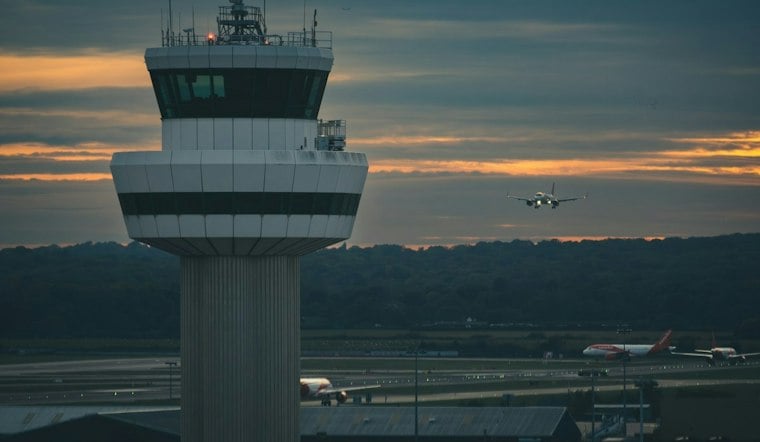
At 12:54 p.m. Pacific on Friday, the FAA ordered every departing flight in America to stay exactly where it was, a move the agency had pulled only twice before: on September 11, 2001, and one January morning in 2023. The official reason, as of this writing, is a "temporary telecommunications outage" somewhere in the web of radios and radar that keeps airliners from meeting each other at 35,000 feet. That's a plausible explanation and, let's be honest, barely an explanation at all. The stop also landed just days after the agency took a new AI air-traffic planning tool nationwide, and the Homeland Security secretary says he isn't ruling anything out, though so far nothing ties the two together and officials say they see no sign of an attack. So here's what's known, what isn't, and which of the theories ricocheting around your feed deserve a raised eyebrow versus a full eye-roll (details current as of mid-afternoon Pacific on Friday, Nov. 13).
What we actually know
The FAA's Air Traffic Control System Command Center posted the advisory at 12:54 p.m. Pacific, ordering all airports ground-stopped "due to extraordinary circumstances and for reasons of safety," according to the SF Standard. About 20 minutes later, Transportation Secretary Sean Duffy took to X to blame "a communication issue impacting all Air Route Traffic Control Centers," which, as ABC News explains, are the 22 facilities responsible for everything flying above 18,000 feet. He offered neither a cause nor an estimate of when flights would resume.
The scale is hard to overstate. Roughly 11,000 flights were still scheduled to depart when the order came down, per aviation analytics firm Cirium, as CNBC reported. Flightradar24 counted 4,042 airborne flights bound for U.S. airports at that moment, all of which were allowed to land, and by press time Afar was citing FlightAware figures of more than 10,000 delays and 1,948 cancellations, both still climbing.
So what actually broke? The aviation newsletter The Air Current reported, via Fast Company, that the command center told airlines radio frequencies and radar capabilities were affected and that it had no information on timing or cause. One pilot told Yahoo News the trouble started at Kansas City Center, which covers the middle of the country, and spread from there; that's a single account, not an FAA finding. ABC News noted both Chicago airports had already been grounded earlier in the afternoon for an equipment outage, and Newsweek counts this as only the third nationwide ground stop ever.
Meanwhile, in the Bay Area
Every Bay Area airport got caught in it. KQED confirmed that planes weren't departing from SFO, Oakland, San José Mineta or Sacramento, that SFO spokesperson Doug Yakel said inbound flights would keep landing, and that the Governor's Office said the state was "closely monitoring" the ground stop. Long ground stops can also leave crews at risk of reaching legal duty-hour limits.
There was a sliver of good news by midafternoon. The SF Standard reported that Pacific-bound flights at SFO were cleared to resume about two hours in, with a plane lifting off around 2:30 p.m. and stranded travelers cheering a second takeoff before 3. The same report said the FAA later extended the broader stop to 8:30 p.m. Pacific, and that San José's airport told travelers it didn't know when operations would return to normal.
SFO had already been having a day, with FAA wind-and-weather delays in place before any of this started, and SFist noticed the FAA's own status page was still blaming a 138-minute average delay on wind, with no mention of the national shutdown. A nationwide outage on top of the weather delays feels like piling on.
The official line, and what it doesn't cover
The administration's message has been consistent, if thin. Homeland Security Secretary Markwayne Mullin told reporters there was "no indication as of yet that this was a nefarious attack against us," per The Hill, though he also said officials aren't "ruling out anything at this point," as GeekWire quoted him. Multiple officials from multiple agencies told NBC News they hadn't seen the kind of activity normally associated with a cyberattack, while cautioning it's early. Bloomberg, as relayed by MS NOW, reported the FBI doesn't believe a cyberattack or criminality was involved.
Here's the awkward part. An airline source told CNN that controllers were on a crisis call with still no clear answer on the cause, and a congressional official told Scripps News that neither the White House nor the Pentagon knew what had happened. The cause remained unclear even as officials said they had seen no signs of a cyberattack.
For what it's worth, Mullin said President Trump had been briefed, according to CNN.
The AI timing, minus the spin
Here's the sequence, as best it can be pieced together. The FAA began using SMART, short for Strategic Management of Airspace, Routes and Trajectories, in a "limited mode" around Washington in September, per Bloomberg via AviationPros, then expanded it to all 22 centers, according to Airways, which cites a November 10 FAA statement. The SF Standard describes the expansion as coming a day before the outage, so the exact date is murky, but every account puts it ahead of Friday.
SMART is an AI air-traffic planning tool, a different layer from the radios and radar reportedly affected Friday.
Mullin said officials weren't "ruling out anything at this point," while the tool's maker said the stop "is not based on or a result of the SMART system," per NBC News. SMART had gone nationwide before Friday's stop, but whether the two are connected remains unclear.
Nature abhors a vacuum, and the internet abhors an unexplained outage. As of this writing, we couldn't find any named public figure putting a specific accusation of sabotage or cover-up on the record; what we found instead was a lot of "just asking questions," which is how these things usually start. Everything in this section is unverified, and we've labeled it accordingly.
UNVERIFIED THEORY #1: A foreign hack (Iran edition)
The claim: Iran, or another adversary, took down air traffic control. Where it comes from: the U.S. and Israel went to war with Iran on February 28, and in April the FBI, CISA and NSA warned that Iran-affiliated hackers were disrupting American critical infrastructure, TechCrunch reported. Colin Clarke of the Soufan Group told Yahoo News he'd fielded several texts asking "This is the Iranians, right?" while saying he'd seen no evidence cyberterrorism was behind the stop.
The reality check: officials say there's no indication of an attack, and Google threat analyst John Hultquist observed back in March that Iranian hackers often "fabricate and exaggerate their effects," per Defense One. And in 2023, the last nationwide stop also set off cyberattack fears before the FAA concluded contract workers had accidentally deleted files, as NPR reported. The dull explanation has a strong track record here, though "strong" is not the same as "always."
UNVERIFIED THEORY #2: The new AI tool did it
The claim: the FAA's new AI system broke the airspace. Where it comes from: the timing laid out above, plus Mullin's refusal to rule it out, which GeekWire also reported.
The reality check: Air Space Intelligence said the stop "is not based on or a result of the SMART system," in a statement NBC News quoted, and the FAA has said SMART makes recommendations facilities can accept or decline and can't take control of an aircraft, per Airways. On paper, a scheduling advisor shouldn't be able to knock out radios and radar, which are different layers of the system, though "on paper" has not been the FAA's strongest argument this year. Of course, a company denying fault is also what companies do, which is why the investigation matters.
UNVERIFIED THEORY #3: Microsoft, the Weather Service and the FAA are one story
The claim: the FAA stoppage, Thursday's Microsoft 365 outage and a Friday-afternoon National Weather Service outage are one coordinated event. Where it comes from: the NWS said it was dealing with nationwide internet and communications problems, Reuters reported, and WND put "Coincidence?" in its headline over a roundup of social posts while acknowledging there was no confirmed link. Polymarket and Mario Nawfal flagged the weather outage alongside the ground stop, and Gunther Eagleman's post is a representative sample:
[embedded]
🚨 NOW: The National Weather Service is reportedly confirming a NATIONWIDE RADAR OUTAGE. This comes less than an hour after the FAA grounded every departing flight in America over a communication issue at every Air Route Traffic Control Center. That means TWO NATIONWIDE SYSTEMS went down on the same afternoon. Nobody has said yet whether the two are connected, and Americans deserve a straight answer fast. Washington needs to tell us exactly what is going on.
— Gunther Eagleman™ (@GuntherEagleman) November 13, 2026
To be fair to the poster, the post doesn't claim a hack; it asks for answers, which is a reasonable thing to want. It does lean on the words "radar outage," which is slightly misleading: per News9, the NWS problem involved its national radar website and other online products, and local offices kept issuing warnings and forecasts, as KESQ noted.
The reality check: three senior officials told NBC News there's nothing to indicate a connection to the Microsoft outage, and Mullin dismissed the idea with "Those are separate issues," per Ticker News. IVN reports Microsoft attributed its outage to a network capacity upgrade followed by a network change, with no sign of malicious activity. What no one we found has addressed directly is the Weather Service overlap, and the SF Standard noted officials haven't confirmed whether those two outages are related, so that one is an open question rather than a conspiracy.
The "don't trust the government" case, steelmanned
The strongest version of the skeptic's argument goes like this: early official reads are sometimes wrong, and "no evidence of an attack" is only as good as the FAA's ability to see one. On that second point, the Government Accountability Office reported September 21 that the FAA hadn't completed formal risk assessments for seven of eight spectrum-dependent systems it reviewed and lacked comprehensive real-time detection of jamming and spoofing, so some incidents can only be investigated after someone reports them, per AvWeb. The agency concurred with all nine of the watchdog's recommendations, according to the GAO.
To be clear, that report describes vulnerabilities, not an incident, and no one has tied it to Friday's stop. But it's the best evidence anywhere in this story that "we found nothing" and "nothing happened" are different statements. It cuts both ways, though: in each of the recent incidents we found, the dull explanation, a deleted file or a blown circuit, beat the dramatic one.
This was not a bolt from the blue
Air traffic control wobbles have been the story of the past 18 months. In spring 2025, the Philadelphia facility that handles Newark's airspace lost radar for 90 seconds and radios for 30 on April 28, with several more outages in the following weeks, according to UPI. Newark's approach control had been moved to Philadelphia in July 2024 to address chronic understaffing, per AeroCorner.
This year has been no better. On August 6, a dual equipment failure at the Minneapolis center knocked out radar and voice communications for roughly two hours and triggered ground stops across multiple states, according to AeroCorner. On September 21, a blown circuit in Philadelphia led to more than 1,000 canceled flights nationwide after FAA Administrator Bryan Bedford said officials discovered the backup line had already been cut, as ABC7 reported, with PhillyVoice reporting the FAA blamed an Amtrak crew for the damage. So much for redundancy.
Which brings us to the money and the politics. Congress has approved $12.5 billion for the air traffic control overhaul, and the figure cited for what's still needed has ranged from about $20 billion in September reporting from AeroCorner to $30 billion in remarks from Duffy, per Scripps News. Sen. Tammy Duckworth, the top Democrat on the aviation subcommittee, said "The safety of our skies is built on redundancies" and promised to demand answers, according to CNN, while the Senate Commerce Committee's Republican staff said the stoppage underscores the need to modernize the centers, per Yahoo News.
What you're owed (and what you aren't)
Quick note first: this is general information, not legal advice. Under DOT's automatic refund rule, a passenger whose flight is canceled or significantly changed is entitled to a refund if they don't accept the alternative flight or travel credit the airline offers, according to KOMO. "Significant" means a change of more than three hours domestically or six internationally, as Good Morning America explains, and the money is supposed to arrive without you asking, within seven days for a credit card and 20 days for other payment methods, per CNN via WHDH. The rule doesn't turn on whose fault the cancellation was, and there's no separate cash payout for the inconvenience itself, the way European passengers get, according to DeepArrival.
Meals and hotels are murkier. Most major airlines have committed to give passengers meals after a long wait and hotel rooms for overnight disruptions, KOMO reports, but those promises live in each carrier's own customer-service plan and, as we understand it, generally apply when the airline is at fault. A nationwide FAA-ordered stop is about as far from "the airline's fault" as it gets, so check your carrier's plan before assuming a hotel voucher is coming; that's our read, not a ruling.
Then there's the tarmac. DOT rules bar U.S. airlines from letting domestic flights sit on the tarmac more than three hours without offering passengers a chance to deplane (four hours for international), and require food and water after two hours, with exceptions for safety, security or air traffic control reasons, according to DOT. Whether a nationwide ground stop falls under the air-traffic-control exception is a question we expect lawyers will enjoy. For now, if you're stuck on a plane for hours, ask the crew what the plan is.
What to watch
The stop was extended to 8:30 p.m. Pacific per the SF Standard's reporting, though Latin Times reported it remained in effect with no lift timeline as of 5:45 p.m. Eastern, and Live and Let's Fly predicts Saturday will be messy even after departures resume. Beyond the logistics, keep an eye out for a named cause from the FAA or DOT, Duckworth's promised demand for answers, and whether anyone ever addresses the Weather Service overlap.
Until then, check your airline's app, resist the urge to "just head to the airport," and be a little skeptical of anyone on X who sounds certain about anything at 3 p.m. on a Friday.




