

























































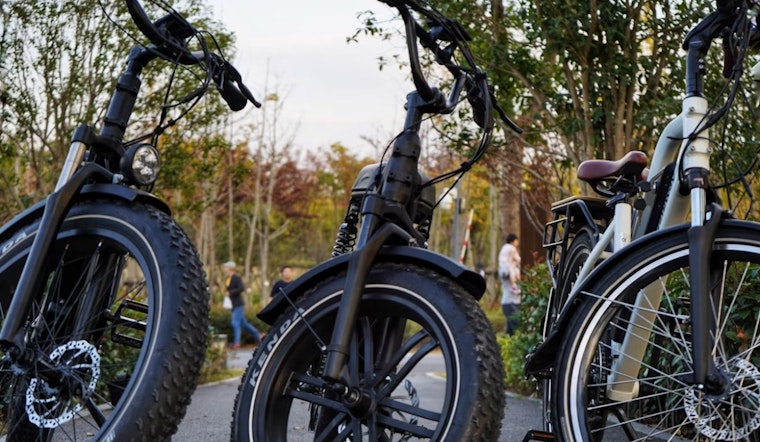
Berkley officials voted unanimously last month to move forward with an ordinance banning electric bikes, e-scooters and electric skateboards from every sidewalk and park in the city, while also barring traditional bicycles from downtown sidewalks. The vote, taken July 20, marks the city's first formal step toward reining in devices that have multiplied on local streets and walkways in recent years.
The measure passed its first reading unanimously, according to FOX 2 Detroit, which reported that Berkley is now the latest Metro Detroit community to grapple with the surge in e-bike popularity. City officials drafted the rules in direct response to a jump in e-bike and e-scooter use across the community, according to C&G Newspapers. Berkley City Manager Crystal VanVleck said the ordinance is meant to promote safe coexistence in the public right-of-way by pushing e-bikes and other motorized devices off sidewalks and onto roadways where state law allows them.
A Broad Enforcement Clause Draws Pushback
Not every council member was fully on board with how the ordinance is written. During the same meeting, Berkley Mayor Pro Tem Ross Gavin raised concerns that draft language granting the public safety director broad authority to erect prohibition signs across public streets, sidewalks and parking areas went too far. Gavin noted the wording could theoretically let traffic officers ban riding across nearly any public space in the city, a concern that will likely resurface before the ordinance's required second reading.
The council scheduled that second reading before the ordinance can take final effect, leaving room for the language to be narrowed. Under Michigan Compiled Laws Section 257.13e, enacted in 2017, e-bikes are legally defined as vehicles with operable pedals, a seat and a motor capped at 750 watts, split into three speed and assistance classes: Class 1 and 2 models assist up to 20 mph, while Class 3 models assist up to 28 mph, per the League of Michigan Bicyclists.
Why Cities, Not the State, Are Writing the Rules
Michigan does not impose a blanket statewide ban on riding e-bikes on sidewalks. Instead, state law hands local municipalities the authority to restrict or prohibit e-bike operation on sidewalks, parks and commercial zones, according to Velotric. That patchwork approach is exactly why Berkley, like its neighbors, is writing its own local ordinance rather than relying on a statewide standard.
Other Metro Detroit suburbs have already gone further. In June, the Dearborn Heights City Council unanimously voted to ban all classes of e-bikes from city-owned property, parks, playgrounds and municipal grounds while adding a $200 police registration fee for e-bike owners, citing a surge in pediatric crash injuries and reckless riding in public parks, according to CBS News. Birmingham police, meanwhile, announced in April they would strictly enforce against unpedaled “electric motorcycles” on sidewalks, warning parents that letting unlicensed minors ride them violates state law and can carry misdemeanor charges, since Michigan classifies pedal-less electric dirt bikes as motor vehicles requiring a driver's license and Secretary of State registration.
Speed Caps Versus Outright Bans
Not every community has reached for a full prohibition. South Lyon adopted regulations this year barring e-bikes from downtown sidewalks while capping speeds on its local rail trail at 15 mph, a lighter-touch approach documented by attorney Jon Abrahams that shows local governments across Oakland and Wayne counties are experimenting with different ways to balance rider access against pedestrian safety.
State lawmakers are weighing their own fix. Michigan House Bill 6166, introduced July 3, would require riders under 18 to hold a special restricted driver license starting at age 15 to operate Class 2 or Class 3 e-bikes on public roadways. The bill remains pending in the House Transportation and Infrastructure Committee, leaving Berkley and other cities to keep setting their own rules in the meantime.
A Regional Safety Reckoning
The push for local restrictions comes as statewide bicycle-involved crashes climbed 20 percent year-over-year to 1,773 incidents in 2024, resulting in 29 bicyclist fatalities, according to Michigan State Police crash data previously reported by Hoodline. Wayne County records the highest per-capita bicycle crash and injury rate among the seven counties that make up Metro Detroit.
That backdrop has shaped recent coverage of local e-bike incidents, including a Rochester Hills crash that critically injured a 12-year-old on an unregistered e-motorcycle and a Redford collision that left a 13-year-old boy with a brain bleed and injured his sister. Both cases fed into the broader debate now playing out in Berkley, where officials must still hold a second reading before the sidewalk and park ban becomes law — and before council members like Gavin get another chance to narrow who exactly gets to decide where riders can go.



