

























































Italian prosecutors have opened what may become the first criminal investigation into one of the Bosnian War's most disturbing allegations—that wealthy foreigners paid tens of thousands of dollars for "weekend safaris" to shoot civilians during the siege of Sarajevo. Among the witnesses whose testimony laid the groundwork for this investigation is John Jordan, a former New York firefighter and Marine scout sniper who volunteered in the besieged city and told international war crimes tribunals about encountering what he called "tourist snipers."
According to BBC, Milan prosecutor Alessandro Gobbis launched the probe following a complaint filed by Italian journalist Ezio Gavazzeni, who compiled 17 pages of testimonies and intelligence reports. The investigation focuses on charges of murder aggravated by cruelty and abject motives, examining claims that wealthy Italians—along with foreigners from several other countries—paid Bosnian Serb forces to shoot at civilians from hillside positions overlooking the besieged capital.
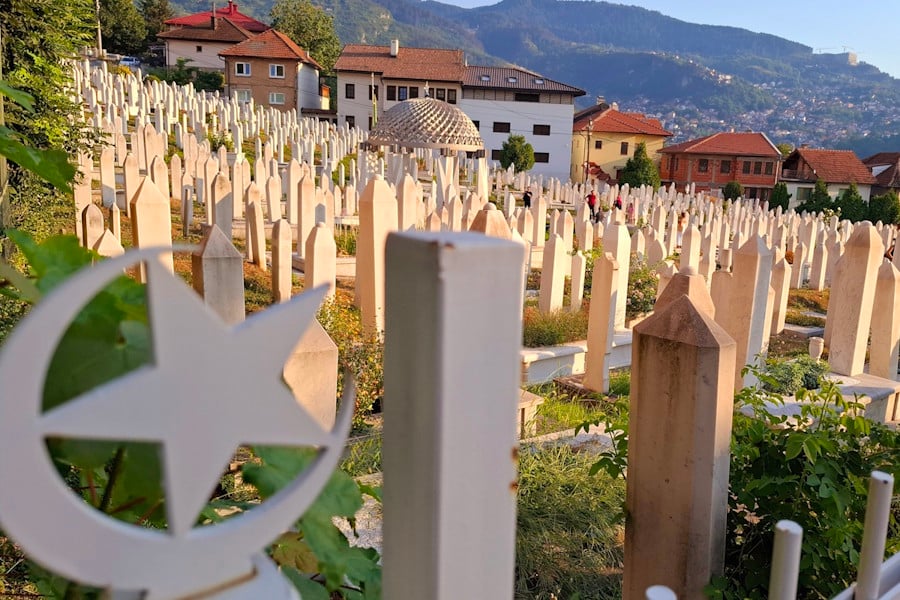
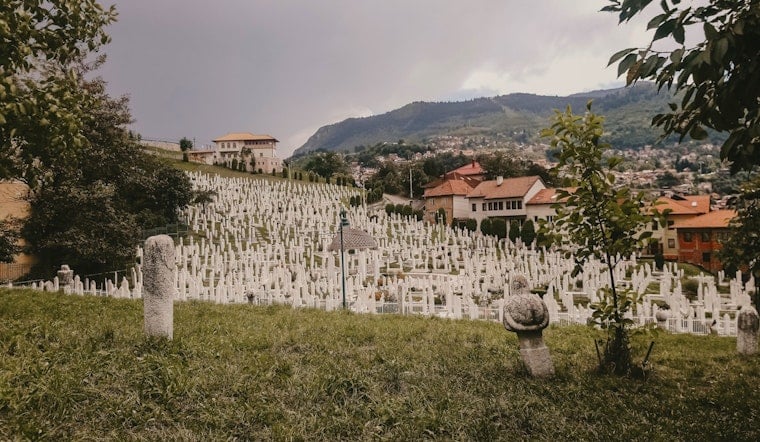
Alifakovac Cemetery, Sarajevo - Source: Suzanne de Veth / Getty Images
The New York Connection
Jordan, who originally hails from New York and served five years in the U.S. Marine Corps as a scout sniper, arrived in Sarajevo in November 1992 after watching CNN footage by Christiane Amanpour showing firefighters being deliberately targeted. He founded Global Operation Fire Rescue Services (GOFRS) with his own funds and remained in the city until October 1995, responding to between 250 and 300 fires during the siege.
Tourist Snipers in the Hills
During multiple testimonies at The Hague war crimes tribunal—including in the trials of Bosnian Serb commanders Dragomir Milošević in 2007 and Ratko Mladić in 2012—Jordan provided chilling details about foreign shooters he observed operating in and around Sarajevo. His testimony about these "tourist shooters" has now become central to the Italian investigation.
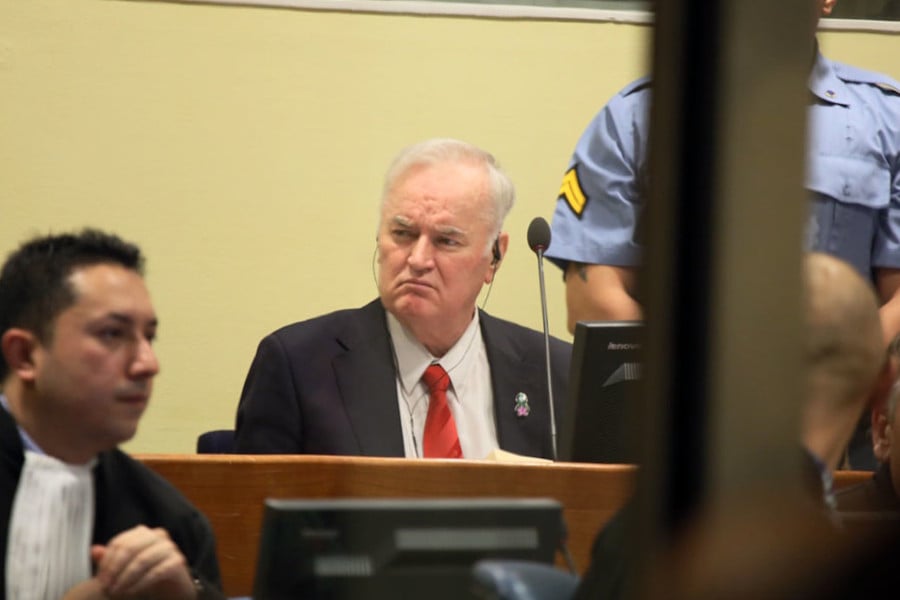
Ratko Mladić - Source: United Nations
"On more than one occasion, I witnessed people who didn't seem like locals to me because of their clothing, the weapons they carried, the way they were being handled, managed, and even guided by locals," Jordan testified before the tribunal. "I saw this in Sarajevo on a number of occasions."
Jordan described seeing these individuals on "a couple of occasions" while visiting Serbian firefighters in Grbavica, and from "various over-watch positions" he would take up to maintain surveillance of his firefighters. He explained that the foreigners stood out immediately: "It was clearly obvious that the person being led by men who were familiar with the ground was completely unfamiliar with the ground, and his manner of dress and the weapons they carried led me to believe they were tourist shooters."
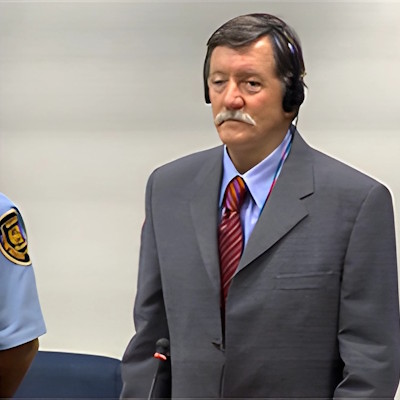
Dragomir Milošević - Source: United Nations: International Criminal Tribunal for the former Yugoslavia
The weapons were particularly telling. "When a boy shows up with a weapon that seems more suited to wild boar hunting in the Black Forest than to urban combat in the Balkans," Jordan told the tribunal, "when you see him handle it and you realize he's a novice at moving around rubble, you know, if it walks like a duck, talks like a duck, it's a duck."
A Term From Another War
Jordan testified that he was already familiar with the expression "tourist shooters" from his time in Beirut during the Lebanese civil war, where he said "we saw the same thing happening around the green line"—the sniper-filled no man's land that separated Beirut during the 1975-90 conflict. He also used the term "burgermeisters," which he explained was slang referring to the fact that "Croatia, being allied, friendly, i.e., Germany, that's where the tourists came from on that side."
While Jordan never directly witnessed these individuals taking shots at civilians, he saw them being "handled and moved around known sniper positions" by local forces who clearly knew the terrain. Some of his personnel reported seeing similar individuals in the Mostar area in southern Bosnia.
Deliberate Targeting Patterns
Jordan's testimony revealed disturbing patterns in how civilians were targeted during the siege. In his 2007 testimony, he described systematic targeting practices that went beyond random violence. "We very often noticed that it was the youngest" family member who was shot, Jordan told the tribunal. He explained the military logic behind such choices: "You kill a man, it's over. You wound a man, four have to carry him out. When you're targeting civilians like this, particularly families who may or may not be Muslim, shooting the child has the effect of literally disemboweling the whole family."
Jordan described another pattern he observed: "In a crowd of girls, it seems that the most attractive would be shot." When asked if he could remember specific examples, he responded: "Yeah, on more than one occasion I remember that kind of thing. I don't know how to describe two years of seeing these things over and over again."
The November 1994 Incident
One of the incidents that became part of the Mladić war crimes indictment occurred on November 18, 1994, when Jordan's team was positioned near the Sarajevo National Museum. A seven-year-old boy named Nermin Divović had just approached the GOFRS truck asking for candy—something children often did—when he and his mother were hit by a single bullet. The bullet passed through the mother's stomach and struck the boy in the head, killing him instantly.
Jordan's deputy chief, Mark Anderson, called him immediately after the incident. "It was a very active sniping day," Jordan later testified. His team had positioned themselves at that location specifically because people were being shot in that area throughout the day. While Jordan himself was not at the scene, several of his team members—including Mark Anderson, Trevor Gibson from Scotland, Todd Bayly from Canada, and Josh Wooding from Kansas—witnessed the shooting and provided immediate assistance.
During cross-examination in the Mladić trial, defense attorney Dragan Ivetic suggested that the sniper might have been aiming at armed GOFRS personnel and accidentally hit the civilians. Jordan firmly rejected this possibility: "I can say with 100 per cent certainty that whoever shot the child could not see us at all because we would always station our vehicle under cover in front of the museum to where we were masked from any gun-fire and we would only break cover to assist casualties. So nobody took a shot at the kid—nobody took a shot at us and hit the kid. Not a possibility."
A Systematic Network
The investigation centers on allegations of an organized operation in which foreigners would gather in Trieste, Italy, then fly to Belgrade via charter airline Aviogenex before being transported to Bosnian Serb positions around Sarajevo. According to Brussels Signal, the complaint includes disturbing details of a "price list" for victims, with children commanding the highest fees, followed by uniformed men, women, and elderly people who could allegedly be killed "for free."
The allegations are based in part on a Bosnian military intelligence report from 1993. A former Bosnian intelligence officer told Gavazzeni that his service shared information with Italy's military intelligence (then known as SISMI, now AISE) about tourist groups of snipers departing from Trieste, as reported by Wanted in Rome. The Italian response allegedly came months later: "We've put a stop to it and there won't be any more safaris."
Armed Fire-Fighters in a War Zone
One of the most controversial aspects of Jordan's operation in Sarajevo was his decision to arm members of his firefighting team—a decision that emerged from grim mathematics. When GOFRS arrived, casualties on the Sarajevo fire department "from gun-fire and shelling exceeded 20 per cent of the department, one man in five," Jordan testified. After his team began providing armed protection for firefighters responding to blazes, "they lost no one after we started protecting them to gun-fire at fires."
Jordan himself carried military-grade weapons, including an M14 battle rifle and a Barrett 50-caliber sniper rifle. He testified that he fired "hundreds of shots" on "scores of occasions" over his two and a half years in Sarajevo—but always, he insisted, defensively. "We only dealt with active threats," he told the tribunal. "Going after the snipers specifically would have made us the focus of violence." Instead, his strategy was to "drive them off" rather than engage in what he called "punitive" or "preemptive" actions.
The approach was unconventional and raised questions during cross-examination about whether armed firefighters made themselves legitimate military targets. Jordan's response was pragmatic: "The BSA firemen were armed to the teeth," he noted, referring to Bosnian Serb firefighters. "While firemen traditionally do not carry weapons, fire marshals in many countries do, and they address criminality involved with arson."
Jordan was himself shot in the chest in November 1994 while fighting a fire near Grbavica, at a location where there was "nothing between me and where the shot came from." The bullet "drove me straight into the ground," he testified. He was not carrying a weapon at the time.
Historical Context and Scale
The siege of Sarajevo lasted from 1992 to 1996—44 months that made it the longest siege of a capital city in modern warfare history. More than 11,000 people died, many of them civilians shot by snipers or killed by shelling, according to N1. The city's main boulevard became infamously known as "Sniper Alley," where residents risked their lives daily to obtain food and water.
Jordan testified about seeing civilians shot "on a daily basis" while simply going about their lives. His team assisted at least 200 civilians injured as a result of shelling and sniping, "the vast majority" of whom were caught up in attacks from Bosnian Serb positions. GOFRS worked alongside both Muslim and Serb firefighters, though Jordan noted that "the vast majority" of fires they responded to were in areas controlled by the Bosnian government.
Jordan described encountering women and children inside burning residential buildings "the majority of the time" when responding to fires. Out of the 250 to 300 fires he attended during the war, only about half a dozen involved strictly military targets. "We would leave" when they discovered a building was purely military, he testified.
Documentary Catalyst
The investigation gained momentum following the 2022 release of "Sarajevo Safari," a documentary by Slovenian director Miran Zupanič that features testimony from a former intelligence operative. According to Balkan Insight, the documentary caused sharply divided reactions, with Bosnian Serb war veterans dismissing it as fabrication while survivors and prosecutors took it seriously enough to launch formal investigations.
Gavazzeni told media outlets that he expects at least 10 of an estimated 100 "war tourists" to be tracked down from evidence handed over to prosecutors. One person of interest is reportedly a Milan businessman who owns a private cosmetic surgery clinic. "We're talking about wealthy people, with a reputation, entrepreneurs, who during the siege of Sarajevo paid to be able to kill defenseless civilians," Gavazzeni said.
Intelligence Reports and Cover-Ups
The allegations are based in part on a Bosnian military intelligence report from 1993. A former Bosnian intelligence officer told Gavazzeni that his service shared information with Italy's military intelligence (then known as SISMI, now AISE) about tourist groups of snipers departing from Trieste, as reported by Wanted in Rome. The Italian response allegedly came months later: "We've put a stop to it and there won't be any more safaris." Within two to three months, according to the officer, the trips had stopped.
Jordan's testimony corroborates aspects of these intelligence reports. While he never saw tourist shooters actually fire their weapons, his observations of foreigners being guided to known sniper positions by local Serb forces align with the systematic nature of the operation described in the Italian complaint.
The Reality of "Snipers" in Sarajevo
In his testimony, Jordan made a crucial distinction that complicates the narrative around the siege. "The expression 'sniper' in Sarajevo was used by just about anyone to refer to when anyone was shot when that was really not the case," he told the tribunal. Many shooters, he explained, were what he called "marksmen" or simply "gunmen" rather than trained military snipers.
"Many of the people who were shot walking around were shot by men who fired a burst out of a window from a thousand yards away," Jordan testified. "They would say the person was shot by a sniper. If there were really that many good snipers there, there would have been more dead." Most of the shooting, he said, involved "medium quality weapons with low-power scopes" wielded by individuals who lacked the training of true military snipers.
This assessment doesn't diminish the horror of civilian casualties—if anything, it makes the tourist shooter allegations even more disturbing. The implication is that wealthy foreigners were paying to shoot at civilians not as part of disciplined military operations but as participants in what amounted to random violence against trapped residents.
Legal Challenges Ahead
The Milan investigation faces significant obstacles. As New Lines Magazine notes, British forces who served in Sarajevo during the 1990s told BBC they never heard of sniper tourism and described the allegations as "logistically difficult to accomplish" due to proliferation of checkpoints. One soldier called it an "urban myth."
Jordan himself acknowledged this logistical reality. When asked about military activities and checkpoint controls, he noted that "the carriage of military arms was, in general, restricted to military or paramilitary personnel on both sides" and that "both sides frowned on somebody just running around with a gun unless they were part of some unit or another." Yet he maintained that he personally witnessed foreigners who clearly didn't belong being escorted to firing positions.
The Bosnian consul in Milan, Dag Dumrukcic, told Italian media that Bosnia is "eager to uncover the truth about such a cruel matter and settle accounts with the past," according to Wanted in Rome. Benjamina Karić, former mayor of Sarajevo who filed a criminal complaint in 2022, has praised the Milan prosecutors' action. "An entire team has fought tirelessly to ensure this complaint isn't forgotten," she said.
Broader Implications
If proven, the investigation could extend beyond Italy to other European countries. According to Brussels Signal, investigative sources confirm that individuals from across Europe are believed to have been involved, with testimonies describing participants from Germany, France, the United Kingdom, Russia, the United States, and Canada.
The Milan prosecutor's office has assigned the case to the ROS unit of the Carabinieri, known for handling complex investigations. Italy thus becomes the first country to launch a judicial inquiry into claims that have circulated for decades but never resulted in formal charges. Prosecutors are expected to begin interviewing witnesses in the coming weeks, with some Italians whose names appear in the collected materials set to be questioned.
The investigation arrives more than three decades after the siege ended, raising questions about evidence preservation and witness availability. Jordan himself, who now works in construction in upstate New York after GOFRS ceased operations in 2001, had to rely on memory when testifying years after the events. During cross-examination, he acknowledged difficulty recalling some specific geographic details while maintaining absolute certainty about the core facts of what he witnessed.
For survivors like those Jordan tried to protect during his three years of volunteer service—which included not just firefighting but occasionally providing emergency security for the U.S. Embassy and other diplomatic missions—the investigation represents a long-overdue reckoning with one of the war's darkest chapters. As Gavazzeni told N1, "I want to see the people who paid to kill in Sarajevo brought before the court."





