

























































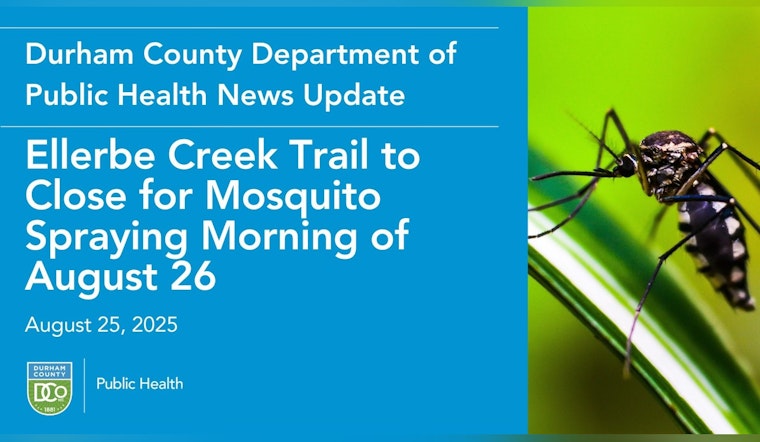
In a move to combat the spread of West Nile virus, Durham County health officials are taking to the Ellerbe Creek Trail with mosquito control measures. The Department of Public Health announced a scheduled closure of the trail this upcoming Tuesday, from 8:00 a.m. to 10:00 a.m., as Mosquito Squad gets to work spraying a plant-based insecticide. Trail-goers will need to find alternate routes or wait until after the spraying, with the trail reopening for regular use immediately following the procedure.
The insecticide, referred to as Essential Botanical Insecticide (EBI), is a concoction derived from natural essential oils such as cedar, thyme, and cinnamon. It's slated to provide some relief from the pesky bloodsuckers that have been a nuisance and a health concern in the area. "It functions as a natural alternative to synthetic pesticides, providing control of existing mosquitoes, ongoing residual control, and repellency for up to 21 days," states a news release from the Durham County. If successful, residents can look forward to fewer bites without any added chemicals harmful to humans or their four-legged companions.
West Nile virus itself is primarily transmitted through mosquito bites and while it doesn't always lead to symptoms, it can inflict some individuals with fever, headaches, and body aches, with a small percentage developing more severe, neurologically compromising conditions. The county health department is not taking their residents' well-being lightly, as the effort to spray EBI stands as a testament to their proactive stance in public health matters.
Alongside the scheduled mosquito controls, officials at the North Carolina Department of Health and Human Services are preaching a gospel of preventative care to stave off the bloodsucking menace. Recommendations include using EPA-registered insect repellents, wearing protective clothing, draining stagnant water, and employing larvicides. It's the kind of guidance that's straightforward but can make an outsized difference in the rates of vector-borne illnesses. There's a communal aspect to these actions—everyone doing their part could ensure lower incidence rates across North Carolina.
For additional vigilance, residents can keep abreast of future spraying dates and potential pathogen updates via the Durham County Department of Public Health's website and social media platforms.





