

























































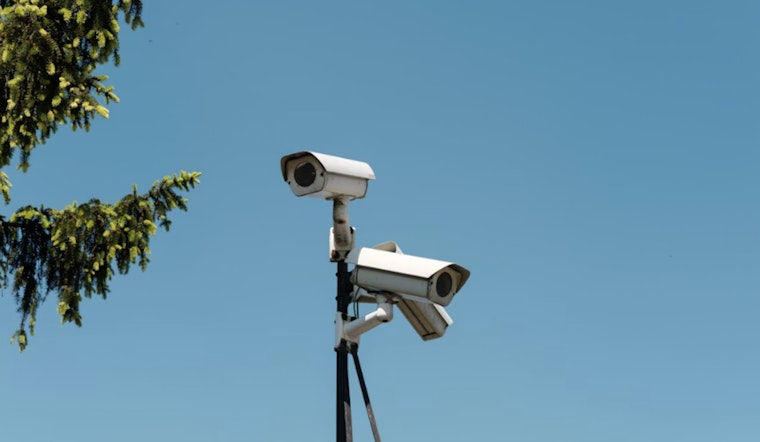
Across the San Antonio suburbs, quiet intersections are getting a new kind of traffic: Flock Safety cameras that scan license plates as cars roll by. From Live Oak to New Braunfels, small police departments are rapidly expanding automated license plate reader networks this winter, betting that more cameras mean more stolen cars recovered and more theft cases solved.
Civil liberties advocates and uneasy residents warn that the fast-growing web of cameras is turning the region into a rolling surveillance grid, even as San Antonio police say they are not joining the Flock spree with fixed cameras of their own.
Several local agencies told reporters they have recently added, or are about to add, Flock automated license-plate readers to city streets. Live Oak says it operates 23 cameras and plans to install five more, crediting the system with 16 arrests tied to stolen vehicles. New Braunfels reported that it currently has 17 cameras in place and intends to add 40 more. Universal City has released case lists connected to its deployment. San Antonio police, by contrast, told reporters they have no plans to install fixed Flock cameras, although patrol vehicles already carry mobile plate-reading gear, according to KSAT.
How The Alerts Hit Officers’ Radios
Flock cameras capture images of passing vehicles, convert license plates into text, then check those plates against law enforcement "hot lists" of vehicles flagged as stolen or otherwise wanted. When the system gets a match, it pushes an alert to officers that a tagged car has just passed a specific location.
"It alerts the officer that that vehicle has passed that location," New Braunfels Police Chief Osvaldo Flores told KSAT. That early heads-up can give patrol units a short window to spot and stop the vehicle, a big deal in cases that might otherwise go cold within minutes.
Transparency, Fine Print And Fuzzy Numbers
Universal City has tried to get in front of privacy concerns with a public transparency portal that spells out its automated license plate reader policy, usage stats, and audit controls. The site, hosted by Flock Safety, highlights requirements such as attaching case numbers to searches and maintaining internal logs that can be checked later.
Still, nailing down exactly how many devices are in play around the region is not as simple as counting poles. Public registries do not always agree on camera totals for the same agencies. The Atlas of Surveillance, which compiles public records on police technology, lists larger fleets for San Antonio and New Braunfels in a July 2025 entry than what local officials have recently described, a discrepancy that underscores how inconsistent camera reporting can be across different sources.
Privacy Questions Go National
The debate over license plate tracking extends beyond San Antonio. Earlier this year, Flock Safety temporarily paused cooperation with some federal agencies after questions arose about how its vast data could be used, according to the Associated Press.
Human rights groups and watchdogs have urged the company to adopt stricter audit controls and limit cross-jurisdictional searches. The Business & Human Rights Resource Centre has tracked Flock’s responses as it works to reassure critics that its system won’t enable broad, unchecked surveillance.
Local Pushback And A Catchy Slogan
In Live Oak, some residents aren’t convinced by officials’ reassurances. A 'Don’t flock with us' petition accuses the city of installing cameras with limited public notice and calls for detailed logs showing which officers run searches and why.
Elsewhere, communities are moving ahead. Fair Oaks Ranch added Flock cameras this year, and other exurban towns have signed contracts to combat catalytic converter thefts and track stolen vehicles, according to Community Impact and local filings.
As more small departments wire up intersections, both officials and advocates agree on the next steps: clear policies, regular public reporting, and independent audits showing how often searches lead to arrests and who is accessing the system. For drivers, the growing camera network improves the odds of recovering stolen vehicles. For communities, it fuels an ongoing debate over the line between public safety and constant surveillance.




