

























































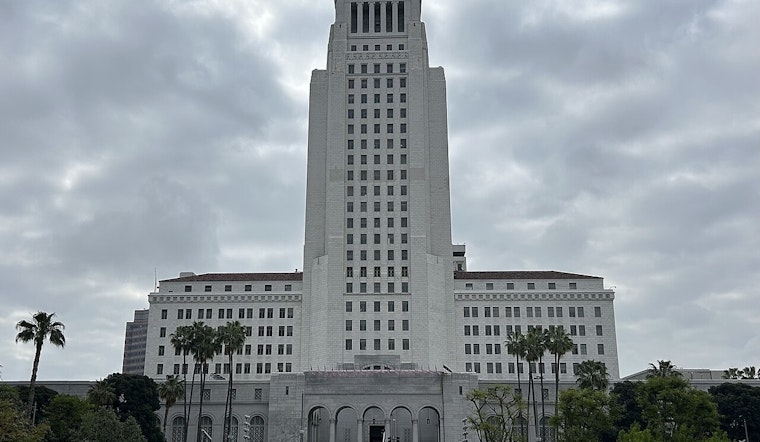
Los Angeles lawmakers just put the city’s big charter overhaul under a brighter spotlight, moving to force public disclosure of backchannel chats between the Charter Reform Commission and City Hall power brokers.
On Tuesday, the City Council advanced an ordinance that would require charter commissioners to publicly report their private communications with elected officials and their staff as the panel races to finish its recommendations. The move drops what supporters describe as a simple transparency tweak right into the middle of a very high-stakes rewrite of the city’s founding document. Councilmember Monica Rodriguez, who led the push, cast the proposal as a way to blunt behind-the-scenes influence on the commission’s work.
The council advanced the ordinance on Jan. 20 in a 12-0 vote, with Councilmembers Bob Blumenfield, John Lee, and Curren Price absent, and did it without any public debate, according to the Daily News. That report also notes the City Clerk was instructed to place the ordinance on a City Council agenda for final consideration no later than Jan. 27.
Rodriguez pushed the issue after public concerns
Rodriguez first introduced the transparency motion in August and renewed her push after public testimony raised alarms about undisclosed talks between commissioners and elected officials, according to The LA Reporter. She appeared before an ad hoc committee on Jan. 17 and told commissioners she wanted ex parte communications formally logged so residents could see who is trying to shape the charter rewrite.
What the rule would require
The proposed amendment would require commissioners to disclose private meetings, phone calls, or emails with elected officials or their staff, bringing those disclosure rules in line with the standards that already govern the city’s redistricting commission, the Daily News reports. Rodriguez told reporters the change is written so that violations are treated as civil offenses rather than criminal ones.
Timeline and next steps
The Charter Reform Commission, created in August 2024, has been holding topic-focused committees across the city. Its schedule lists an ad hoc committee meeting on Jan. 17 and a full commission town hall set for Wednesday, Jan. 21, at Van Nuys City Hall, 14410 Sylvan St., according to the Charter Reform Commission website. The panel is working on a tight clock: commissioners must deliver proposed charter changes to the City Council by April 2, 2026, LAist reports.
Why it matters
Backers of the new rule say it will cut down on backroom influence and spell out which officials or advisers are driving key proposals. Some advocates, though, caution that aggressive disclosure requirements could unintentionally discourage legitimate outreach to experts and community organizations.
The commission itself was created in the shadow of multiple City Hall scandals, including the leaked racist audio that set off a political firestorm in 2022. The fight over disclosure lands squarely in the middle of efforts to rebuild public trust, as documented by the Los Angeles Times.
What to watch next
In the near term, the action is procedural. The City Clerk still has to slot the ordinance onto a council agenda for a final vote by Jan. 27, and the commission’s Jan. 21 town hall could signal how strictly members expect the rule to be interpreted and enforced. If the commission finishes on time, the council could send charter changes to the ballot and let voters weigh in as early as November 2026, LAist notes.
Legal implications
By classifying violations as civil instead of criminal, the amendment appears aimed at creating a public-record remedy without opening the door to criminal prosecutions, although it could still involve fines or administrative penalties depending on the final ordinance language and how it is enforced. Watchdogs and legal observers will be combing through the finished text and implementing rules to see whether this actually reins in undisclosed influence or simply adds another disclosure form to an already crowded stack.


.jpg)