

























































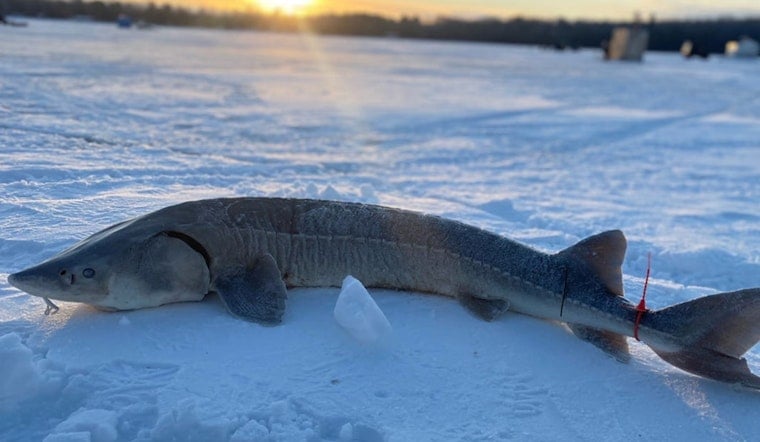
As the chill of February descends upon Michigan, anglers gear up for the Black Lake sturgeon season, an annual event in Cheboygan County marked by its brevity and conservation efforts. Scheduled for February 7, the 2026 season may close as quickly as 17 minutes after it opens, as it did last year, or run until 2 p.m. on Wednesday, February 11, depending on the catch. According to FOX 2 Detroit, fishing hours are set from 8 a.m. to 2 p.m., with a strict limit of six lake sturgeons to protect the species.
The sturgeon, prehistoric giants that roam the depths of the Great Lakes, have swum into this precarious narrative due to historic overfishing, leading to conservation measures that now dictate this swift ice-fishing saga, where anglers vie for the chance to catch what has been, for many, becoming a bucket-list fish, and all participants must register by February 6 – those 17 and older must also possess a valid fishing license. "Hundreds of anglers make their way onto the ice each winter, hoping to take home one of these iconic fish," MLive reports on the enthusiasm surrounding the event.
For those lucky enough to land a sturgeon, Michigan Advance notes that immediate notification of DNR personnel on the ice is required, and harvested fish will undergo examination and tissue sampling for DNA analysis and aging, all part of the scientific effort to monitor and preserve this ancient species. Anglers must also display a bright red flag on their shanties for identification by DNR staff, and will be informed on the ice and via text when the season ends.
Despite the season's unpredictable duration, ice safety remains paramount – officials emphasize that ice conditions can widely vary and the season could cancel up to 48 hours beforehand if safety risks for anglers and staff arise; this initiative to maintain security jives with the ongoing collaboration between DNR, tribal agencies, and several other partners, such as Michigan State University and Sturgeon for Tomorrow, which have invested two decades to bolster the Black Lake sturgeon populations, an effort that reflects a deepening commitment to these living links to our planet's distant past, an effort that according to the collective partnership is bearing fruit as the population numbers begin to show encouraging signs of increase.



