

























































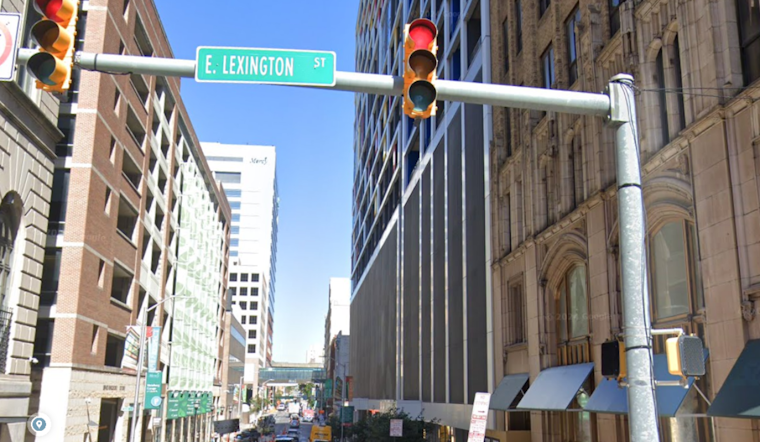
A historic stretch of downtown Baltimore, a block behind City Hall, is set to become a 25,000-square-foot safety net for young adults on unstable ground.
Springboard Community Services is planning a new Youth Training Center at 206–210 E. Lexington Street that will combine short-term dorm-style housing, permanent supportive units, workforce training, and on-site counseling under one roof. The nonprofit says the center will focus on transitional-aged youth, roughly 18 to 24 years old, and is targeting completion in spring 2027. Leaders report they have raised nearly $18 million for the project.
What the center will offer
The Youth Training Center is designed as a one-stop hub for both housing and opportunity. Programs are expected to include job-readiness workshops, vocational training, and a restaurant that will be used for culinary training and job placement. Behavioral health services and case management support will round out the offerings.
According to Springboard Community Services, the model is to pair stable housing with clear employment pathways so young people can move from instability into permanent housing and work. The nonprofit says the building will be staffed by on-site case managers, clinicians, and residential personnel to provide wraparound support.
Funding and partners
Turning the historic property into a modern youth hub is not cheap, and the financing comes from several directions. The plan blends philanthropic grants with bridge lending. The Neighborhood Impact Investment Fund says it provided $4.2 million in bridge financing as part of roughly a $16 million transaction that also included support from Reinvestment Fund and other partners.
In a press release via the Mayor’s Office of Homeless Services, the city confirmed that Springboard received $1 million in American Rescue Plan Act funds to expand youth services and pilot direct cash assistance programs. Statements from NIIF and its partners note that a mix of loans, tax-credit support, and grants helped Springboard settle the financing and move the project toward renovation and construction.
Why it matters
Baltimore’s most recent Point-in-Time count found a sharp increase in homelessness between 2024 and 2025, a spike that local officials say has raised the stakes for youth-focused housing and services. As outlined by the City of Baltimore, the surge reversed earlier declines and highlighted gaps in support for transitional-aged youth in particular.
Local reporting from WMAR includes accounts from young people who say Springboard’s existing day center helped them find housing and work, which is the kind of outcome the nonprofit is trying to scale up with the much larger Lexington Street project.
Timeline and next steps
Springboard’s project timeline calls for renovation and construction through early 2027, with occupancy targeted for April 2027. The Neighborhood Impact Investment Fund says the financing package was wrapped up in late 2025 and that work is scheduled to continue through March 2027 in order to hit the spring opening goal.
Springboard, NIIF, and city partners describe the Youth Training Center as a model they hope can be replicated in nearby counties that currently lack similar youth housing and training infrastructure.
In an interview with WBAL NewsRadio, Springboard CEO F. T. Burden said, "it's a historic building and we've raised almost $18 million to do this facility." Organizers say they are already recruiting employer partners and funders to support training and job placement ahead of the center's opening.





