

























































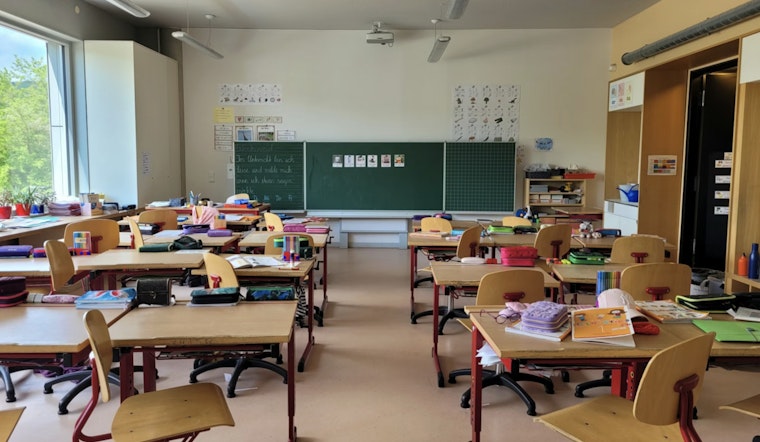
New York lawmakers are looking to put recess on the clock, literally, by writing a guaranteed half hour of play into state law for the youngest students. The proposal would lock in at least 30 minutes of supervised but student-directed recess every school day for kindergarten through fifth grade, and for sixth graders who attend elementary schools where the school day runs longer than five hours. Backers say it is a way to protect unstructured play that has been squeezed by test prep and pandemic-era schedule reshuffling.
What the bill would require
Senate Bill S6858 would require a minimum of 30 minutes of daily recess during the school day in any school where the day exceeds five hours, and it specifies that recess should be held outside whenever practicable, according to the New York State Senate. The bill spells out that recess must be supervised but led by students, bars phones, tablets and videos during that time, and clarifies that neither lunch nor physical education can be counted as recess.
Companion bill and who’s behind it
A matching Assembly proposal, A6939, has been introduced by Assemblymember Carrie Woerner and mirrors the Senate language, covering both public and private schools, according to the New York State Assembly. Both measures are parked in their respective education committees while lawmakers sort through scheduling, staffing and other practical details.
Backed by public-health and child-development research
Supporters are leaning on a thick stack of research that says kids behave and learn better when they are allowed to blow off steam. The American Academy of Pediatrics calls recess “a necessary break” and urges schools not to take it away either as punishment or to make room for more academics, according to the AAP. The Centers for Disease Control and Prevention also highlights recess as an evidence-based strategy to boost daily physical activity and improve classroom behavior, according to the CDC.
Operational hurdles for districts
The proposals do not pretend every school has a wide-open playground waiting for a kickball game. Districts that lack outdoor play areas or suitable indoor spaces are required to come up with a plan for physical play or apply to the Education Department for a waiver, according to the New York State Assembly. Making the law work in real schools will mean revising schedules, lining up teachers or aides to supervise, and making sure there is at least basic play equipment, which district leaders say will require clear state guidance and some targeted resources.
How schools could implement it
Public-health playbooks point to relatively simple starting moves for schools that are not already giving kids that much free play. Districts can build recess into the master schedule, train supervisors on how to manage active play, stock low-cost equipment like balls and jump ropes, and use painted lines and markings to squeeze multiple games onto a single blacktop. The Centers for Disease Control and Prevention publishes recess planning templates and step-by-step toolkits that districts can adapt while they sort out the local logistics, according to the CDC.
Next steps
S6858 was sent to the Senate Education Committee on Jan. 7, 2026, and A6939 is before the Assembly Education Committee. If both chambers pass identical versions and the governor signs off, the law would take effect on the first July 1 after it is enacted, according to the New York State Senate. For now the bills remain in committee while educators, parents and public-health groups prepare testimony and lawmakers weigh possible tweaks around waivers, funding and scheduling.
What to watch
Upcoming committee hearings will be the first real test of how this proposal might play out in crowded hallways and tight school budgets, and they will offer a public look at concerns from districts and health advocates. We will keep an eye on Albany’s calendar for any sign that the recess bills are moving toward a floor vote.



