

























































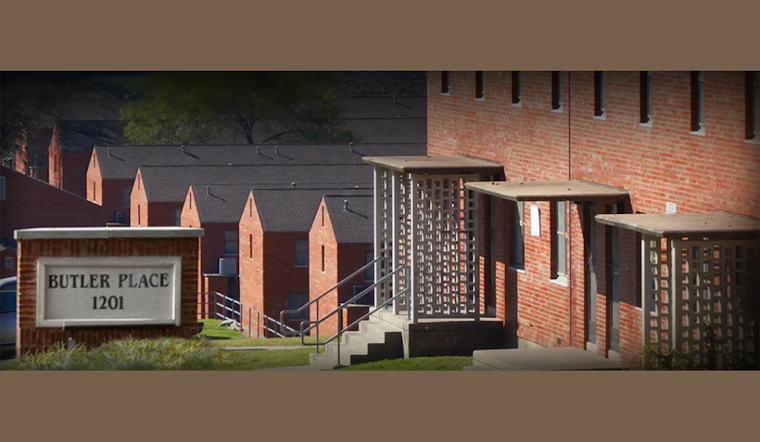
Butler Place, the long-vacant public housing complex just east of downtown Fort Worth, is finally inching toward a new life. Housing officials have signed off on independent market work, and City Hall has put a spotlight on the effort with a post on its official social feed, nudging a years-long conversation into a more tangible phase that could unlock one of the last major developable tracts next to downtown.
JLL market study moves project forward
On Jan. 29, the board of Fort Worth Housing Solutions voted unanimously to approve a $635,000 contract with JLL Americas Inc. for market and financial feasibility studies and to prepare a solicitation for a master developer, according to Fort Worth Report. Agency leaders told board members they want an independent, data-driven read on demand and financing options before choosing between selling the land outright or pursuing a public-private partnership.
History and preservation shape the proposal
Built in 1940 as a New Deal-era public housing project, Butler Place covers roughly 42 acres just east of downtown, boxed in by I-30, I-35, and U.S. 287. The site carries deep cultural weight for Fort Worth’s Black community, and both the city and the housing authority have lined up protections for key historic elements. Those include local landmark nominations for the former Carver-Hamilton school and two Stephenson Street buildings, plus a plan to save red bricks for a future public art feature, according to the City of Fort Worth. The approval of local landmark status for the complex and the school was previously covered by Hoodline.
Access, contaminants and infrastructure concerns
For decades, the tangle of highways and rail lines around Butler Place has cut it off from the rest of downtown. The city’s Access Butler Place planning effort lays out mobility and land-use ideas aimed at stitching the area back into surrounding neighborhoods and improving multimodal access for people on foot, bikes, transit and in cars.
Environmental reviews are also on the table for Butler Place and neighboring properties. Those reviews could influence cleanup costs and the schedule for any large-scale redevelopment, according to Access Butler Place.
What comes next
The findings from JLL’s analysis will guide how Fort Worth Housing Solutions chooses to package the site, whether as a sale, a long-term ground lease or a public-private partnership. Staff has said that any increase in consultant costs beyond the initial $635,000 would have to come back to the board for approval. Local business and planning insiders have long viewed Butler Place as one of the last large, downtown-adjacent tracts that could draw office, campus or mixed-use projects if the numbers and financing fall into place, Fort Worth Business Press reported.
Community stakes and the clock
Residents were moved out of Butler Place between 2018 and 2020 under HUD’s Rental Assistance Demonstration program, which converted subsidies into portable vouchers and opened the door for new uses at the site, according to the Texas State Historical Association. City officials and preservation advocates have stressed that any redevelopment will have to walk a line between economic opportunity and honoring community memory and equity, a balance they say will be central to public engagement as the housing authority gets closer to seeking a developer.
The market study and the environmental work will help set a clearer timeline, but officials are already signaling that the process will take many months and will involve multiple public meetings before any major construction starts. Fort Worth Housing Solutions and the city say they plan to release the JLL findings and spell out how the public can weigh in once the analysis is complete.





