

























































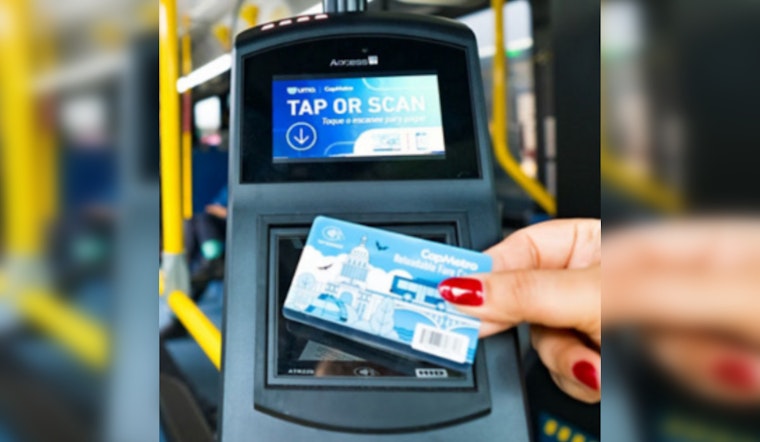
Paper 24-hour passes on Austin’s buses are officially on the clock. Capital Metro’s board voted Monday to retire the agency’s paper one-day bus pass on June 1, 2026, as part of a broader shift to an account-based fare system. The agency’s own analysis says the move will touch about 3% of trips, roughly 771,000 rides a year out of around 25.7 million annual trips. Riders will still be able to pay cash for single rides on buses, but those cash fares will no longer unlock the $2.50 daily cap that app, reloadable-card, and tap-to-pay users get.
What the board approved
The board signed off on phasing out the 24-hour paper day pass as CapMetro installs new onboard fareboxes that will not sell or accept magnetic-stripe passes, a technical shift described on the agency’s farebox project page. The transition is meant to cut downtime from aging equipment and to steer riders toward the Umo app or a reloadable fare card as the main ways to access capped fares. CapMetro lays out the timeline and what riders should do ahead of the change.
Farebox replacements and cost
This phaseout follows the agency’s earlier decision to replace roughly two-decade-old fareboxes, with the board previously approving a $6.3 million contract for new equipment in 2024. Reporting on that board meeting notes that members also adopted a federally required equity analysis before finalizing the paper pass change. As reported by the Houston Chronicle, officials are framing the move primarily as an operational upgrade while they figure out how best to reach riders who still rely on the old passes.
Tap-to-pay and fare capping
CapMetro rolled out tap-to-pay across its bus fleet in early February, giving riders the option to tap contactless credit or debit cards and mobile wallets for a boarding fare that counts toward daily fare capping. According to the agency, tap-to-pay and the Umo app (or a registered reloadable fare card) all apply the same $2.50 daily cap on local service, after which additional rides on that service are free for the rest of the day. Cash will remain an option for single rides, but those boardings will not automatically accrue toward daily fare caps. CapMetro details how tap-to-pay and fare capping work across the system.
Who could be hit hardest
CapMetro’s equity analysis estimates the elimination of the paper day pass will affect about 3% of trips, or roughly 771,000 rides annually, and concludes there is no disproportionate impact on low-income or minority riders. Still, outside researchers and advocates have long warned that cash-only riders are more likely to be unbanked or from communities of color, raising concerns about access and convenience as transit agencies lean into digital payment systems. National data from the FDIC highlight how unbanked and underbanked households rely heavily on cash and alternative financial services, a backdrop that critics say transit agencies cannot ignore.
How riders can prepare
In the run-up to June 2026, CapMetro is urging riders to download the Umo app or pick up a reloadable fare card, which can be loaded with cash at participating retailers such as H‑E‑B and 7‑Eleven. The agency says it will keep ramping up outreach as the implementation date gets closer. Riders who are uneasy about switching payment methods are being encouraged to seek help at CapMetro customer events or at the Transit Store, and to consult official guidance for step-by-step instructions. Local coverage notes that the agency is planning hands-on outreach in the coming weeks to walk riders through the new system. Patch summarizes the options for getting a reloadable card and using the app.




