

























































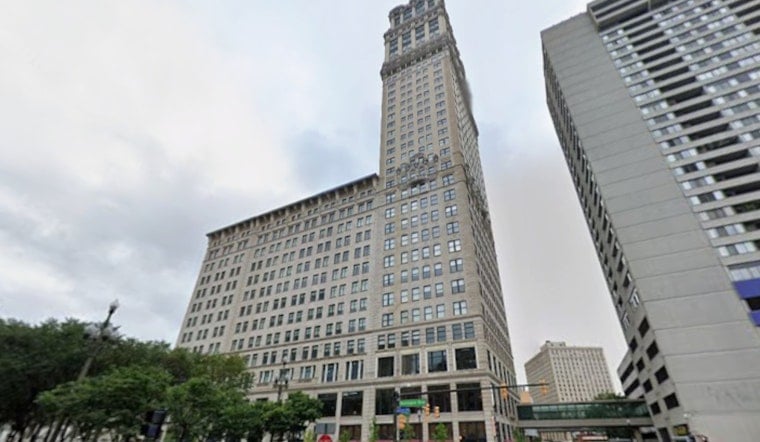
Downtown Detroit just watched one of its grand old skyscrapers officially hit triple digits. The 38-story Book Tower turned 100 this week, a building that ruled the city’s skyline when it opened in 1926, then slid into decades of decline and nearly a decade-long vacancy. Now it is back in circulation with apartments, a ROOST apartment hotel and several street-level dining rooms after a painstaking restoration. The centennial is being marked with a lobby exhibition and modest programming that tie the Book family’s history to the tower’s very modern revival.
Developer Bedrock, which bought the tower in 2015, spent eight years and more than $300 million bringing it back to life before reopening the building in 2023. The project converted all 38 floors into 229 residences, 117 ROOST hotel rooms and about 52,000 square feet of retail and office space, according to Bedrock. Crews repaired travertine floors, restored 29 exterior caryatids, replaced 2,483 windows and painstakingly reconstructed the three-story art-glass skylight that caps the Rotunda.
For the Book family, the anniversary is personal. Randy Book, a great-grandson of Frank Book, told WXYZ he gets “goosebumps” walking into the restored spaces and that relatives are planning an on-site family reunion for the centennial. Bedrock senior vice president of architecture and design Jamie Witherspoon said the building arrived in “extreme disrepair,” explaining that crews essentially gutted and rebuilt key systems in order to save the historic fabric.
What Bedrock preserved and rebuilt
The restoration team did not just polish what was left; much of it had to be recreated. According to Bedrock, artisans recreated and hand-painted more than 7,000 square feet of ornate ceiling tiles, reinstalled roughly 50,000 square feet of marble and restored the decorative exterior elements while turning former office floors into new residential and hotel units. The showpiece is the rebuilt art-glass skylight, assembled from about 6,000 panels and more than 7,000 glass jewel embellishments, now flooding the three-story Rotunda that serves as the tower’s grand public entry.
Lobby exhibit and public access
The Detroit Historical Society teamed up with Bedrock on a Historic Exhibition in the Book Tower lobby that leans into both nostalgia and recovery. The display features artifacts salvaged during the renovation alongside items on loan from the Book family, including 1920s renderings and an original caryatid, according to the Detroit Historical Society. The free exhibition is open daily through at least May 31, 2026, and visitors can add their own memories to an oral-history collection tied to the building.
How the project was financed and honored
Rescuing a century-old skyscraper is not cheap, and this one needed a complex capital stack to work. The state’s preservation program notes that the rehabilitation used a mix of financing tools, including Federal Historic Rehabilitation Tax Credits and Michigan’s first-of-its-kind Transformational Brownfield Plan, to support the more than $300 million effort. MiPlace recognized the project with a Governor’s Award for Historic Preservation, saying the work brought new residents and round-the-clock activity back to Washington Boulevard.
Centennial programming
The centennial will not be all hard hats and history buffs. Alongside the private family reunion, Book Tower is lining up public ways to toast the milestone. Bar Rotunda in the lobby will start serving a cocktail called “The Centennial Celebration” in March, WXYZ reports. Organizers say the intentional mix of apartments, hotel rooms and open public spaces is meant to keep the building humming long after the birthday attention moves on.
Why it matters to Detroit
Urbanists and design watchers have latched onto Book Tower as a case study in adaptive reuse done carefully. Preservation groups and design outlets point to the project as proof that ornate historic interiors can be saved while still delivering new housing and hospitality uses that support a broader downtown revival. Coverage in publications such as Surface has highlighted the craftsmanship involved and the argument that restoring landmark buildings like this can play a central role in a city’s comeback story.




