

























































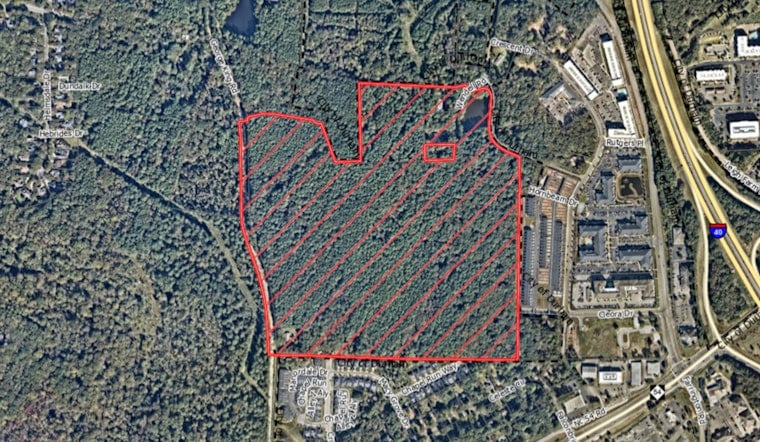
Durham City Council is set for another round Monday night at 7 p.m., when it resumes a heated public hearing on a proposed annexation and rezoning that would turn roughly 81 acres of wooded land along the Durham-Chapel Hill line into a dense mixed-use community. The plan has split planners, elected officials and nearby residents over traffic, loss of trees and what the project could do to local schools and neighborhood streets.
The proposal, known as Leigh Village Center, calls for annexing 81.75 acres and rezoning the site to a compact suburban design that would include apartments, townhomes, retail space and greenway connections, according to The News & Observer. The development plan on file commits to preserving about half of the site’s native plants, dedicating roughly 1.5 acres for a city park, banning certain uses such as drive-throughs, and providing limited affordability targets for a portion of the new housing.
The annexation (BDG2300027) and rezoning (Z2300042) are listed on the council’s agenda for a continued public hearing and possible vote at 7 p.m. in Council Chambers, according to the City of Durham. The Planning Commission previously reviewed the proposal and recommended approval on a 10-1 vote, according to a transcript of commission and council comments posted on SeeGov.
Opposition has come together quickly. A Change.org petition against the project shows more than 220 verified signatures, and a local "No to Leigh Village" group has gathered neighbors’ objections over traffic, school crowding and tree loss. Organizers argue that the project, located northwest of I-40 exit 273, would send more cars onto already clogged roads and permanently alter the character of nearby neighborhoods.
Traffic, Safety and Vision Zero
Neighbors are casting the debate as a safety issue as much as a growth fight. Chapel Run resident Linda Harden warned council members that signing off on the project could "easily put us in danger of going against the tenets of vision zero," a line quoted in The News & Observer. The City of Durham’s Vision Zero materials state that, on average, about 23 people are killed in crashes in Durham each year, a figure opponents say should weigh heavily when council evaluates traffic mitigation promises.
Traffic Analysis and a Zoning Fight
During the December hearing, some council members pressed city staff and the applicant for tougher traffic analysis and more specific commitments, arguing that the Unified Development Ordinance’s traffic-impact requirements call for a stronger showing before approving more intense zoning. Planning staff recommended continuing the case so the applicant could supply additional studies and clearer transportation commitments, a step reflected in meeting records on SeeGov.
Developer Background and Timeline
The redevelopment concept has been circulating for years, with regional firm Thomas & Hutton involved in shaping the plan and public materials. The firm says the proposal grew out of long-range efforts to create a walkable, mixed-use neighborhood. Nearby residents, however, remain unconvinced and worry that the immediate impacts, such as construction traffic, tree clearing and additional car trips, will arrive well before any of the promoted public benefits.
What Council Will Decide
When council returns to the case Monday, members can vote to approve the annexation and rezoning, deny them, or continue the public hearing again to seek further commitments. Any approval would not end the review process. Detailed site plans and phased traffic analyses would still be required as the project moves from zoning approvals to building permits, so any construction would unfold in stages over many years.
City Hall is likely to be packed, and the microphones busy. The item has already drawn strong turnout and organized pushback, and council members signaled last year that they want more precise answers on traffic, parks and tree protections before they cast a final vote.



