

























































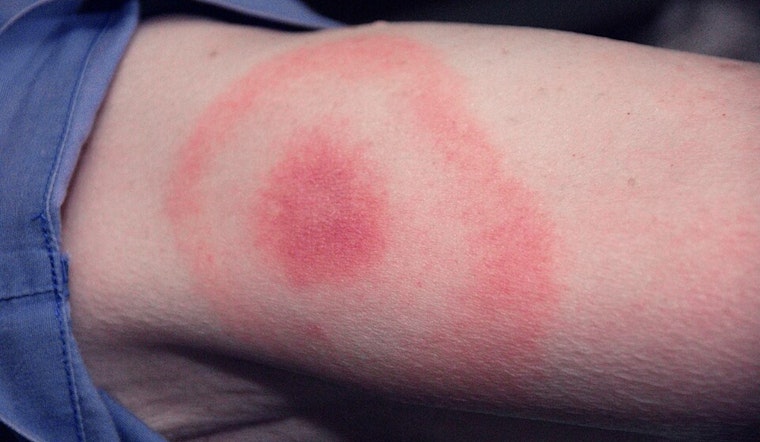
The risk of contracting Lyme disease in Ohio is now alarmingly on par with that of longtime Lyme hotspot Connecticut, according to a recent study from The Ohio State University. The findings reveal a significant surge in infected blacklegged ticks throughout the state, sounding an undeniable wake-up call for both public awareness and medical vigilance.
In the span of a decade, Ohio has seen the prevalence of Lyme disease skyrocket, with these ticks' infection rate jumping from a mere 2.4% to a staggering 47.6%. The study's senior author, Risa Pesapane, put the situation into perspective, affirming, "And now Ohio has the same risk as those endemic regions in the Northeast. I think that is surprising to a lot of people because we think, sure, we have the tick and we have some of the hosts, but we’re not Connecticut. But for some parts of Ohio, we are Connecticut at this point," she told Ohio State News.
Ohio isn't alone in confronting this uptick in tick-borne illnesses, pointing to a broader issue of vector-borne diseases on the rise across the United States. Eastern and southern parts of Ohio, characterized by their forested terrains, are particularly susceptible, but worryingly, blacklegged ticks have been reported in all 88 Ohio counties. Ningzhu Bai, who spearheaded the study for her master's thesis, highlighted the shocking increase in pathogen presence: “It was shocking to find that infection prevalence increased from 2.4% for Borrelia burgdorferi sensu lato to almost 50% in 10 years,” according to the Ohio State News.
The surge isn't happening in a vacuum; Lyme disease cases in Ohio have skyrocketed by 48-fold from 2010 to 2025. Pesapane, who also helms Ohio State's School of Environment and Natural Resources, is urging Ohioans to employ personal protective measures. Wearing repellent and appropriate clothing, conducting thorough tick checks, and utilizing preventatives for pets are key steps in staving off this expanding threat. She emphasized, "Even on days that have snow, as long as the ambient temperature is above freezing, blacklegged ticks will be seeking hosts and biting rather indiscriminately whomever they encounter," in a statement obtained by Ohio State News.
Further ecological intervention studies are in the pipeline, aiming to ascertain the effectiveness of tick-killing acaricides on small mammal reservoirs, which could provide much-needed reprieve from this growing epidemic. The Ohio State team is also facilitating the Buckeye Tick Test, an Ohio State service offering pathogen tests of submitted ticks for a fee, in their ongoing battle against Lyme disease.



