

























































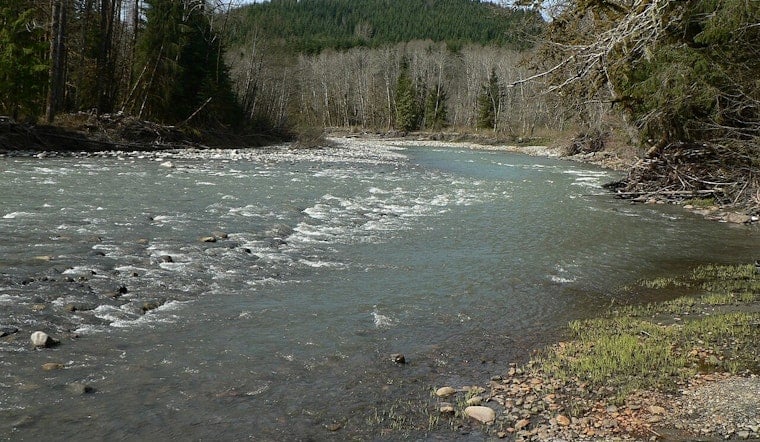
The Stillaguamish Tribe has literally given its river room to roam, carving open old farm dikes at the mouth of the Stillaguamish River north of Seattle and letting the tides pour back in. Heavy equipment and carefully sequenced engineering turned long-drained fields into a young tidal marsh that shorebirds and returning fish are already starting to claim. Tribal leaders say the shift revives a landscape their ancestors tended while also easing flood pressure on nearby farms and on the town of Stanwood.
How the breach was engineered
To pull this off, crews first cut a network of distributary channels across the site, then opened roughly two miles of earthen embankment this fall so the Salish Sea could surge into what used to be farmland. Project designers say Phase II wrapped up in autumn 2025 and has brought back roughly 230 to 250 acres of intertidal marsh by lowering and setting back levees and removing an old sea dike. As described by Environmental Science Associates, crews also removed buildings and utilities across the site. HeraldNet has reported that new flood gates were installed to protect neighboring fields from higher water.
Why the new marsh matters for Chinook
That new tidal marsh is more than scenic waterfront. Estuaries at river mouths are critical nurseries for juvenile Chinook salmon, which NOAA Fisheries lists as a threatened population in Puget Sound. The Stillaguamish fishery’s 2025 catch was capped at just 26 Chinook, a stark indicator of how few adults are making it back to the river. “The salmon, it has always been important to our people, to the tribe, to our way of life,” fisheries manager Jason Boyd told KUOW. The station reports that scientists say it will take thousands more acres of connected estuary habitat before Puget Sound Chinook have a real shot at recovery.
Partners, purchases and tribal history
The project is stitched together out of years of land deals and partnerships. The Nature Conservancy helped raise money for a 537-acre parcel that links the tribe’s Zis A Ba properties to its Port Susan Bay Preserve. The state also transferred nearly 70 acres to the tribe this year for long-term salmon recovery, according to the Washington Department of Natural Resources. The Stillaguamish have been buying and restoring estuary parcels for more than a decade while keeping design and permitting for the next phase of Zis A Ba moving forward. Tribal materials note that the Stillaguamish achieved federal recognition in 1976 and today retain only a small reservation footprint, as the Stillaguamish Tribe explains.
Trade-offs and flood resilience
None of this comes without trade-offs. Reconnecting tidewater inevitably means fewer acres available for crops. Project managers counter that the new setback levees, flood gates and upgraded drainage should leave neighboring fields and Stanwood better protected from worsening storms, a point underscored in local reporting. Some farmers have voiced anxiety about losing productive land even as engineers argue that giving the river more space should cut down on the frequency and cost of emergency levee repairs. Project leaders say they are trying to balance habitat gains with agriculture by building in flood control features and keeping some fields in production under short-term leases until restoration work is ready to proceed, according to local coverage and engineering summaries.
What’s next for Zis A Ba
This winter and spring, tribal natural-resources staff will be out on the mudflats, tracking which fish, plants and birds show up in the new marsh while they also design the next restoration phase and search for construction funding. Partners emphasize that true estuary recovery plays out over decades and that reconnecting a few hundred acres is only the opening chapter. Scientists and tribal leaders say thousands more acres of linked tidal habitat will be needed before Puget Sound Chinook can be considered fully recovered. For the Stillaguamish, the stakes are cultural as well as ecological: the work reopens ancestral floodplain lands, exposes archaeological middens and renews a living connection between treaty rights and day-to-day habitat stewardship, a theme tribal and conservation partners return to again and again.




