

























































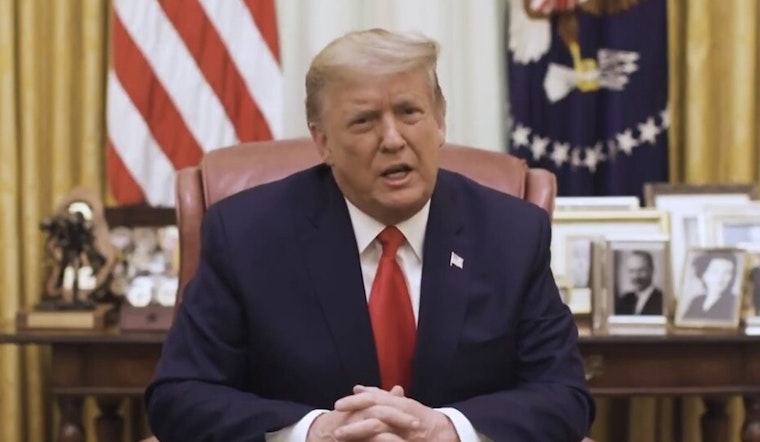
President Donald Trump on Monday threatened to block the opening of the Gordie Howe International Bridge, the long awaited Detroit-Windsor span, unless Canada "fully compensated" the United States and agreed to hand over "perhaps, at least one half" ownership, according to a post on his Truth Social account. The threat surfaced just as the finished span entered final testing and commissioning, with officials having forecast an opening in early 2026, and it immediately set off alarms in Michigan political and business circles.
The Truth Social post ran through a list of trade complaints, from claims that U.S. products are being shut out to an allegation that the bridge was built with "virtually no U.S. content." It also featured the line, "What does the United States of America get - Absolutely NOTHING!", as reported by CNN. Trump added that the United States should own "at least one half" of the crossing and promised immediate negotiations with Ottawa, according to news accounts.
Bridge status and timeline
Major construction on the Gordie Howe project is now complete, and the Windsor-Detroit Bridge Authority says work has shifted to testing and commissioning the bridge's systems ahead of an official opening. The authority has laid out the commissioning steps and emphasized that the start of operations will depend on quality reviews and on giving border agencies enough time to be ready. WDBA has detailed that process, and earlier coverage has noted that the bridge was nearing completion.
Federal steps toward opening
On the U.S. side, Customs and Border Protection has already taken a key regulatory step. This winter, the agency published a final rule designating the Gordie Howe crossing as a Class A port of entry, clearing the way for CBP to assign officers and resources to the new span. The rule, set to take effect March 2, 2026, states that CBP will notify the public once the crossing is fully operational, a move federal officials view as one of the last administrative pieces required before traffic can begin flowing. Federal Register
Michigan leaders push back
Michigan leaders responded quickly, warning that following through on the threat would undercut the state's economy and jeopardize jobs tied to cross border trade. Senator Elissa Slotkin said canceling the project would have "serious repercussions," while a spokesperson for Governor Gretchen Whitmer told reporters the bridge "is going to open one way or another," comments reported by The Guardian.
How (and whether) the White House could stop it
Legal analysts say it is far from clear how a president could simply "not allow" a completed international bridge to open. Possible levers that have been floated include withholding CBP staffing, invoking emergency economic powers or using tariffs, but each of those paths comes with its own legal, logistical and diplomatic hurdles. Commentators also note that the project was negotiated and built under a formal binational framework, and that any attempt to block or delay it would risk significant trade fallout between the two countries. The Irish Times
What's at stake
The Gordie Howe bridge is designed to relieve truck backups on one of North America's busiest trade corridors. Federal analysis notes that the Detroit port area handles tens of billions of dollars in freight, and any delay or derailment of the new crossing could raise costs for manufacturers, freight carriers and regional workers. Canada has financed the multibillion dollar project and expects to recover its investment through toll revenue, which is why officials at multiple levels of government on both sides of the border are treating Trump's threat not just as an infrastructure dispute but as a serious diplomatic and trade flare up. The economic case for the crossing has been laid out in reporting by the Detroit Free Press and in CBP documents.
For now, the bridge's eventual opening is still tied to testing, staffing plans and cross border coordination rather than a single social media post. Officials in Michigan and Ottawa say they will be watching closely as commissioning continues and CBP completes the remaining administrative steps before the first cars and trucks are cleared to roll across the new span.





