

























































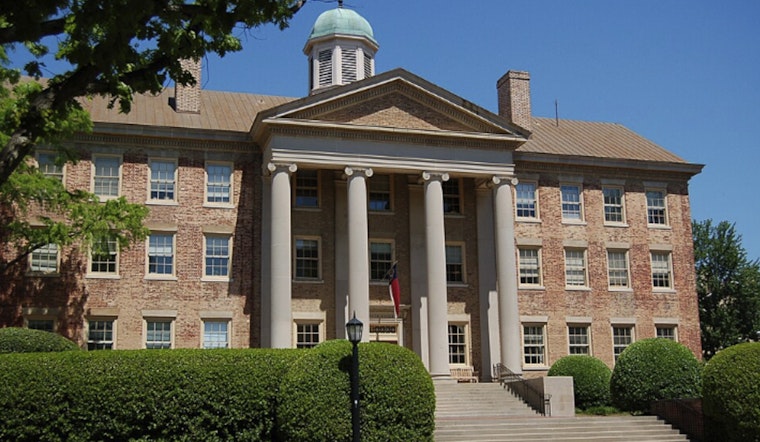
New enrollment numbers and local reporting show the Supreme Court’s decision ending race-conscious admissions has landed unevenly across the Triangle. At UNC–Chapel Hill, the share of Black students has slipped. NC State and North Carolina Central have posted modest gains. Duke’s picture is muddied by a spike in students who are not reporting their race at all. Put together, the shifts create a patchwork that mirrors national patterns researchers are still trying to untangle.
Campus-by-campus shifts in the Triangle
Local reporting found that between 2023 and 2025 UNC–Chapel Hill’s Black student share fell by nearly three percentage points, while white enrollment also ticked down. Asian and Hispanic shares rose by less than a point. The same analysis showed NC State became moderately more diverse, with Hispanic enrollment up about 1.5 percentage points, and historically Black North Carolina Central saw Black enrollment inch up roughly 1.3 points. These figures come from an analysis of campus data and enrollment files, according to the News & Observer.
What the broader data show
Nationally, a new analysis points to a clear pattern: the most selective institutions lost underrepresented students, while many less selective public flagships gained them, a shift researchers describe as a “cascade” of enrollments. The report, based on federal enrollment data across more than 3,000 colleges, also flags aggregate declines in total enrollment and in Black enrollment at some HBCUs. That pattern is laid out in a recent report by Class Action.
Duke's mixed picture and reporting quirks
Duke’s publicly released numbers tell a mixed story. The university reported an increase in Pell-eligible students and some shifts among racial groups, but also a sharp rise in students who did not report race, a “race unknown” category that climbed from roughly 5% to about 11%. Those reporting quirks make direct year-to-year comparisons difficult and have drawn outside scrutiny. Axios Raleigh reviewed Duke’s class data and admissions commentary, documenting the university’s changes and outreach efforts, and noted the increase in Pell recipients and other enrollment shifts at Duke.
Student reaction and campus climate
Students and advocates say the numbers are obvious on the ground. “There are fewer Black students on campus than previously,” student Daniel Klasik told reporters, a comment captured in local coverage that reflects frustration among some campus groups. Public radio reporting has also documented sharp drops at Carolina in recent class profiles. For example, the incoming class’ Black share fell to about 7.8% in 2024 from roughly 10.5% the prior year, underscoring the changed mix in some first-year cohorts. These observations were reported by the News & Observer and public radio’s WUNC.
Legal and compliance spotlight
The advocacy group that brought the landmark Supreme Court case is still watching closely. Students for Fair Admissions sent letters to several elite universities questioning whether their reported racial outcomes were possible under race-neutral admissions and asking schools to preserve potentially relevant documents. SFFA published its letters and a public statement in September 2024, signaling it is prepared to pursue litigation if it concludes institutions are not complying with the Court’s decision. The group’s timeline and requests are outlined by Students for Fair Admissions.
What campuses say they're doing
Universities point to ramped-up recruitment and financial-aid work as their response. Duke, for example, has emphasized programs aimed at economic access, including a Carolinas initiative that offers substantial grant support for in-state students, and has said it is using tools like the College Board’s Landscape to identify applicants from disadvantaged high schools and neighborhoods. The university’s financial-aid pages outline those initiatives and its emphasis on expanding economic access, as described by Duke University.
The first-year fallout from the end of race-conscious admissions is uneven and still unfolding, and the Triangle’s mixed results offer a close-up of how policy, reporting choices, and student decisions are reshaping campuses. Scholars and advocates say the next admissions cycles, along with any legal or federal reviews, will determine whether these shifts persist or push colleges toward different strategies for building diverse classes.





