

























































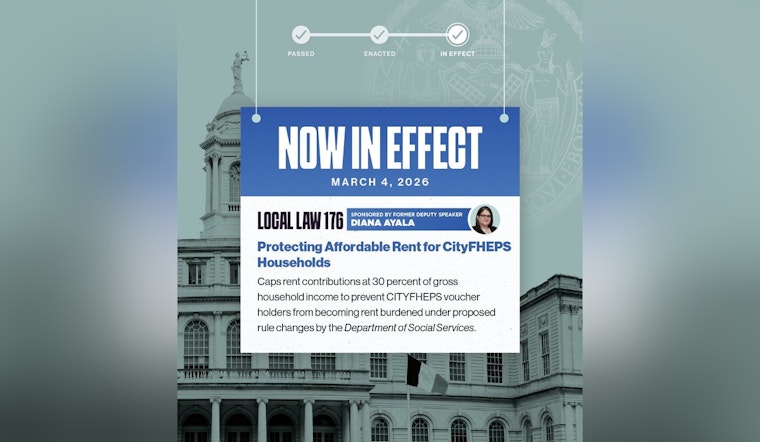
The New York City Council says the cap is finally real. Local Law 176 is now in effect, locking CityFHEPS tenants’ share of the rent at no more than 30 percent of their household income and blocking a Department of Social Services plan that would have raised long-term voucher holders’ contributions. The move lands after months of legal wrangling and political infighting over how the city treats some of its lowest-income renters.
The Council blasted out a “NOW IN EFFECT” post on X on March 4, 2026, announcing the change and naming Deputy Speaker Diana Ayala as the bill sponsor. The post is available on X.
What Local Law 176 Does
Enacted as Intro 1372 and recorded as Local Law 176 (Law No. 2025/176), the measure requires that a household’s rent contribution under CityFHEPS cannot exceed 30 percent of its total monthly income, whether that income comes from public assistance, earnings, or both, according to the legislative file maintained by the New York City Council. That file also includes the bill text and formal enactment details.
In backing the law, Deputy Speaker Diana Ayala called CityFHEPS “a lifeline for tens of thousands of New Yorkers,” a statement recorded in a press release from the New York City Council.
Why This Matters for Voucher Holders
Before the cap took effect, the Adams administration had proposed a rule that would have required some CityFHEPS households to pay 40 percent of their gross income toward rent once they had been in the program for five years, a shift the city’s budget watchdog warned could destabilize tenants. The New York City Comptroller and local advocates argued the change would push many families into being officially rent-burdened.
The Community Service Society estimated roughly 30,000 households could be hit by the proposed increase, raising alarms about potential jumps in evictions and returns to the shelter system.
Legal Fight and What to Expect
The law’s road to implementation ran through the courts after the mayor’s administration challenged the Council’s authority to reshape CityFHEPS, setting off appellate briefing over how far the city can go in regulating rental assistance. Filings and responses tracking that back-and-forth are available on CaseMine.
The Council ultimately overrode Mayor Eric Adams’ veto of the reform package in December, a key political win for supporters of the cap that was reported by City Limits as clearing the way for enforcement.
What Tenants Should Know
CityFHEPS is run by HRA/DSS and typically provides a rent subsidy for up to five years. Tenants with questions about payment amounts, how their share is calculated, or how to renew their vouchers can find guidance on the program’s main information hub from the New York City Human Resources Administration. That page explains how to submit renewals through ACCESS HRA and lists the Rental Assistance Call Center for help with specific cases.
Advocates advise voucher holders to keep thorough records, including proof of income and all written communications with HRA, so they are prepared to challenge any disputes over how much their household is being told to pay.





