

























































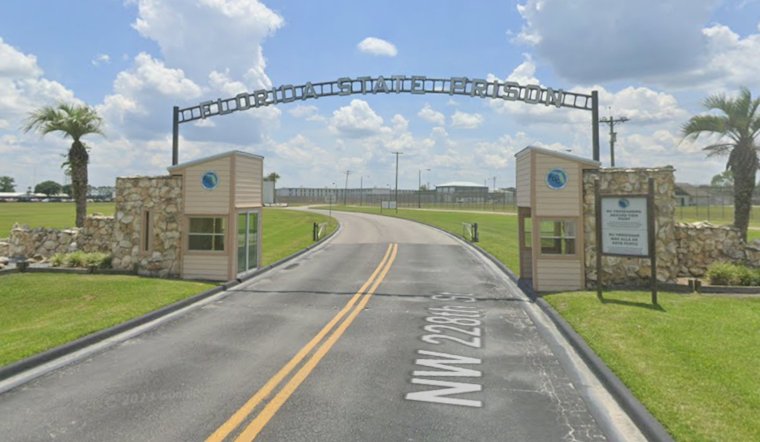
Nearly four decades after 11-year-old Teresa McAbee was raped and murdered in Mascotte, former police officer James Aren Duckett is now set to die for the crime. Florida officials have scheduled his execution for 6 p.m. on March 31, at Florida State Prison in Raiford, following more than thirty years of appeals and post-conviction fights.
Gov. Ron DeSantis signed the death warrant on Feb. 27, according to Palm Beach Daily News. The formal order states the execution is to begin at 6:00 p.m. on March 31 at Florida State Prison and, as that reporting notes, cites investigators’ findings that McAbee was last seen getting into Duckett’s patrol car and that fingerprint, tire-tread, and other forensic traces linked the crime scene to his vehicle.
The state’s case against Duckett was built largely on circumstantial forensic evidence and eyewitness testimony. Jurors heard about tire tracks matching his patrol car, McAbee’s fingerprints found on the hood of that vehicle, and testimony describing a pubic hair discovered in the victim’s underclothes. As detailed by the Florida Supreme Court in the case Duckett v. State, available via Justia, a jury convicted Duckett of sexual battery and first-degree murder, and the trial judge imposed a death sentence after the 1988 trial.
Case That Put Him On Death Row
Prosecutors say 11-year-old McAbee was last seen leaving a convenience store and reportedly got into Duckett’s patrol car. Her body was discovered the next day, less than a mile away. The medical examiner concluded she had been sexually battered, strangled, and drowned.
That narrative, and the long trail of litigation that followed, are laid out in local coverage, including reporting by WFTV, which notes Duckett has until March 13 to file appeal papers challenging the warrant.
Broader Context And Questions About Execution Protocols
Duckett’s date with the execution chamber comes as Florida moves through a new wave of death sentences. The state carried out a record number of executions in 2025 and has already taken steps to conduct several more this year, part of an aggressive capital punishment schedule described by The Associated Press.
On the national stage, the pace and secrecy around Florida’s executions have drawn pointed criticism. When the U.S. Supreme Court declined to halt a recent Florida execution, Justice Sonia Sotomayor wrote that “the record to date is troubling” and urged greater transparency in the state’s lethal-injection records, as shown in her statement published via Cornell Law.
Legal Options And Next Steps
For now, Duckett’s lawyers can still seek stays and emergency relief in state and federal courts. His attorneys reportedly have until March 13 to file initial challenges in circuit court, a key early deadline in this final phase.
The death warrant notes that clemency was considered and denied, and that any execution is to be carried out at Florida State Prison in Raiford, a facility listed by the Florida Department of Corrections. Local coverage has underscored how tight the procedural calendar becomes once a warrant is signed. As reported by WFTV, those deadlines now represent the main procedural hurdles for Duckett’s defense team.
For Central Florida residents who remember the 1987 case, the scheduled execution is a stark reminder that capital convictions can resurface in the public eye decades later. This story will be updated as courts weigh in or if officials issue any changes to the execution timetable.





