

























































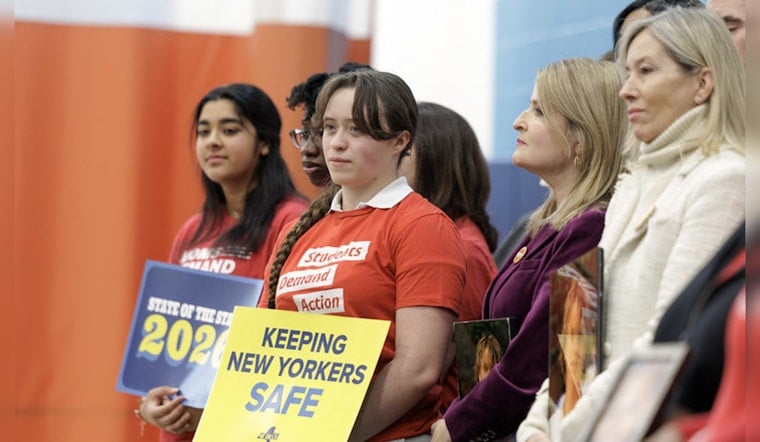
On Tuesday, March 10, 2026, parents, students and teachers packed into New York to turn up the heat on lawmakers over a fast-rising concern: 3D-printed guns and conversion devices that they say are fueling a new "plastic pipeline" of untraceable weapons. Survivors, educators and volunteers cast the issue as a growing danger for schools, local shops and neighborhood streets, and urged legislators to move quickly. The rally, organized by Moms Demand Action and Students Demand Action, pulled in speakers from advocacy groups, unions and the Legislature, all pushing the same message: make the printer and the manufacturer part of the safety fix, not part of the problem.
As reported by the Legislative Gazette, volunteers and survivors cycled through the microphone, including Janet Goldstein, a New York volunteer with Moms Demand Action, who told the crowd that "DIY machine guns and 3D-printed firearms have no place in our communities." The Gazette noted that speakers warned 3D printers can churn out gun parts with no serial numbers and no background checks, a combination they branded the "plastic pipeline." Organizers pressed lawmakers to support bills from Sen. Zellnor Myrie and others that would tighten accountability for manufacturers and sellers.
What Advocates Are Pushing For
Advocates laid out a three-part game plan. First, they want 3D printers sold in New York to be required to ship with software that detects and blocks files used to make guns. Second, they are pushing to outlaw the sale or distribution of digital blueprints for firearms. Third, they want pistol manufacturers forced to design weapons so they cannot be easily converted into machine guns.
Those specifics are detailed in proposals from Governor Kathy Hochul's office. Supporters at the rally argued that mandatory blocking software, tougher design rules and a clear paper trail would help close gaps that let traffickers and people who are prohibited from owning firearms produce untraceable guns at home. The governor's plan would also require law enforcement agencies to report every recovery of a 3D-printed firearm to a state clearinghouse, so officials have a clearer view of how big the problem is getting.
Survivors Put A Face On The Risk
Mia Tretta, president of Brown Students Demand and a survivor of the 2019 Saugus High School shooting, brought the policy debate down to a brutally personal level. She described being wounded when a classmate showed up at school with a loaded ghost gun and opened fire. Two students were killed in the November 14, 2019 attack, according to the Associated Press.
Tretta told the Legislative Gazette that requiring 3D printers to have gun-blocking software is the "bare minimum" lawmakers should do to help keep weapons out of young people's hands. Her story lined up neatly with advocates' broader warning that untraceable, privately made weapons keep finding their way into schools and college campuses, and that policy has not caught up to the technology.
Enforcement, Prosecutions And Conversion Devices
Speakers also pointed to recent federal prosecutions to make the case that the threat is not theoretical. A March 5, 2026 press release from the U.S. Attorney's Office for the Eastern District of New York describes a conviction in a case where defendants used 3D printers and small parts known as "auto sears" to assemble and sell ghost guns and machine-gun conversion components.
Organizers argued that those kinds of cases highlight a widening gap between current law and what is now possible with a desktop printer and a conversion kit. They say that disconnect is exactly why New York needs tougher manufacturing standards and sharper penalties for traffickers who use 3D printing and conversion devices to skirt existing gun laws.
Public Support And The Political Math
Advocates did not show up empty-handed on the politics either. Polling from Everytown for Gun Safety shows broad backing in New York for several of the proposed crackdowns: 74 percent of those surveyed supported requiring 3D printers to include blocking software, and 75 percent favored rules that make pistols harder to modify into automatic weapons.
Everytown's January 2026 memo also flags that bills sponsored by Sen. Zellnor Myrie and Assemblymember Michaelle Solages are already in the legislative pipeline as part of a broader state package. Rally organizers said that when you stack survivor testimony alongside recent prosecutions and favorable polling, you get real momentum for lawmakers as the session rolls on.
What Comes Next
Organizers said they plan to keep shuttling between meetings with legislators as Albany's session continues and urged lawmakers to move fast enough for the safeguards to be written into the state budget or passed as standalone measures. State leaders have signaled interest, but negotiators still have to sort through technical standards, enforcement mechanics and potential costs for manufacturers.
For now, advocates described the rally as both a warning flare and a countdown clock for Albany. Their bottom line was blunt: the technology that lets people print gun parts at home is moving faster than the laws meant to keep New Yorkers safe, and they want that gap closed before the "plastic pipeline" gets any wider.




