

























































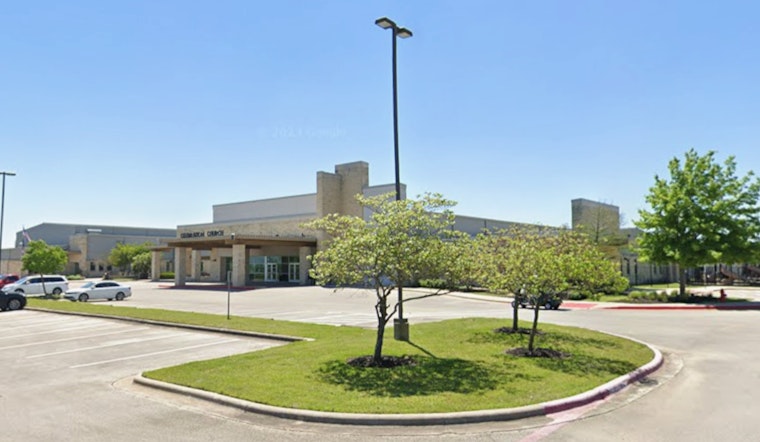
Roger Bringmann, a longtime Nvidia executive and a key backer of Austin Christian University, is putting $50 million behind the tiny faith-based campus’s big ambitions. His pledge will fund the Bringmann Center, a new hub meant to anchor the three-year-old business school’s rapid expansion. Announced at a late March ceremony, the gift will pay for auditorium space, classrooms and new student services as ACU stretches beyond its scrappy start-up phase. For a university that opened in 2023 with only a few dozen students, leaders say the donation fast-tracks their plans to train Christian entrepreneurs and technologists in the Austin area.
Groundbreaking and the $50 million donation
The gift was rolled out at a formal groundbreaking that featured leadership author John C. Maxwell, and university officials unveiled glossy renderings of the complex. According to PR Newswire, the Bringmann Center will house a 750-seat auditorium and serve as a central gathering place for weekly assemblies and public events. School spokespeople cast the donation as a faith-driven investment in “Kingdom” leaders and in workforce-ready training for business and technology careers.
Big footprint, bigger ambitions
As reported by the Austin American-Statesman, the Bringmann Center is expected to roughly double ACU’s physical footprint to about 125,000 square feet and replace roughly two-thirds of the existing site with new facilities. The paper notes that the school, which launched in 2023, is aiming to boost enrollment from its current handful of students to around 1,600. University officials told reporters they are on track to reach candidate status with the Association for Biblical Higher Education by February 2027. Administrators frame the buildout as an attempt to fuse marketplace skills with explicitly Christian instruction.
Tech money, church ties
Bringmann sits on ACU’s board and is described by the university as a longtime Nvidia executive. University materials state that the family donation honors Lynne and Roger Bringmann and channels tech-industry experience into campus programs. The school has worked to embed industry mentors in its curriculum and to recruit local leaders to its board as it plugs into Austin’s tech ecosystem, Austin Christian University notes. Founders say those business connections are central to the model of combining faith formation with practical, marketable skills.
Who will enroll and what they will study
The university currently lists about 15 faculty members and had roughly 63 students as of the latest reporting. According to the Austin American-Statesman, ACU requires applicants to live in a manner consistent with biblical standards and to attend church, and it offers a business degree through an articulation agreement with Southeastern University in Florida. The Statesman reports that donor-funded scholarships bring the average student’s net cost under $10,000, even though published tuition runs about $35,000 with housing and roughly $25,000 without room and board.
Accreditation and the cost question
Austin Christian University currently holds applicant status with the Association for Biblical Higher Education, the school notes on its Austin Christian University accreditation page. ACU describes applicant status as a pre-membership designation that is intended to lead to candidacy, and the university expects to publish retention and outcome data after its first graduating class in spring 2027. Officials and donors maintain that scholarships will keep out-of-pocket costs low for many students, although the university still has to show clear student outcomes as it scales up.
What to watch next
The construction of the Bringmann Center and ACU’s push for candidacy status will be the first big tests of whether a small, donor-driven Christian college can gain a foothold in the Austin higher-ed landscape. Local leaders say they will be keeping an eye on graduate hiring outcomes, accreditation milestones and whether the university can keep tuition discounts flowing as enrollment climbs.





