

























































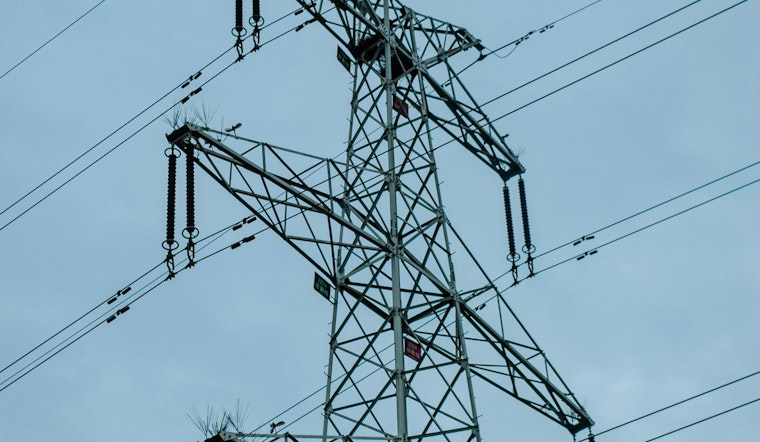
San Antonio’s city-owned utility has stumbled into the middle of an AI land rush, and the power demands are piling up fast. CPS Energy officials say roughly 2 gigawatts of data-center load are already in contracting, enough electricity to serve about 500,000 homes, with a long list of additional potential projects waiting in the wings. That kind of growth would dramatically bulk up stress on the grid and is already forcing tough choices on transmission upgrades, short-term power purchases, and long-term climate commitments for local planners and ratepayers.
The stakes came into sharp focus in recent local coverage, where CPS CEO Rudy Garza warned the utility has “over 50 projects that could quadruple our resource needs” and confirmed that about 2 gigawatts of demand are in the contracting phase, as reported by the San Antonio Express-News. ERCOT’s planning material treats very large customers differently, and system-level planning reports are already revising forecasts to reflect these heavy new loads. In its planning guidance, ERCOT defines a “large load” at roughly 75 megawatts. CPS Energy uses a lower local threshold, customers needing more than 40 megawatts, which helps explain how modest-looking clusters of servers can trigger outsized utility changes.
Short-term buys, not a permanent fix
To buy time while transmission projects and longer-range solutions catch up, CPS Energy has leaned on old-fashioned, dispatchable power. Last year the utility agreed to acquire four relatively new gas-fired plants totaling roughly 1,632 megawatts for about $1.4 billion, according to PROENERGY. Those units give CPS an immediate reliability boost, but they are essentially short-term bridges if the data-center pipeline keeps expanding at its current pace. Utility leaders have been clear that these plant purchases help stabilize the system now, yet they do not eliminate the need for new transmission lines where large loads are clustering.
Transmission is the choke point
Getting enough power to the new data campuses is where things really slow down. ERCOT’s Large Load interconnection pages and supporting study forms spell out a multi-step process of studies, paperwork and approvals for sites of 75 megawatts or more, and that process can run for years. Local officials are already trying to get ahead of the curve: the City Council and city staff are examining zoning and other coordination tools to steer large projects and better align water and power planning, according to reporting and ERCOT’s interconnection guidance.
Policy trade-offs for local ratepayers
CPS Energy’s long-range thinking ties these growth decisions directly to climate goals and future bills. Reporting notes the utility’s Horizon 2050 framework and the tension between near-term reliability moves and midcentury emissions targets, even as the board sets aside money for interim steps. Board minutes and planning documents show that converting the Spruce 2 unit from coal to natural gas is under consideration at an estimated cost of about $40 million, a move that would keep dispatchable capacity online while cutting carbon relative to coal. Those trade-offs, whether to buy more dispatchable power now or push faster on retirements to meet cleaner-energy targets, are set to shape both customer rates and CPS Energy’s long-term resource plan.
What’s next
External market pressure is only adding fuel to the fire. JLL’s year-end data-center report charts a record development pipeline and finds Texas racing toward the top of the national market, which in turn magnifies the strain on local grids. Put together, that suggests CPS Energy will likely keep relying on a mix of short-term power deals, targeted transmission upgrades and planning changes, while developers increasingly hedge their bets with long-term power contracts or on-site generation. It is a combination that will force San Antonio to rethink how it plans for growth, sets rates and sticks to its clean-energy promises in the age of AI.





