

























































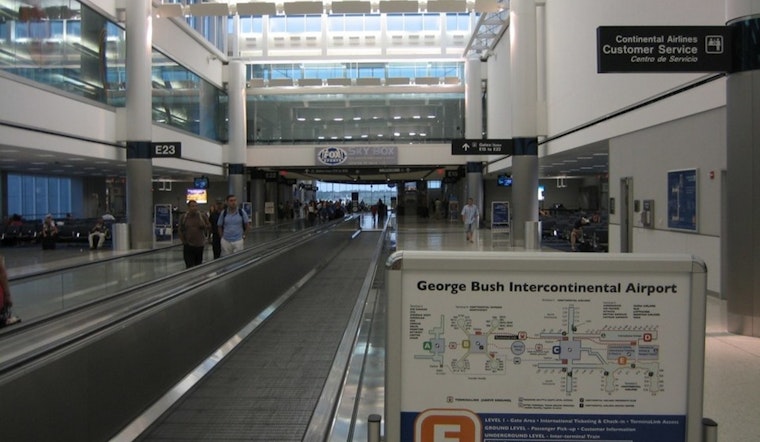
Thunderstorms rolling across the Houston area on Sunday evening brought departures at George Bush Intercontinental Airport (IAH) to a halt, as the Federal Aviation Administration temporarily stopped flights headed to the busy hub. The pause kept planes parked at their origin airports and sent airline schedules into shuffle mode, with travelers at IAH facing longer waits and shifting departure times as the weather moved through.
Ground stop reported by local outlets
According to Click2Houston, the FAA placed Bush Intercontinental under a ground stop Sunday night and cited “thunderstorms” as the reason. The station noted a ground-delay program advisory that showed the hold in place until 9 p.m. local time. Once the advisory went up, airport monitors and airline apps began to reflect held or delayed departures as carriers adjusted their operations.
FAA airport-status page shows weather hold
The FAA's airport-status page for IAH showed the same weather-related hold in effect Sunday evening, with the agency's update timestamped shortly before the advisory took hold. Ground stops are used to keep aircraft at their departure airports until controllers can safely accept arrivals, a precaution meant to cut down on in-flight reroutes and keep operations safe while severe weather passes through busy airspace.
Why the pause matters for connections
Because IAH is a major connecting hub - especially for United Airlines - even a relatively short ground stop can ripple through flights across the country. The Houston Chronicle has detailed United's large footprint and recent infrastructure upgrades at Bush Intercontinental, context that helps explain why a weather hold in Houston can quickly translate into missed connections and longer layovers for travelers far beyond Texas.
What travelers should do
Passengers headed to or from IAH are advised to stay glued to their airline app and the official Houston Airports site for the latest gate changes and departure times, and to check for updated guidance before leaving for the airport. For a wider look at nationwide delays and airport impacts, the FAA provides real-time operational maps and status pages. Travelers with tight connections should contact their airline directly to discuss rebooking options and any available compensation policies.





