

























































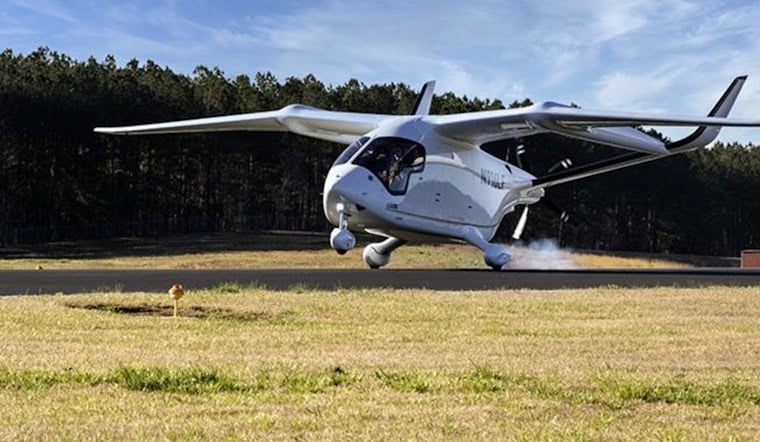
Air taxis are officially on approach to North Carolina, with the state named one of eight winners in a new federal pilot program that will put passenger air taxis, cargo eVTOLs and other advanced-air-mobility aircraft into limited real-world service. The selection drops state transportation leaders and private partners onto a fast-moving runway, with federal officials saying operations could be visible to the public by summer 2026. State officials say early efforts will zero in on medical response, short regional hops and autonomous trials meant to better connect small towns with hospitals and regional commerce hubs.
The U.S. Department of Transportation rolled out the Advanced Air Mobility and eVTOL Integration Pilot Program, calling it an effort to "create one of the largest real-world testing environments" for next-generation aircraft and naming the North Carolina Department of Transportation among the selected projects, according to the U.S. Department of Transportation. The agency said the eight pilot projects stretch across more than two dozen states and span uses from urban air taxis to offshore and energy-sector transport. Federal officials say the public should start seeing operations under the program by summer 2026.
The N.C. Department of Transportation submitted its proposal in late February, centering the bid on improving rural health access and economic opportunity, according to a state press release. NCDOT said early work will feature public demonstrations, deployment of charging infrastructure and operational trials focused on moving patients and medical supplies between underserved counties and regional hospitals. State transportation leaders also flagged workforce and university research partnerships aimed at getting regional airports and nearby communities ready for advanced-air-mobility activity.
What North Carolina Will Test
The federal announcement says North Carolina's project will center on piloted medical flights and regional passenger operations while building out an autonomous corridor into Virginia, according to the U.S. Department of Transportation. The release names industry partners tied to the state's effort, including BETA Technologies and Joby Aviation, which plan to test aircraft, charging and vertiport concepts in real operating conditions. Sen. Ted Budd cheered the news in a post on X, writing that "NC is well-suited to lead the U.S. in AAM certification & deployment" and pointing to Davie County as a local site in his announcement, according to X.
Partners and Timeline
Private manufacturers and operators have been lining up for exactly this kind of program. Joby has publicly targeted passenger flights in 2026 and has been working its way through certification pathways, according to its investor filings. Joby Aviation's recent SEC filing lays out the regulatory and operational hurdles companies expect as pilots expand. Industry coverage of the FAA's eIPP process notes that selected projects are expected to help the agency shape rules and that early operational activity is anticipated later this year, according to Flying.
What This Means For Communities
State officials say the pilots are meant to deliver public benefit along with commercial opportunity. "This proposal reflects a coordinated approach to connecting rural populations with hospitals that are typically a few counties away," NCDOT said in its announcement. NCDOT also underscored workforce development and research partnerships with state universities to prepare airports and nearby communities for advanced-air-mobility operations. Even so, residents and local officials will have to wrestle with noise, land use, safety and equity questions as the conversation shifts from test flights to something that looks more like routine service.
Regulatory Questions And Next Steps
The DOT says data from these pilots will feed directly into FAA standards that could enable advanced-air-mobility operations at scale, meaning the technical work now underway may shape national certification and operational rules for years. Coverage of the eIPP points out that the pilots are as much about writing regulatory playbooks for vertiports, charging networks and low-altitude traffic management as they are about flying passengers. Flying notes that regulators will be watching safety, communications and air-traffic integration especially closely as projects ramp up.
For North Carolina, the selection marks a visible shift from planning to hands-on testing, and state officials say they will coordinate with the FAA and industry partners as schedules solidify over the spring. Public demonstrations and community outreach are expected to follow as local sites and operational details - from charging pads to pilot training - are worked out.





