

























































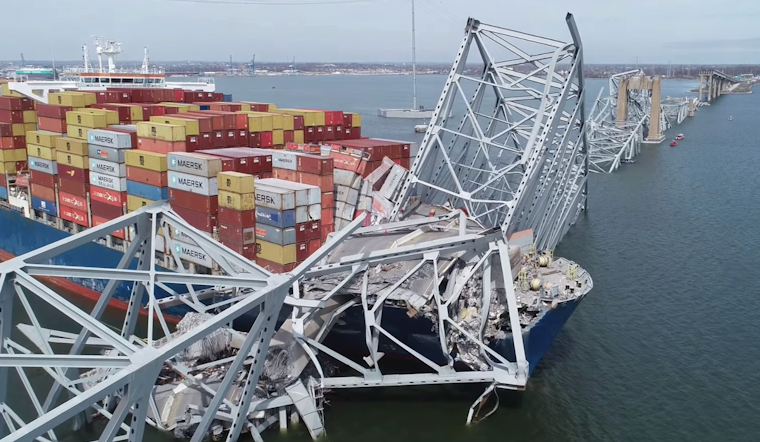
Two years after the Francis Scott Key Bridge collapsed into the Patapsco River, a Baltimore mother who lost her partner in the disaster is now fighting to stay in the country she has called home for nearly two decades.
Zoila Guerra Sandoval, who has lived and worked in Maryland for almost 20 years, was recently told by federal immigration authorities that she is in removal proceedings and could be deported. That would separate her from the U.S. citizen child she shares custody of with José Mynor López, one of the six construction workers who died when the bridge fell. The development has rattled local advocates who say families were urged to seek humanitarian help after the tragedy and now feel those same efforts have put them in danger.
According to NPR, Guerra Sandoval received a letter from U.S. Citizenship and Immigration Services dated April 14 denying her request for parole in place and informing her that she is in removal proceedings. The notice followed post-collapse outreach in which Biden administration officials encouraged roughly 30 relatives of the six victims to apply for expedited humanitarian protections, advocates and lawyers told NPR. Guerra Sandoval's attorney says the letter landed like a gut punch after families handed over extensive personal details, including fingerprints, hoping it would lead to work authorization and some measure of stability.
Four days after USCIS denied her application, Immigration and Customs Enforcement filed a notice to appear and formally initiated removal proceedings, according to The Independent. "We will absolutely be fighting back against deportation," attorney Rachel Girod told The Independent, adding that legal teams plan to seek stays of removal while also ramping up community organizing in Baltimore. Advocates say the move effectively turns what were billed as lifelines after the disaster into a fresh legal threat hanging over grieving families.
What families were told
In the chaotic days and weeks after the Key Bridge collapse, federal officials met with relatives of the victims and urged them to apply for targeted humanitarian relief to keep households intact, according to local reporting. Around 30 people were identified as potentially eligible and some did receive temporary protections, but many applications stalled or were ultimately denied, WBAL reports. Lawyers who helped assemble the filings say they were told to follow exacting instructions, down to how envelopes were labeled, yet processing delays and apparent policy shifts still left applicants exposed.
How federal enforcement has shifted
Advocates argue that Guerra Sandoval's case is part of a broader national pattern. Since the current administration took office, the Justice Department's immigration arm has reshaped court procedures in ways that advocates say hasten removals, with judges encouraged to grant government motions that can quickly clear dockets, according to The Independent.
Local outlets, including WBAL, also report that immigration agents increasingly arrest people at court check-ins and USCIS appointments, turning what used to be routine touchpoints into potential enforcement traps. Lawyers say those shifts, along with a broader push to accelerate deportations, make it far riskier now to step forward for humanitarian relief than it was when families were first invited to apply.
Legal options and next steps
Guerra Sandoval's first immigration court hearing is set for July, NPR reports. Her attorneys say they will ask judges for stays or other forms of relief while they challenge the denial of her application. One potential tool is "parole in place," a discretionary humanitarian measure that can allow certain relatives to remain and work in the United States temporarily. USCIS explains that parole in place is limited and evaluated on a case-by-case basis, and it does not automatically lead to permanent status.
Because of those limits, lawyers say the courtroom fights ahead, combined with pressure from the community, will likely determine whether Guerra Sandoval and other relatives can stay.
Local reaction
Community organizations, including CASA, have vowed to rally around the families and press elected officials and the Department of Homeland Security to reverse the denials, according to local coverage. Attorneys representing several relatives plan to file challenges in immigration court and seek temporary protections while appeals move forward. For many in Baltimore still reeling from the loss of the Key Bridge, advocates say this latest turn is a stark reminder that federal enforcement choices land not in abstract policy debates, but in specific neighborhoods and homes.
As removal proceedings advance, the case will test whether promises made in the aftermath of a public tragedy can survive a national drive to speed up deportations. For now, families and their lawyers say the next few months will decide whether relatives already coping with loss will be allowed to stay together in Baltimore or face forced separation by federal authorities.





.jpg)