

























































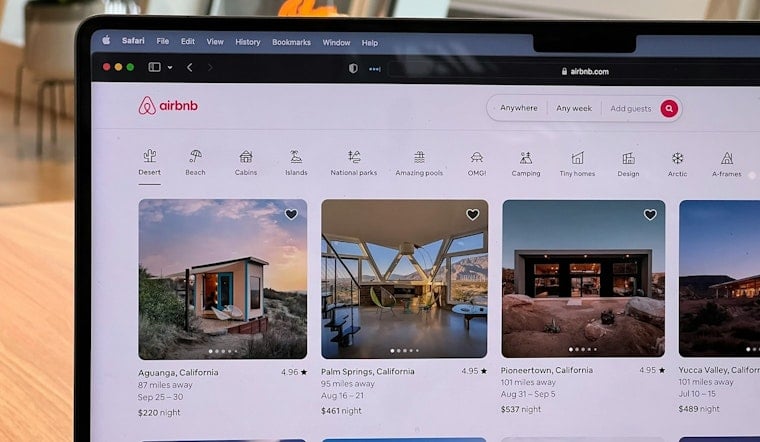
Los Angeles City Hall is weighing a tempting offer from Airbnb: cash up front in exchange for loosening short‑term rental rules just in time for the 2028 Olympics.
Mayor Karen Bass' proposed budget quietly tucks in two key provisions that could both widen Airbnb's footprint and front‑load tax revenue. One directive asks the Planning Department to craft a limited vacation‑rental program that would expire on December 31, 2028. Another orders the Office of Finance and the City Administrative Officer to study letting short‑term rental platforms pre‑pay the city's transient occupancy (bed) tax. Airbnb has pitched that pre‑payment as a quick way to raise money for repairs, parks and other city services, and the idea has already spooked housing advocates, hotel interests and some council offices. Though buried in budget paperwork, the proposals have kicked off a fast political fight at City Hall.
The pre‑payment idea surfaces in Exhibit H of the mayor’s proposed budget, which, as detailed by L.A. Material, instructs staff to come back with recommendations for allowing transient occupancy tax to be paid in advance of the 2028 Games. The same section tells the Planning Department to examine a time‑limited program that would open the door for second homes and investment properties to be used as vacation rentals through the Olympics.
Planning department shifts stance
The Department of City Planning had previously recommended rejecting a permanent expansion for second‑home rentals. On April 15, however, it issued a supplemental report clarifying that its April 2 analysis focused on a permanent program rather than a short‑term, Olympics‑specific one, and that a temporary program could create different impacts, according to a supplemental report from the Department of City Planning. That report urged the City Council and the Office of Finance to study how such a temporary program would be implemented and enforced if it moves forward. The apparent flip has intensified scrutiny, with critics warning that any loosening of rules risks long‑term housing loss even if the policy is technically temporary.
How much money are we talking?
The budget documents forecast that Los Angeles will pull in transient occupancy tax revenue in the low hundreds of millions of dollars next year, according to the City Administrative Officer's proposed budget materials for 2026‑27. Separate reporting by LAist notes that the current budget year is expected to generate about $297 million in transient occupancy tax, roughly $34.5 million of which the city controller attributes to short‑term rentals.
Who’s pushing it and who’s warning
Airbnb has cast the pre‑payment plan as a pragmatic way to get money through the door faster. Justin Wesson, the company’s senior public policy manager in California, has said Airbnb offered to provide tax revenue up front to help fund essential city programs, as described by L.A. Material. Labor groups and housing advocates counter that even a time‑limited expansion would draw more second homes and investment properties into the short‑term rental market and drain the long‑term rental supply. Noah Suarez‑Sikes of Better Neighbors L.A. has warned that a temporary rule change could still permanently displace renters, and several councilmembers have publicly raised red flags about both pre‑payment and enforcement, according to reporting by LAist.
Next steps: hearings, politics and money
City Council budget hearings are set to begin this week, with a public hearing scheduled for May 20 and initial votes expected in late May, according to council scheduling trackers and reporting summarized by PolicyEdge. The broader war over short‑term rental rules has already shown up on doorsteps: canvasses and flier drops tied to a “Save Our Services” campaign drew attention last year and were linked to Airbnb advocacy, as reported by the Los Angeles Times. With unions, hotel operators and neighborhood groups all spending time and money on the issue, the budget fight is as much political as it is fiscal.
Key questions now include whether the mayor and council ultimately sign off on language that enables pre‑paid transient occupancy tax deals, what enforcement tools and permit caps the Planning Department recommends, and whether an “Olympics‑only” program morphs into something more permanent in the city’s housing market. City staff are expected to report back in the weeks ahead, and the council’s deliberations will determine whether Los Angeles grabs the cash‑upfront offer or sticks with tighter guardrails intended to protect long‑term housing.





