

























































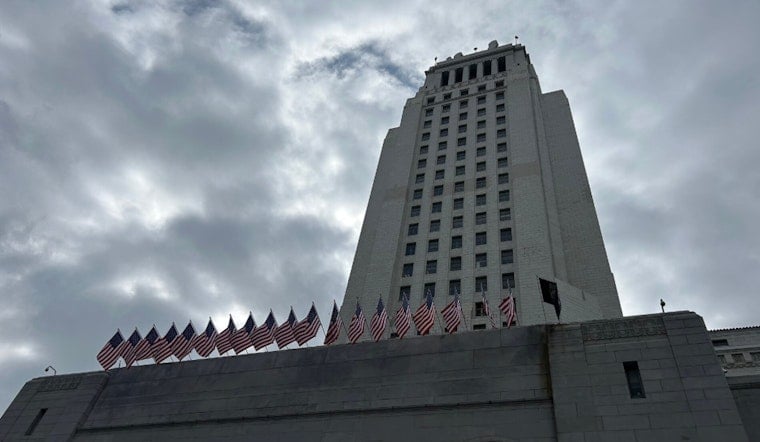
Los Angeles City Hall is having a very 2026 argument over a very 2020 problem: how often public lawyers actually need to show up to work in person. Marissa Roy, a Democratic Socialists of America-backed challenger for city attorney, has told the attorneys’ union she wants most of the office in person only two days a month, a move critics say would worsen an already “vacant” City Hall and punish downtown businesses that depend on office crowds. The clash has quickly turned into a test of what leadership should look like ahead of the June 2 primary.
Roy’s Two-Day Pitch
Roy, a deputy state attorney general, recently told the Los Angeles City Attorneys Association that, if elected, she would require city attorneys to be physically present just two days a month. She argued that the schedule matches what attorneys already see at the California Attorney General’s office and said it respects the pay cut many government lawyers take while preserving their work-life balance. As reported by the Los Angeles Times, Roy had raised more than $450,000 through the end of December, making her the best-funded challenger in the race.
Feldstein Soto’s Push To Be Back At Desks
Incumbent City Attorney Hydee Feldstein Soto has moved in the opposite direction. Her office now requires most staff attorneys to be in person at least three days a week and supervisors four days a week. "It builds teamwork. It ensures cohesion. It ensures that you have the opportunity to review and evaluate the work of new employees while they are still on probation," she told the Los Angeles Times. Those stricter rules have generated friction with the Los Angeles City Attorneys Assn., which filed an unfair-employee-relations claim last year and is expected to weigh its endorsement options before the June primary.
Why Office Rules Hit Downtown Where It Hurts
This is not just a calendar fight. Office attendance patterns have very real consequences for downtown restaurants, coffee spots, and retail counters that once depended on lunchtime and after-work rushes from government buildings. Statewide, similar battles over telework have turned up the heat. Governor Gavin Newsom’s push to have most state employees back in person four days a week has triggered negotiations and proposed legislation that could send more public workers into offices later this year, according to CalMatters. That broader backdrop helps explain why a City Hall scheduling policy has suddenly become a campaign flashpoint.
Downtown Business Owners Hit The Panic Button
Some downtown business owners have been blunt about what hybrid work has done to their bottom lines, and national outlets have carried their complaints beyond the 110. The New York Post reported that several operators said revenues have dropped by as much as 90 percent and that about 50 Angelenos were turned away after finding locked doors and empty counters when they tried to visit City Hall. Those numbers are eye-catching and, where possible, they should be weighed against local economic and foot-traffic data before anyone declares downtown officially doomed.
Endorsements, Activists, And The Politics Of Showing Up
Roy’s run is backed by local progressives. DSA-LA has campaigned for her and promoted events in support of “Marissa Roy, DSA-LA’s endorsed candidate for City Attorney” on its calendar, as seen on DSA-LA. Her campaign website, Marissa Roy for City Attorney, highlights her work at the California Department of Justice and frames her attendance plan as part of a strategy to recruit and keep public-interest lawyers. The Office of the City Clerk lists both Roy and Hydee Feldstein Soto as certified candidates, with the primary set for June 2, 2026, according to the Los Angeles City Clerk.
Legal And Labor Stakes Behind The Schedules
Across California, return-to-office rules have already spilled into legal disputes and official reviews. The California State Auditor has warned that a one-size-fits-all approach to in-person work could undermine savings from telework and criticized how some directives were rolled out, offering a broader legal and fiscal backdrop to the City Hall debate, per the California State Auditor. That ongoing tug-of-war turns the city attorney’s in-office rules into both a workplace issue and a campaign dividing line.
What Angelenos Will Decide Next
Union leaders are expected to consider endorsements in the coming weeks, adding another layer of drama before ballots go out. On June 2, voters will effectively be asked to choose not just a city attorney but a vision of how City Hall should function, who it should be convenient for, and whether downtown Los Angeles can reclaim anything close to its pre-pandemic buzz. Expect both campaigns to use the attendance fight as shorthand for those larger questions.





.jpg)