

























































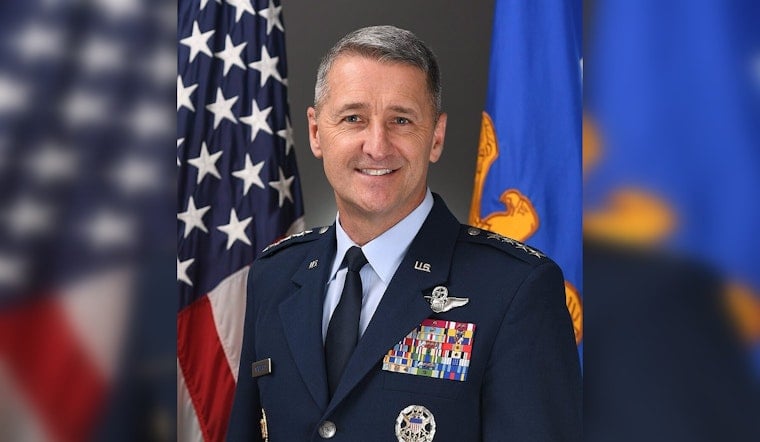
Gen. Steve Nordhaus sat before a House Appropriations subcommittee last Friday and promised that if the National Guard is ordered to assist at polling places, troops will "follow the Constitution." It was meant as reassurance. Instead, it underscored how jumpy Washington has become about a prolonged Guard presence in the capital as the 2026 midterms creep closer.
Democrats zeroed in on a basic question: what real limits exist on deploying troops to voting locations, and who gets to enforce them when political pressure hits a boiling point?
Nordhaus: 'We Follow The Law'
Rep. Joe Morelle pressed Nordhaus for a clear promise to the public. Nordhaus replied, "The National Guard, obviously, always follows the Constitution, law, policy and guidance, both at the federal and the state level." He added that Guard work around elections during the pandemic was mostly clerical and support work, done in civilian clothes, not as armed law enforcement.
The exchange is laid out in the Guard's official transcript of the April 17 hearing, according to the National Guard Bureau.
What The Law Says
On paper, the guardrails are strict. A federal statute makes it a crime to order or keep "troops or armed men" at any place where a federal or special election is held, unless it is necessary "to repel armed enemies of the United States." Violating that law can bring criminal penalties and even disqualification from office.
The Justice Department's election offenses manual lays out the statute, its history and the possible prison time of up to five years, according to the Justice Department.
Why Lawmakers Are Worried
The unease on Capitol Hill is not coming out of nowhere. Recent reporting has chronicled episodes in which advisers discussed seizing voting machines and in which people close to the president pushed for a more aggressive federal law enforcement presence around elections.
During the hearing, Rep. Betty McCollum and others pointed to that history, arguing that past talk by allies such as Steve Bannon makes a bare promise to "follow the law" feel flimsy without tighter guardrails written into policy and statute. Regional coverage, including from KOTA, has tracked those concerns.
Troops In Washington And What They’re Doing
All of this is playing out against the backdrop of a still-unusual sight in the nation's capital. Roughly 2,500 Guard members remain on duty in the District, handling everything from beautification details to station patrols. Critics warn that this kind of open-ended deployment risks making armed troops on city streets feel routine instead of extraordinary.
The Associated Press has reported that more than 2,500 Guard members are still in Washington and that the mission has started to feel permanent, with local officials and civil liberties groups questioning both the cost and the long-term impact. ABC News has summarized the reporting and local reaction.
What Comes Next
Lawmakers signaled that what ultimately matters is not only what Pentagon officials say, but how Congress, the courts and public scrutiny constrain any future orders involving troops near elections. Some fights are already in the books.
The Supreme Court has left in place a lower court order that blocked a National Guard deployment in Chicago, a reminder that judges may end up as the final backstop against contested uses of federal troops in domestic situations. The ruling and subsequent appeals have been detailed by The Washington Post and court watchers.
Legal Implications
The legal lines around Election Day are not subtle. Any move to post federal troops at polling places risks criminal exposure under 18 U.S.C. § 592 and related statutes, which were written to stop armed intimidation at the ballot box and still sharply limit what any president can do.
Civil liberties groups and election law experts warn that even the perception of military involvement in voting could trigger fast-moving lawsuits, injunctions and potentially prosecutions. Those risks are spelled out in the Justice Department manual and in analysis from the Brennan Center on laws that bar federal forces from polling places.
For Washington residents, Nordhaus's pledge that the Guard will follow the law may offer some comfort. Local leaders and civil liberties advocates, however, say they will keep pushing for transparency and clearer legal limits. Between the ongoing Guard presence, the looming midterms and a judiciary already weighing in, how troops are used at home is likely to stay front and center as election season heats up.


