

























































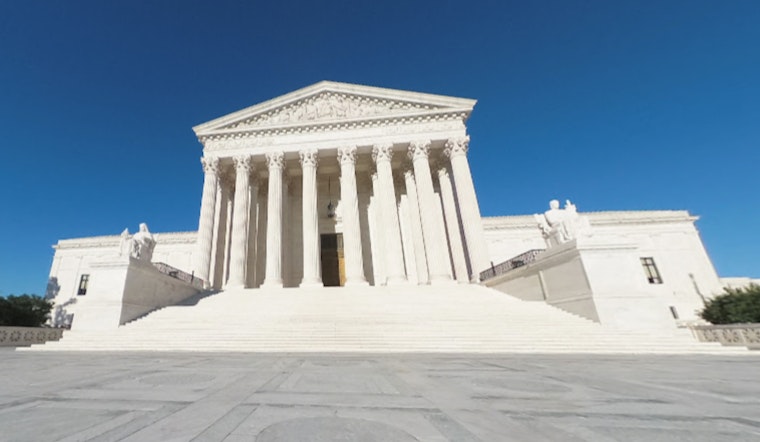
The Second Amendment Foundation has teamed up with a slate of national gun-rights groups and is now knocking on the doors of the U.S. Supreme Court, asking the justices to take up George Peterson v. United States, a constitutional challenge to how federal law treats firearm suppressors. Their target is a set of long-standing National Firearms Act rules, including special registration requirements and what was historically a $200 tax stamp, which the amici argue pile an unconstitutional burden onto the right to keep and bear arms, as per the Supreme Court.
In a brief filed April 2, 2026, the coalition contends that suppressors qualify as “arms” under the plain text of the Second Amendment and that American history offers no tradition of per-arm registration or special taxes of this kind. The legal filing, submitted on behalf of the Second Amendment Foundation, the National Rifle Association, the American Suppressor Association and several state-level organizations, was lodged with the Supreme Court.
Kostas Moros, SAF’s director of legal research, told reporters there is “no historical precedent for such restrictive government oversight,” while SAF founder Alan M. Gottlieb framed the dispute as a direct challenge to “the government's efforts to financially burden and regulate the exercise of Second Amendment rights.” Those remarks were reported by Tampa Free Press.
How the Case Reached the High Court
The Peterson case grew out of an ATF search of the defendant’s home and business in Louisiana, where agents seized an unregistered suppressor. Peterson later entered a conditional guilty plea yet preserved his ability to appeal specific pretrial rulings. On review, the Fifth Circuit assumed for the sake of argument that suppressors are protected “arms,” but still upheld the NFA’s registration and approval structure in a December 2025 opinion, as detailed by Justia.
Why the Legal Terrain Is Shifting
Congress recently changed one important piece of the NFA puzzle. Public Law 119-21 reset the making and transfer tax on many NFA-regulated items to $0 as of January 1, 2026. Lawmakers, however, left the rest of the NFA machinery intact, including its separate registration, background check and approval mandates. The Congressional Research Service points out that those non-tax regulations are still fully in effect, and SAF leans hard on that distinction in its brief while arguing that the surviving rules lack support in historical practice.
What Comes Next
According to the petition, George Peterson applied for certiorari on March 9, 2026, and the case has been slated for the Supreme Court’s April 17 conference. The official Supreme Court docket logs the petition, the amici filing and the procedural schedule. Should the justices agree to hear the case, they could clarify whether suppressors are constitutionally protected “arms” and whether the NFA’s registration framework survives under the Court’s post-Bruen test.
For now, nothing on the ground changes. The statutory and regulatory scheme remains in effect, and ATF registration and approval rules continue to govern most suppressor transfers while industry players and advocacy groups wage battle on multiple legal fronts. Owners, manufacturers and dealers will be watching the high court’s conference calendar closely to see if this quiet piece of hardware becomes the next loud Supreme Court showdown.



