

























































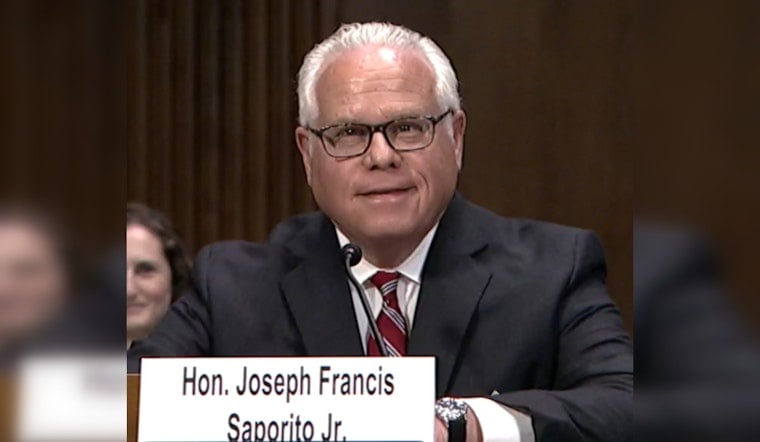
Federal Judge Joseph F. Saporito Jr. has sided with Pennsylvania election officials in a closely watched fight over who gets to post the state’s voter rolls online, handing Secretary of the Commonwealth Al Schmidt a clean win on April 23. The ruling tosses out a lawsuit from the Voter Reference Foundation, which argued that the National Voter Registration Act (NVRA) and the First Amendment require wider public access to the data. For now, Pennsylvania’s existing system stays in place: residents and qualified groups can still buy the “Full Voter Export” as an electronic download for $20, but outside organizations are barred from slapping that full list onto public websites.
Inside the judge’s 52-page opinion
In a 52-page memorandum, Judge Saporito granted the Secretary’s motion for summary judgment and ordered the clerk to enter judgment for the Commonwealth, according to Justia Dockets & Filings. The court stressed that the state’s Internet Sharing Ban "does not restrict any party’s access to data to which they are entitled" and instead targets only the posting of the full voter export file on the open web. Saporito concluded that the NVRA does not override Pennsylvania’s internet-sharing rule and that the Voter Reference Foundation’s First Amendment challenge falls short.
What the Voter Reference Foundation wanted
The Voter Reference Foundation said it twice asked for Pennsylvania’s Full Voter Export, a sweeping file that lists names, addresses, dates of birth and voting histories, in March 2022 and again in November 2023. Both times, the Department of State refused to release the data after the group declined to sign the required pledge not to publish the list online, as reported by the Pennsylvania Capital‑Star. The Department told VRF the file is available only to requesters who promise to use the information for election, political or law-enforcement purposes, a condition VRF would not accept. The group said it hoped to run discrepancy checks and build searchable pages so the public could scrutinize the data. The judge found those goals did not cancel out the state’s power to control how the voter list is spread around.
Federal courts are not on the same page
Saporito’s reading of the NVRA breaks from recent rulings out of the 1st and 10th Circuits, which have held that similar publication bans are preempted because the NVRA’s public-inspection provision allows for broad dissemination, according to Bloomberg Law. That split in approach makes an appeal to the U.S. Court of Appeals for the 3rd Circuit more likely, since that court oversees Pennsylvania’s federal cases. The decision also lands in the middle of a broader wave of federal fights over access to detailed voter data, including recent rulings that have turned back some Justice Department efforts to obtain state voter lists, a trend covered by the AP.
Privacy rules, penalties and the $20 download
Under Pennsylvania law, election officials must keep public information lists that include a voter’s name, address, date of birth and voting history, and the Department offers the Full Voter Export as a $20 electronic download, according to PA Voter Services. Secretary Al Schmidt and the Department argue that the required affirmation and the ban on internet publication are key to protecting voter privacy, and Schmidt has publicly framed the ruling as a win for keeping voters’ personal details off mass searchable sites. State law backs that up with criminal penalties: improper online publication of the list can be charged as a misdemeanor that carries up to a $6,000 fine or three years in prison, a point highlighted in reporting by WITF and echoed in the court’s opinion.
What could come next
The Voter Reference Foundation can still take its case to the 3rd Circuit, and with federal appeals courts now openly disagreeing on whether the NVRA requires voter data to be publishable online, the next round could shape the rules for Pennsylvania and neighboring states. Any appeal would again pit public oversight against voter privacy and statutory language, with judges parsing exactly how much sunlight the NVRA demands. Legal analysts say the eventual outcome will influence what advocacy groups, political players and federal agencies are allowed to do with the voter files they purchase from states, according to Bloomberg Law.
The ruling also shines a brighter light on who is asking for these massive voter files. Investigative reporting has tied the Voter Reference Foundation’s operations and funding to conservative political networks and a Super PAC backed by billionaire donor Richard Uihlein, according to ProPublica. For Pennsylvanians, the real-world effect is more straightforward: the state will keep selling its voter list under controlled terms, rather than letting full, raw voter databases be posted as open, searchable directories for anyone with a browser.





