

























































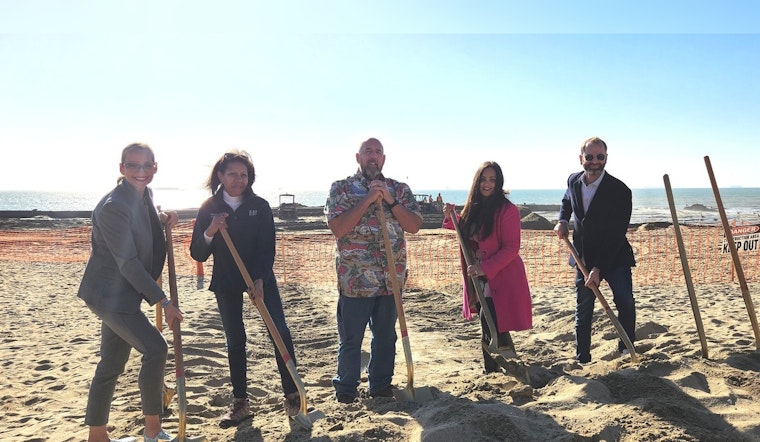
The Surfside-Sunset Beach Renourishment Project, a critical conservation and infrastructure initiative, launched into its 13th stage, led by the U.S. Army Corps of Engineers on Wednesday. As reported on the City of Huntington Beach's official Facebook page, the ceremony marked the beginning of a significant effort to bolster the shorelines of Seal Beach, Huntington Beach, and Newport Beach against the relentless forces of nature, including erosion and flooding.
The initiative is accelerating the region's readiness against coastal threats, laying the groundwork for enhanced sand barriers to shield residences and fragile bluffs from the ocean's destructive potential said Col. Andrew J. Baker, commander of the U.S. Army Corps of Engineers Los Angeles District. In a statement highlighted by Surf City Weekly, "This is an exciting time for all of us, and it has been a tremendous team effort with our local, state, and federal partners."
Huntington Beach Mayor Gracey Van Der Mark and officials from neighboring cities praised the project for its foresight and the assurance it gives to the role of their beaches in the fabric of community life and the local economy. Seal Beach Councilmember Joe Kalmick told Surf City Weekly about the collective push behind the project's success, stating, "The success of this project is due to the combined efforts and partnership of so many: our legislators, the Army Corps, State, and County agencies and of course the cities who are finally going to see sand back on the beaches, protecting 17 miles of our valuable coastline."
The robust roster of partners supporting the project's current phase includes state lawmakers, local supervisors, and representatives for state and federal legislators. Mayor Will O'Neill of Newport Beach succinctly captured the sentiment among the communities involved when he expressed, "Newport Beach would simply be Newport without the beach," as per his statement on the City of Huntington Beach's Facebook post.
With a budget of $23.1 million, the current phase aims to deploy 1.2 million cubic yards of sand to the specified areas, a move set to be completed by February 2024, with the following stage slated for five years later.





