

























































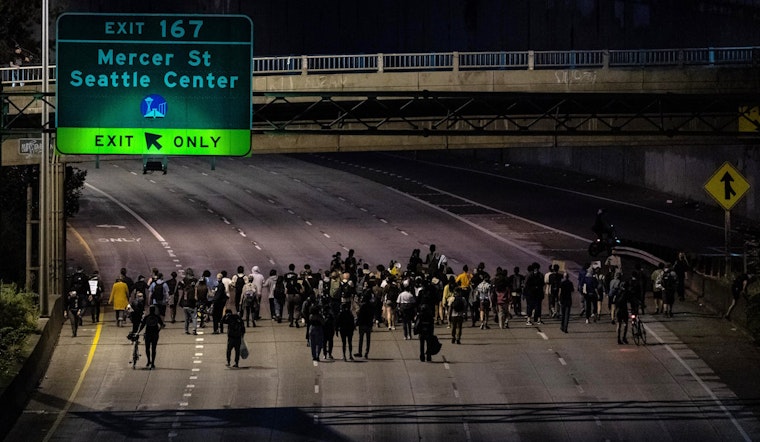
Washington state lawmakers have had enough of protesters playing in traffic—quite literally. In the wake of last Saturday's blockade of Interstate 5 in Seattle by pro-Palestinian activists, a firm legal response is now in the offing. A bill sponsored by Rep. Andrew Barkis is taking aim at those who find the city's highways an opportune stage for political expression.
The proposed legislation, House Bill 2358, seeks to impose stiffer penalties on individuals who obstruct state highways. In a statement obtained by KIRO Newsradio, Barkis demanded reclaiming the asphalt, saying “Washington will not tolerate anarchy on our highways.” Echoing this sentiment, House Bill 2358 is backed by 35 other lawmakers and has been referred to the House Transportation Committee, as reported by KIRO's MyNorthwest.
It's clear that the tipping point was the I-5 blockade, which dealt the Emerald City a traffic nightmare, backing up vehicles for six miles and leaving the city paralyzed for hours. According to The Center Square, videos surfacing on social media captured the extent of the chaos, punctuated by protesters' chants as traffic ground to a halt.
Under HB 2358, unlawfully obstructing vehicular flow on state highways with three or more individuals is deemed a gross misdemeanor. The stakes rise to felony charges when such demonstrations hinder emergency responders or when protesters refuse lawful orders to disperse. "It doesn’t matter, it’s being blocked illegally,” Barkis told The Center Square, highlighting the implicit urgency when an ambulance is trapped in the gridlock. The bill has provisioned for a class C felony, packing a minimum $5,000 penalty, and escalating consequences for repeat offenders. The comprehensive details of the bill are outlined on the official state legislature site.
The Washington State Patrol, heavily criticized for their handling of the protest, admits being caught off-guard by the size and organization of the demonstrating crowd, as over 500 protesters and a dozen vehicles effectively commandeered the I-5. WSP is actively investigating several protest organizers, which could lead to referrals to the King County Prosecuting Attorney’s Office, according to statements from WSP Chief John R. Batiste obtained by MyNorthwest.
This legislative package has stoked debate on the balance between protestors' rights and the public's right to unimpeded travel. With bipartisan support, yet set for a public hearing, House Bill 2358 might soon redefine how Washington weighs the scales of justice against the highway blockades of dissent.



