

























































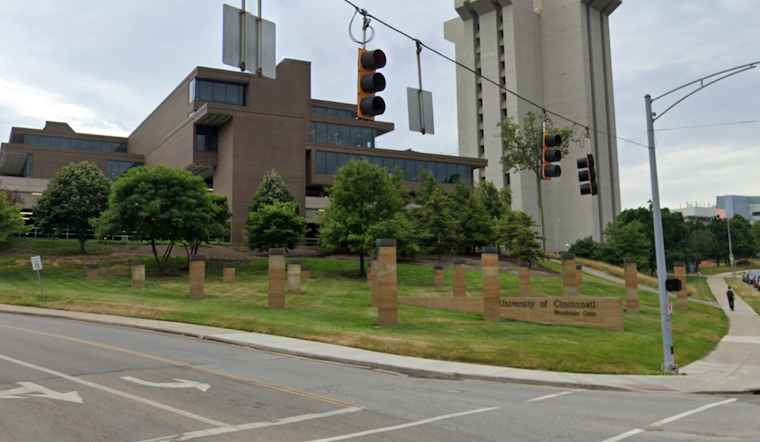
Surgeons stand on the threshold of a revolution, not wielded by the scalpel but crafted by the precision of 3D printing, as Cincinnati's own Meteora3D, an up-and-coming company based at the University of Cincinnati Venture Lab, paves the way for the future of surgical preparation. According to the University of Cincinnati in a recent interview on 55KRC, Meteora3D is innovating ultra-fast 3D-printed anatomical models that are patient-specific, a bold step beyond the limits of traditional 2D medical imaging.
Seeing beyond the two-dimensional confines of CT scans, Meteora3D is amassing funds to further its mission, having raised over $500,000 to develop and validate its groundbreaking technology. The company’s expertise lies in translating the flat images of yesteryear into tactile models that allow surgeons to plan and rehearse complex procedures with an intimacy that digital photos alone cannot provide—in a statement obtained by 55KRC, the company's spearheads, Dr. Prashanth Ravi, CEO of Meteora3D and a faculty member at the UC College of Medicine’s Department of Radiology, alongside Shane Cline, chief technology officer, emphasized their commitment to bridging the disconnect between a surgeon's need for tangible spatial understanding and the conventional digital approaches.
Meteora3D has enlisted Kevin Ryan as a business advisor to bolster their commercial endeavors, tasking him with navigating the market's demands. Jake Harrington also joins the ranks as the startup’s senior mechanical engineer, poised to drive product advancement. A sense of anticipation hangs in the air as the team prepares to welcome an internationally recognized medical advisor whose name remains under wraps but whose expertise is expected to fine-tune Meteora3D's alignment with the medical industry's needs.
The value of Meteora3D's innovation is not lost on medical professionals. In an era where outcomes are meticulously measured and precision is paramount, these models represent a significant upgrade in a surgeon's toolbox. With each 3D-printed organ tailor-made for specific patients, the models grant fidelity to the practice of surgery that was once the stuff of hopeful conjecture but now steps vividly into the realm of tangible reality. According to Meteora3D, the developments stand to transform not only how surgeries are planned but also how surgical teams collaborate and communicate when the stakes are high and the margins for error are razor-thin.





