

























































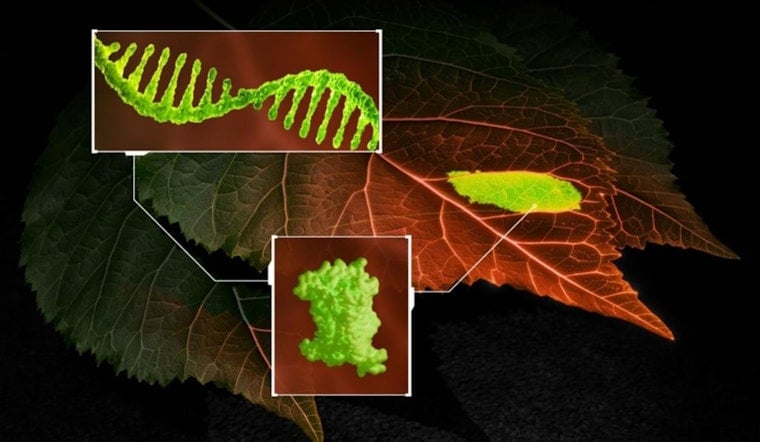
In a significant stride towards advanced agricultural biotechnology, Oak Ridge National Laboratory scientists have developed a biosensor that can visibly track RNA within plant cells, a breakthrough that could revolutionize crop improvement efforts and pathogen detection. This tool, as reported by ORNL, is the first of its kind to afford researchers real-time insights into gene expression and plant response to environmental stressors.
Lighting up the inner workings of plants, the technology capitalizes on a novel use of ribozymes—split into two inactive parts that come together to form an active enzyme when they encounter the RNA target, allowing for the assemblage of a fluorescent reporter protein. Xiaohan Yang, the ORNL project leader, emphasized the importance of this innovation as it allows observation of cells' molecular adaptation to shifts like drought or infections, what they've unveiled serves not only the scientific community, by easing up the cumbersome traditional process that required destruction of plant samples for RNA analysis but also underpins potential strides in crop resilience and food security.
Utilizing this biosensor, ORNL researchers were able to detect viral infections in tobacco plants and dissect the gene regulatory patterns in Arabidopsis, a model organism in plant biology. The versatility of the biosensor extends from observation at the individual cellular level to the scope of full plant structures, providing an unprecedented angle into the plant's biology. "It’s helpful to researchers to be able to see when and where a plant is starting to reprogram itself in response to conditions like drought," Paul Abraham, co-author and bioanalytical chemist, remarked in a statement made by the Oak Ridge National Laboratory.
Jerry Tuskan, co-author and director of the DOE Center for Bioenergy Innovation at ORNL, stated that “the biosensor advances plant science in multiple ways.” He added, “Its versatility ranges from a fundamental science perspective of performing better functional genomics to practical use as a tool to screen plant performance for early detection of pathogens or other stress response, even before those impacts result in outward changes to the plant.”





