

























































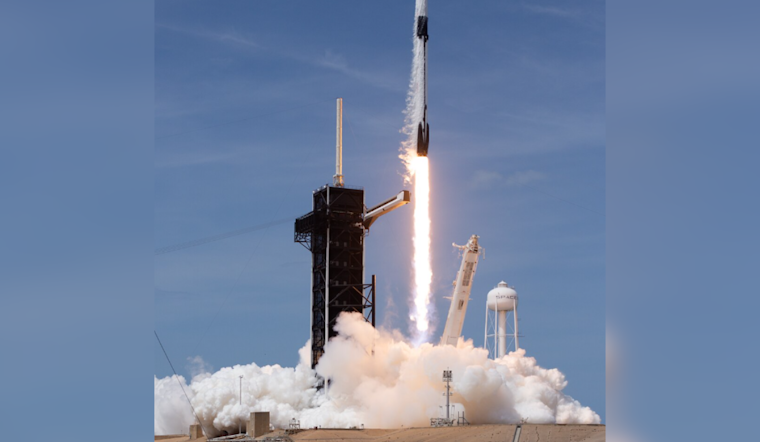
SpaceX's ongoing efforts to bolster its Starlink satellite constellation continued unabated with the successful launch of a Falcon 9 rocket from the Cape Canaveral Space Force Station on Thursday night. As confirmed by a report from ClickOrlando, at precisely 9:51 p.m., the rocket ascended, carrying 28 internet satellites aimed at enhancing global connectivity through the expansive Starlink network.
The mission, dubbed Starlink 6-75, adds to a growing number of such payloads SpaceX has sent to low-Earth orbit to provide internet access to remote areas across the globe; a mission reiterated by a Florida Today article, which noted the imperative role of these satellites in reaching underserved communities, this mission marked the 18th journey for the Falcon 9's first-stage booster, a veteran of 11 prior Starlink missions alongside various other commercial and resupply flights.
According to a detailed description by Space.com, the booster, after fulfilling its role of lifting the second stage and payload to the edge of space, accomplished a precise landing on the Just Read the Instructions drone ship stationed in the Atlantic Ocean, just over eight minutes following its departure from solid ground; this landing marked the booster's enduring reliability and SpaceX's commitment to reusability.
In addition to this successful mission, the upcoming schedule remains bustling with the next rocket launch from Cape Canaveral, the Starlink 6-84 mission, already on the horizon with a tentative launch window set for tomorrow anticipating the dispatch of yet another cluster of Starlink satellites into Earth's orbit, as reported by Florida Today.





_(cropped).jpg)