

























































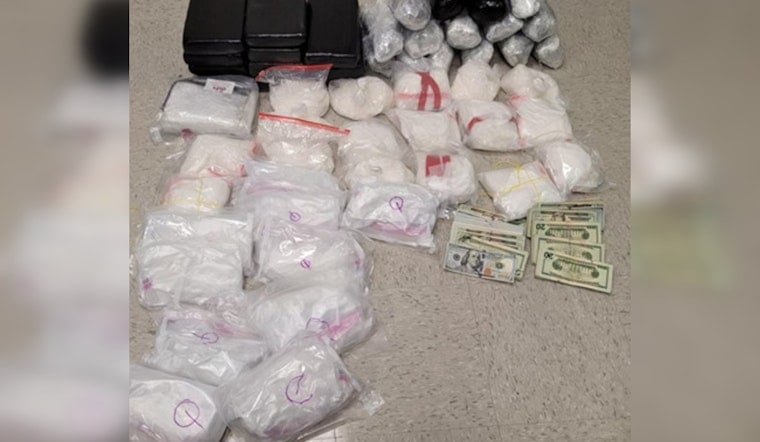
Following the return of the California National Guard to state control, there has been a substantial increase in the seizure of fentanyl, underscoring the Guard's critical role in combating drug trafficking. In the month of September, 891 pounds of illicit fentanyl were intercepted, marking a 240% increase since June, when a significant portion of the Guard was redirected to Los Angeles in a move deemed unnecessary by Governor Gavin Newsom. These efforts have reportedly removed drugs worth roughly $6.75 million from the streets and curtailed the flow of this dangerous opioid, according to the Governor's office.
Before being pulled from their assignments by President Trump, many servicemembers of the CalGuard specialized narcotics teams were instrumental in public safety missions. Since commencing drug interdiction efforts in 2021, the teams have confiscated over 34,350 pounds of fentanyl and in excess of 50.6 million fentanyl-containing pills, "worth an estimated $492 million," as said by Governor Gavin Newsom. Throughout this year alone, the servicemembers, in collaboration with partner agencies, have seized approximately 4,460 pounds of fentanyl—nearly 2 million pills—valued close to $36 million. Despite being reassigned to Los Angeles to unlawfully militarize the city, an estimated 32% of CalGuard members are dedicated to the Counterdrug Task Force, and 300 are still federalized, contributing to the public safety mission.
Moreover, the California National Guard's involvement with public safety extends beyond enforcing drug laws to educational initiatives. The Guard's Drug Demand Reduction Outreach program has made its presence known in schools, conducting in-person outreach and using the Health Belief Model to resonate with students about the dangers of opioid abuse. As of late, the program has reached over 112,000 students through visits to 200 schools, attempting to prevent future drug misuse.
The National Guard's humanitarian services are also noteworthy, as they have been mobilized to assist in fighting wildfires and supporting food banks, especially when benefits delays plague 5.5 million Californians, the same ones reported by Governor Newsom to have now been supported in their nutritional needs by the planning, packing, distributing, and delivering of meals. These deployments are part of a broader, cross-collaborative approach to public service, where soldiers not only work with Task Force Rattlesnake in wildfire mitigation but also support communities in times of need.
Despite the controversy surrounding their use, the President has insisted on deploying the National Guard in various US cities, such as San Francisco, facing opposition from local leaders who point out the positive trend in public safety. Furthermore, a federal judge ruled in August 2025 that the deployment in Los Angeles violated the Posse Comitatus Act, although this decision is currently under appeal. President Trump's insistence on federalizing the Guard has not only stirred opposition but also sparked litigation, as California continues to challenge his actions—in the words of Governor Newsom, a reminder that "California was the first to be targeted in this way, it would not be the last."





