

























































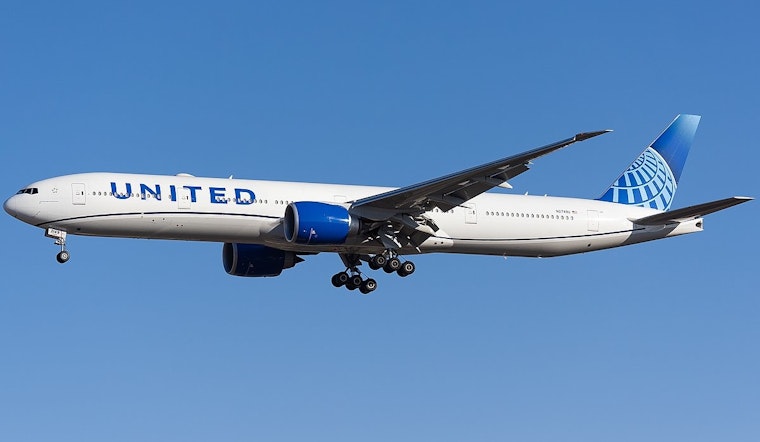
Two commercial jets departing George Bush Intercontinental Airport on December 18 came alarmingly close to each other after one crew turned toward the other plane instead of away, setting off cockpit collision-avoidance alerts and last-second evasive maneuvers. Passengers reportedly had no idea how tense those first moments after takeoff were, and there were no injuries. Both flights carried on to their destinations, with the scare drawing fresh attention this week as ATC audio and flight-track replays started circulating online.
According to One Mile at a Time, the flights involved were Volaris El Salvador flight 4321, an Airbus A320neo headed for San Salvador, and United Express flight 4814, an Embraer ERJ-145 operated by CommuteAir and bound for Jackson, Mississippi. Controllers cleared both jets for takeoff from parallel runways at IAH roughly 20 seconds apart and assigned post-departure headings designed to send them away from each other immediately after liftoff.
As detailed by View From The Wing, the tower instructed the Volaris crew to turn left to a heading of 110 once airborne, while the United Express crew was told to turn right to heading 340. For reasons that are still unclear, the Volaris jet instead banked right. That wrong-way turn put the two airplanes on a direct collision course just moments after takeoff. The United Express pilots reported a TCAS Resolution Advisory and followed the system’s evasive commands as the onboard technology coordinated vertical avoidance instructions.
Air traffic control audio obtained by ABC13 Houston captures the tower-frequency exchange and indicates controllers did not immediately spot the developing conflict. The FAA told the station it would respond to information requests as investigators dig into the recordings.
How close did they get?
A VASAviation replay cited by industry blogs puts the closest point of approach at roughly 1,200 to 1,300 feet above the ground, with both horizontal and vertical separation reportedly down to only a few hundred feet. That is a razor-thin margin at such a low altitude, when both aircraft are still in a high-workload climb-out phase. The conflict peaked with a TCAS RA that instructed the United Express crew to adjust their vertical profile to avoid the intruding traffic, according to View From The Wing.
What likely went wrong
Analysts have highlighted straightforward pilot error, made worse by the specific vectoring choice. A left turn to heading 110 from a runway aligned around 330 degrees requires more than a 180-degree swing, which can feel counterintuitive for both crews and automated systems. One Mile at a Time and aviation commentators also flagged nonstandard phraseology and heavy controller workload as possible contributors that may have slowed recognition of the problem.
FAA review and safety takeaways
The FAA routinely investigates loss-of-separation events and told ABC13 Houston it would respond to questions about this incident as the review proceeds. Onboard collision-avoidance systems are designed to operate independently of air traffic control, and the FAA notes that Resolution Advisories are automatic vertical-avoidance commands that pilots are expected to follow to maintain or increase separation.
Roughly ten days after the close call, the release of ATC recordings and flight-track replays kicked off a wave of analysis across aviation sites and raised fresh questions about vectoring practices at busy hubs. Investigators will now line up tower transcripts, radar data, and airline records. Passengers, meanwhile, can quietly thank those automated safeguards that once again kept a frightening moment in Houston from turning into something far worse.




.jpg)