

























































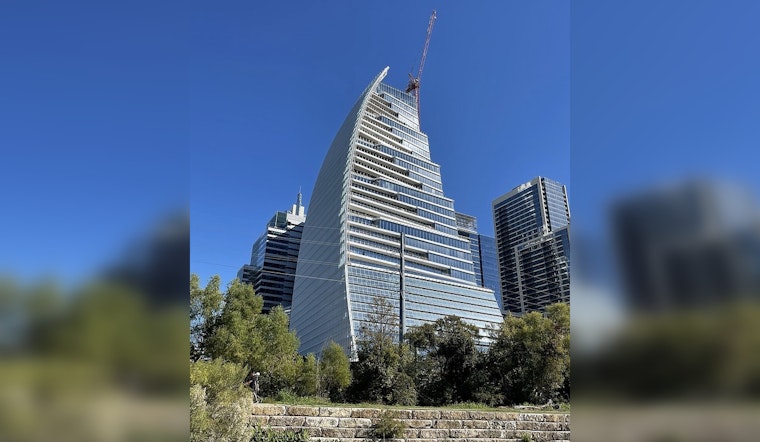
After years of sitting mostly dark on the skyline, Google’s 35-story Sail Tower at 601 W. 2nd St. in downtown Austin finally shows real signs of life. Lights are on, workers are visible, and interior work is underway, suggesting the tech giant has begun occupying at least parts of the long-empty skyscraper. For downtown residents and nearby retailers who have spent years walking past a quiet, glassy giant, even a partial move-in feels like a meaningful shift.
Local reporting shows partial occupancy
According to the Austin Business Journal, activity inside the building as of Tuesday points to Google having moved into portions of the tower. The outlet notes interior lighting and visible workers on multiple floors, while stopping short of describing a full-company relocation into the building.
Why the move was delayed
Google signed a full-building lease on the sail-shaped tower in 2019 but held off on moving in as pandemic-era work patterns reshaped office demand, the Houston Chronicle reported in 2025. A Google spokesperson told the Chronicle that the company planned to open its new Austin office at 601 W. Second in the year that followed.
The tower and its new owner
Often referred to as Block 185, the property totals roughly 804,000 square feet across 35 stories and includes retail space and parking, according to commercial listings. Cousins Properties agreed to acquire the tower for about $521.8 million in December 2024, details that appeared in a Cousins Properties release and on LoopNet.
Subleases, costs and downtown context
Industry reporting indicates Google and its brokers have been reshaping the building’s footprint, including subleasing upper floors to other tenants such as Digital Realty, according to The Real Deal. Commercial coverage has also estimated that Google was taking on more than $50 million a year in rent for largely unused space while the tower sat mostly vacant during the early years of the lease.
What to watch next
If the current trickle of activity turns into a full-scale move-in, nearby retail, foot traffic, and transit patterns could start to shift around the tower. Analysts and brokers will be watching for new tenant filings, formal company announcements, and any additional sublease activity that might clarify how much of the building’s roughly 804,000 square feet Google intends to actively use in the near term.





