

























































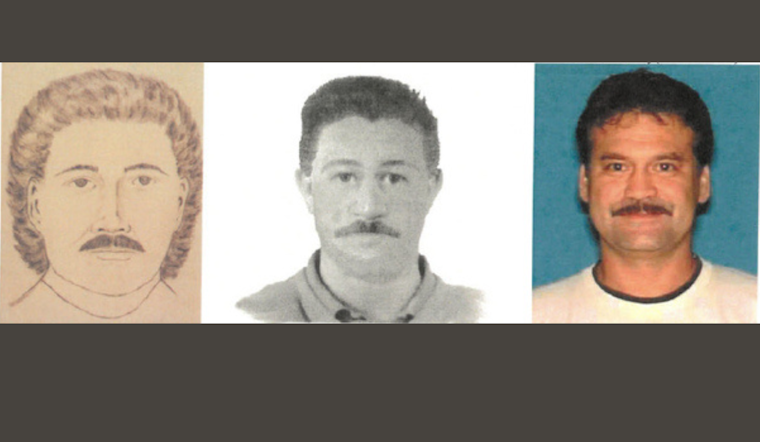
Nicholas Carney, 65, will spend the rest of his life in prison after a Collin County jury convicted him of kidnapping and sexually assaulting an 8-year-old girl in Plano in the early 1990s. The life sentence effectively closes a cold case that lingered for decades and, investigators say, firmly links Carney to a second, near-identical attack on a child in Dallas in 1999. Modern DNA work and genealogical sleuthing are being credited with finally breaking the case open and spurring a wider search for other possible victims.
According to The Dallas Morning News, the Collin County District Attorney’s Office announced this week that jurors found Carney guilty of aggravated sexual assault of a child and returned a life sentence. Prosecutors said the conviction stems from a 1991 abduction in Plano, and that the same investigation also tied Carney to a March 1999 child abduction in Dallas.
How investigators cracked two cold cases
For years, both cases sat in police files with little more than aging evidence and haunting composite sketches. That changed in 2023, when detectives submitted preserved biological evidence from the two attacks for forensic investigative genetic genealogy, according to CBS Texas. The genealogical work built out a family tree that eventually pointed to Carney as a possible suspect.
Investigators then went old-school: they quietly collected DNA from discarded cigarette butts and other items outside an address in Ardmore, Oklahoma, where Carney was believed to be connected, officials said. Lab testing of those discarded samples matched the DNA profile from both the 1991 and 1999 crime scenes, providing the key link that allowed prosecutors to move forward.
The crimes tied to Carney
Authorities say the first attack happened on August 15, 1991, when an 8-year-old girl was kidnapped from an alley near a neighborhood pool in Plano, held for hours, and then left about 20 miles from her home, according to The Dallas Morning News. The second case, in March 1999, involved a 9-year-old girl who was abducted while walking home from school in Dallas and later found roughly 40 miles away, officials said.
Both incidents involved young girls taken off familiar neighborhood routes and driven significant distances before being released, a pattern that stuck in the minds of detectives and residents for years.
A prior Oklahoma arrest and pattern of targeting
Carney’s name was not entirely new to law enforcement. Local reporting has linked him to an earlier indecent-exposure arrest in Oklahoma in 1980, when he was accused of exposing himself to a 6-year-old while working as an ice cream truck driver, FOX4 reported. Investigators also located old driver’s-license photographs and vehicle descriptions that they say lined up with composite sketches drawn during the 1990s investigations.
Taken together, officials say, the history, the descriptions, and the DNA evidence painted a picture of someone who targeted very young children in everyday settings, from neighborhood pools to walk-home routes from school.
Legal context and the role of genetic genealogy
Under the Texas Penal Code, aggravated sexual assault is a first-degree felony that can carry a sentence of up to life in prison, with enhanced minimum penalties under certain conditions. Prosecutors said the cutting-edge genetic genealogy work provided the investigative lead that put Carney on their radar, while traditional DNA testing on the discarded samples delivered the definitive match needed in court.
Investigative genetic genealogy has become a powerful, if sometimes controversial, tool in cold-case work nationwide, and officials in this case are pointing to it as a textbook example of how decades-old files can suddenly move again when technology catches up.
Investigators ask for tips
Despite the conviction and life sentence, Plano police and partnering agencies say their work is not done. The investigation remains active, and authorities believe there could be additional victims. Anyone with information is asked to contact the Plano Police Department tip line at 972-941-2148 or email [email protected], according to CBS Texas. Detectives have urged people in Dallas, Plano, and surrounding communities to revisit old reports and to reach out if they recall suspicious encounters or unsolved incidents involving children from the 1990s.
For neighbors who lived near the Plano pool where the 1991 abduction began, the outcome is a long-awaited relief. Some residents told reporters they spent years wondering if the man behind the attacks would ever be found. “It’s pretty wonderful that they can solve this and get us some closure,” one longtime resident said after the conviction. CBS Texas reported on the neighborhood’s reaction to the arrest and the decades-long effort to bring the case to trial.





